Languages
Sunday, October 18, 2026



News and Views from the Global South
Editors' Choice
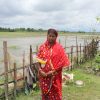
Women Advocates for Harvesting Rainwater in Salinity-Affected Coastal Bangladesh
Like many other women in Bangladesh's salinity-prone coastal region, Lalita Roy had to travel a long distance every day to collect drinking water as there was no fresh water source nearby her locality.
Why Investing in Water, Sanitation and Hygiene Pays Off
As the devastating images of flooding in Pakistan went round the world and the country declared a state of emergency, some 4,000 miles away in Stockholm, delegates had just arrived for World Water Week – an annual focal point for global water issues.
Inequality in Peru’s Education Sector Deepens in Post-Pandemic Era
"When the pandemic hit, I stopped studying, just when it was my last year of school…My parents couldn't afford to pay for internet at home," said Rodrigo Reyes, 18, one of the nearly 250,000 children who dropped out of school in 2020.
Pacific Community’s Agricultural Gene Bank Wins Global Award
Safeguarding plentiful, nutritious supplies of food for the present generation of Pacific Islanders and those who come in the future is a frontline goal in the wake of the pandemic and the continual threat of climate extremes to island farming. But the region, where 50 to 70 percent of people depend on agriculture and fisheries for sustenance and income, is now one step ahead in that objective. The region’s agricultural gene bank, established by the development organisation, Pacific Community (SPC), is now acclaimed as world-class and a leader in building future food supplies.
Guatemalans Fight Extractive Industries
The majority of the Guatemalan population continues to oppose mining and other extractive projects, in the midst of a scenario of socio-environmental conflict that pits communities defending their natural resources against the interests of multinational corporations.
Mexico’s Electric Mobility, Stuck in Fossil Fuel Traffic
The Mexico City government began testing an elevated route for electric buses with great fanfare on Sept. 11, in a bid to promote more sustainable transport. The initiative is part of an incipient promotion of electromobility in the country, amidst pro-fossil fuel energy policies.
UN and Partners Called to Act Urgently with Education in Emergencies at Summit
Suicide bombings shattered Aisha Khurram’s school, and her university was attacked by terrorists – but despite learning in an environment where the walls were colored by blood spatter, it never shook her determination to be educated.
Remedy in Sight to Subdue an Invasive Poisonous Enemy in Kenya’s Drylands
Hannah Sakamo is worried. She is about to lose yet another goat in less than a month. A pastoralist in Eldepe village, Marigat Sub-County, Baringo County in Kenya’s Rift Valley region, her household’s lifeline is at stake. The goat in question, whose days are now numbered, has consumed pods, or the fruits of the invasive species, Prosopis juliflora, locally known as mathenge.
Let’s Fight for What Counts to End AIDS, Tuberculosis and Malaria
Next week, taking place alongside the UN General Assembly, President Biden hosts a financing summit in New York of such importance that it will determine if millions of people live, will shape the world around us for years to come and will set the future direction of global health. At least $18 billion is needed to fund the work of the Global Fund to Fight AIDS, Tuberculosis and Malaria.
Great Wind and Solar Potential Boosts Green Hydrogen in Northern Brazil
Brazil could become a world leader in the production of green hydrogen, and the northeastern state of Ceará has anticipated this future role by making the port of Pecém, with its export processing zone, a hub for this energy source.
Peruvian Trans Women Fight for Their Right to Identity
"Without recognition of your identity by the State and society, there is no exercise of citizenship or rights," said Leyla Huerta, director of Féminas Perú, an organization that has been working since 2015 to empower transgender women in the face of the highly vulnerable situation they find themselves in.
Africa Needs More Action, Fewer Words to Secure Food and Nutrition
For more than five years, Ritta Achevih was harvesting one bag of maize or less from her small plot each season. She could hardly provide enough healthy food for her big family.
In the Face of Scarcity, Cubans Dream of Once Again Drinking Their Daily Cup of Coffee
While the Cuban government's plans to increase production begin to bear fruit, Mireya Barrios confesses that she seeks every possible way to enjoy a cup of coffee every day, in the face of high prices and scarcity.
Inequitable Global Health Responses Underscore Need for More Self-Sufficiency in Developing Countries
With the outbreak of Monkeypox in non-endemic countries leading to a scramble for vaccines, global health advocates are again calling for equity to be prioritized in the international response.
Bukele’s Failed Bitcoin Experiment in El Salvador
A year after Salvadoran President Nayib Bukele decided to make El Salvador the first country where bitcoin is legal tender, the experiment has so far failed, as few of the original plan's objectives have been achieved.
Make Art, Not War: Ukrainian Artists Tell the Ukraine Story Through their Art
“I must say that I had a premonition of a war with Russia in 2014 when Russian troops had started to occupy Crimea,” said Mykola Zhuravel, a contemporary painter and sculptor, in an interview with IPS. Zhuravel, with his partner, Daria Tishchenko-Zhuravel, have used art to communicate and express the horrors of the war since 2014.
Pakistan’s Climate Catastrophe: Lessons for the World
Monsoon flooding has occurred often in Pakistan but never to the catastrophic extent presently happening. A distinguishing feature of this disaster is that no one blames the flooding’s unprecedented intensity and destructiveness on anything but climate heating. The clear link between the warming atmosphere and the frequency and duration of extreme weather events of this scale should not be lost on the rest of the world.
Biomethane, the Energy that Cleans Garbage in Brazil
The increasing productivity with which humankind generates waste has gained at least one sustainable counterpart: the extraction of biogas from landfills, a growing activity in Brazil.
Special Economic Zones: A Nod Towards Capitalism in Venezuela
Venezuela is preparing to replicate the experience of Special Economic Zones (SEZs), a mechanism with which more than 60 countries have tried to draw investment and accelerate economic growth, while under its avowedly socialist government a "silent neoliberalism" is gaining ground.
From Worm Composting to Biofuels, the Caribbean Seeks Solutions to Seaweed Influx
In June 2022, swathes of matted, putrid seaweed took over the shores of beaches across the Caribbean. It was the worst seaweed influx reported since 2011, when ocean currents began depositing tons of the brown seaweed, known as Sargassum, across the region, leaving authorities grappling with the severe ecological and economic fallout.
Racism Hurts People and Democracy in Peru
Banning the use of the same bathroom, insults and calling people animals are just a few of the daily forms of racism experienced by people in Peru, a multicultural, multiethnic and multilingual country where various forms of discrimination are intertwined.« Previous Page — Next Page »





The Week with IPS

NEXT STOP - SDGs
Tracking global progress towards a sustainable world
Tracking global progress towards a sustainable world
