Languages
Sunday, November 8, 2026



News and Views from the Global South
Biodiversity

Net Tightens Around Fishing in Egypt
For Egypt’s commercial marine fishermen, making a living has never been more dangerous. Egyptian crews driven further afield in search of fish have faced pirate attacks, spent months in dingy foreign prisons, and come under fire from coast guard vessels. Dozens of fishermen have been held for ransom, abused by authorities, or shot and killed.Secretive U.S. Amendment Would Weaken Biotech Oversight
Food safety advocates, environmentalists and health professionals here are engaging in a fervent last-minute campaign to highlight a controversial legislative amendment they say would gut the ability of both the judiciary and the federal government to regulate genetically modified agricultural products.
Canada Losing Its Seasons
"Canada is not a country, it's winter," Canadians say with pride. But the nation's long, fearsome winters will live only in memory and song for Canadian children born this decade.
“We Aren’t Fighting Poverty Here, We’re Improving the Quality of Life”
The residents of San Crisanto, a small communal village nestled in an idyllic setting in the southeastern Mexican state of Yucatán, have learned that valuing and protecting natural resources can generate employment and income.Microbes Thriving Deep Within the Earth
Every living thing from bacteria to President Barack Obama is made of carbon from exploding stars.
Q&A: Climate Change Front and Centre in Cuban Development Model
Each of Cuba’s 168 municipalities faces the challenge of designing its own strategic development which, as well as economic and social progress, minimises the impact of extreme weather and other problems caused by global warming.
In Conservatives’ Canada, It’s Not Easy Being Green
Canada's police and security agencies think citizens concerned about the environment are threats to national security, and some are under surveillance, documents reveal.
Brazilian Ethanol in the Slow Lane to Global Market
Following a promising start, Brazil's dream of positioning ethanol in the global market on an equal standing with petroleum-based fuels is hindered by new and old challenges.
Thawing Permafrost May Be “Huge Factor” in Global Warming
Thawing permafrost is emitting more climate-heating carbon faster than previously realised. Scientists have now learned that when the ancient carbon locked in the ice thaws and is exposed to sunlight, it turns into carbon dioxide 40 percent faster.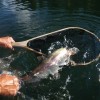
Trout Trump the Taliban
The rivers in northern Pakistan’s Khyber Pakhtunkhwa (KP) province were once thick with trout. Spanning hundreds of kilometres, these water bodies played host to the exotic fish, first introduced by the British in the early 1900s, which eventually became a staple in the diets and livelihoods of the province’s 20 million residents.
Corruption Muddies the Waters in Argentina
Two corruption scandals - one homegrown and the other originating in Spain – are again highlighting the connections in Argentina between irregular investments, the misuse of environmental remediation projects for private gain, and plans that contribute to the degradation of natural resources.
World Bank Unmoved on Auditor’s Criticism of Forest Policy
Officials at the World Bank are forcefully rejecting a new internal evaluation that is highly critical of the institution’s decade-long forest policy, expressing their “strong disagreement” with some assertions in the report.
The Open and Rocky Road Post-2015
What values does a Yemeni journalist who fuelled the Arab Spring hold in common with a former principal of the U.S. National Security Council? And how in turn will they see eye to eye with a Jordanian queen, or the president of Indonesia?
OP-ED: Weird, and Getting Weirder
Weird is the only way to describe January temperatures whipsawing between record warm and arctic cold over a span of a few days. Experts say that is what climate change looks like: weird, record-shattering weather.
Better than Organic
When my children were born it was a clear commitment: all clothing would have to carry the “organic” seal. It was an expression of a lifestyle, a commitment to the Earth.
Investments Go Green in Peru
Peru’s economic growth is largely dependent on its wealth of natural resources, which provide over 50 percent of the country’s gross domestic product (GDP) and 80 percent of exports. In view of this fact, the government is developing a project for the valuation and protection of this natural bounty.OP-ED: Organic Farming Movement Marginal but Growing Worldwide
Despite the growing worldwide demand for organic food, clothing and other products, the area of land certified as organic still makes up just 0.9 percent of global agricultural land, with 37 million hectares being farmed organically.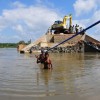
Experts Fear Collapse of Global Civilisation
Experts on the health of our planet are terrified of the future. They can clearly see the coming collapse of global civilisation from an array of interconnected environmental problems.
China’s Rising Soybean Consumption Reshaping Western Agriculture
Global demand for soybeans has soared in recent decades, with China leading the race. Nearly 60 percent of all soybeans entering international trade today go to China, making it far and away the world's largest importer.
Pacific Island Wakes Up to Threat of Oil Spills
Coral reefs and marine ecosystems in the Milne Bay Province of the Pacific Island nation of Papua New Guinea are at serious risk of long-term environmental damage. The reason: an oil spill from a ship that ran aground on a reef on Kwaiawata Island on Christmas Eve, and authorities’ long delay in mobilising an appropriate response to the accident.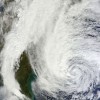
OP-ED: Climate Inaction Is a Clear Failure of Democracy
Around the world, 2012 was the year of extreme weather, when we unequivocally learned that the fossil fuel energy that powers our societies is destroying them. Accepting this reality is the biggest challenge of the brand new year.« Previous Page — Next Page »





The world's diverse flora and fauna are facing urgent threats due to pollution, climate change, commercialization of nature and other forms of harmful human intervention. The widespread loss of biodiversity is worrying not simply because of the disappearance of exotic species which deserve saving, but because tampering with nature's equilibrium means that the loss of one form of life is a threat to another. IPS taps into its own diverse network of correspondents around the world to report on continuing and emerging dangers to nature's riches - and the struggle to protect them.

The Week with IPS

NEXT STOP - SDGs
Tracking global progress towards a sustainable world
Tracking global progress towards a sustainable world
