
Sunday, November 8, 2026



News and Views from the Global South
Biodiversity

Guyana Hits Paydirt on Low Carbon Development Path
Imagine Guyana and Dominica without forests and rivers, or Antigua, Barbados and St. Lucia without beaches.
Bioshields Best Defence Against Disasters
In commemoration of the eighth anniversary of the Asian tsunami, Wednesday was a day of prayer and mourning across the Andaman Nicobar Islands – located at the juncture of the Bay of Bengal and the Andaman Sea – and south India’s coastal Tamil Nadu state, two areas that suffered thousands of casualties on that fateful day.
Forests, Fruit and Fish Could Save Coastal Communities
Scientists predict that in the coming years, Bangladesh will be battered by even more climate disasters than it has already endured. Global warming has caused devastating damage in this lower Himalayan delta country of 150 million people, where seawater intrusion, increasingly intense cyclones, dried up rivers and extreme weather events have become the norm.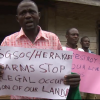
Q&A: Fighting to Save Africa’s Richest Rainforest
Protests against a controversial palm oil plantation in the Korup National Park, Africa’s oldest and richest rainforest in terms of floral and faunal diversity, in Mundemba, southwest Cameroon will continue despite the arrests and intimidation of local environmental campaigners.

Endangered Bird Falls Prey to Royal Hunting Games
Every year, between November and January, the Indus Flyway bears witness to a migration of an endangered bird species – the houbara bustard – from Central Asia to the deserts of Pakistan.
Environmental Uncertainties Halt Deep Sea Mining
The world’s first deep sea mineral (DSM) mining venture in the Bismarck Sea off the northern coast of Papua New Guinea in the southwest Pacific has come to a halt after two years of development.
Deforestation Wreaks Havoc in Guatemala’s Caribbean Region
"Many tourists come to this area for bird watching, but the terrible deforestation is leading to the disappearance of so much of our flora and fauna. The cleared land is used for cattle ranching,” said Haroldo Figueroa, who works as a guide in nature reserves along Guatemala’s Caribbean coast.
Argentina Making Strides in Protection of Ocean Areas
Argentina is creating protected marine areas at a rate of knots. In the last 10 years, the preservation of saltwater areas has expanded, and for the first time an Atlantic ocean zone is being added to the list.
Critics Brand Climate Talks Another Lost Opportunity
Rich countries came to the U.N. climate talks in Doha intent on delaying needed action on climate change for another three years and a still to be hammered out new global treaty.
An Empty Table at Doha Climate Talks
United Nations climate talks are on the edge of collapse Thursday, according to a coalition of civil society and representatives from half of the world's countries.
A Storm Brews in Doha
While the Philippines copes with the aftermath of powerful super-typhoon Bopha, which killed more than 300 people this week, tempers flared at the U.N. climate summit here.
Trawlers Glide Past International Fishing Laws
Somali pirates on the southwest Indian Ocean have become one of the biggest security risks for commercial maritime shipping over the last several years. But even as piracy gave rise to international furore, an unlikely benefactor emerged: bluefin tuna stocks in the Indian Ocean.
OP-ED: Loss and Damage from Climate Change Must Not Become the “New Normal”
As United Nations climate talks get underway this week in Doha, Qatar, they show a subtle, unsettling shift in the global climate change debate.
/UPDATE*/ Africa – Calling for a GMO-Free Continent
South African smallholder farmer Motlasi Musi is not happy with the African Centre for Biosafety’s call for his country and Africa to ban the cultivation, import and export of all genetically modified maize. "I eat genetically modified maize, which I have been growing on my farm for more than seven years, and I am still alive," he declared.
The Planet’s Thermostat Moves to Doha
The upcoming United Nations climate talks may have a renewed sense of urgency with a new World Bank report warning that the planet is on a dangerous path to four degrees Celsius of global warming by 2100.
Deep Emissions Cuts Urged at Climate Summit
Extreme weather disasters, including floods and droughts intensified by climate change, have totalled many billions of dollars in damages this year.Planet on Path to Four C Warming, World Bank Warns
Coal, oil and gas companies and their backers in the financial and investment industry must stop putting billions of dollars into finding and extracting new sources of fossil fuels. If they don't shift their investments, temperatures will soar four to 10 degrees C higher, devastating many parts of the world, the World Bank said Monday.
Billions in Subsidies Prop up Unsustainable Overfishing
Calls are mounting for the world's big fishing powers to stop subsidising international fleets that use destructive methods like bottom trawling in foreign coastal waters, drastically reducing the catch of local artisanal fishers who use nets and fishing lines.
For Champions of Degrowth, Less Is Much More
The concept of degrowth is not a very comfortable one in overdeveloped countries such as the United States.
Conservationists Call for Ugandans to Stop Eating Chimps
Conservationists struggling to protect the remaining population of Ugandan chimpanzees have raised concerns that people around wildlife reserves in the west of the country have taken to eating the primates.
Mexico Could Say Goodbye to Imported Maize
It has been many years since Mexico, the birthplace of maize, has been self-sufficient in this staple food that plays a central role in its cuisine and culture. But new studies indicate that it could produce enough maize to meet its needs within 10 to 15 years.« Previous Page — Next Page »





The world's diverse flora and fauna are facing urgent threats due to pollution, climate change, commercialization of nature and other forms of harmful human intervention. The widespread loss of biodiversity is worrying not simply because of the disappearance of exotic species which deserve saving, but because tampering with nature's equilibrium means that the loss of one form of life is a threat to another. IPS taps into its own diverse network of correspondents around the world to report on continuing and emerging dangers to nature's riches - and the struggle to protect them.

The Week with IPS

Tracking global progress towards a sustainable world
