
Tuesday, November 17, 2026



News and Views from the Global South
Environment
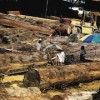
WORLD: Tropical Forest Summit Opens
Heads of state from the Amazon, Congo and Borneo-Mekong basins are meeting in the Congolese capital, Brazzaville: leaders hope to reach an accord on sound management of valuable rainforest ecoystems, but civil society actors believe the problems faced by local populations may be ignored.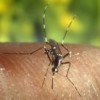
EUROPE: Space Agency Maps Mosquitoes to Combat Tropical Diseases
In times of war, the accurate mapping of enemy positions can be the key to victory. In the war on mosquito-borne diseases such as malaria, mapping the distribution and habitat of mosquitoes can play a crucial role in combating epidemics at the source.
SOUTH AFRICA: Sound Policy Key to Renewable Energy
A radical rethink of current energy policy can cut South Africa's greenhouse gas emissions by 80 percent in 2050 compared to 1990 levels. More than that - after an initial spike in investment - South Africans four decades down the line would pay 23 billion dollars per year less for their electricity compared to business as usual.EUROPE: New Move to Protect Virgin Forests
Seven countries from the Carpathian Region in Eastern Europe have signed a protocol to prevent one of Europe’s last natural and virgin forests from disappearing at the hands of illegal logging.Germany Pledges Nuclear Shutdown By 2022
Germany has decided to shut all its nuclear reactors by 2022 in a drastic policy reversal in the wake of the nuclear disaster at Japan's Fukushima plant.CENTRAL AMERICA: Caught in the Rain Without an Umbrella
"A year ago the river burst its banks; my house was ruined, I lost everything and I'm still waiting for help," Candelaria Peneleu told IPS from her modest home in Palín in the southern province of Escuintla, an area of Guatemala that was devastated last year by tropical storm Agatha.
PHILIPPINES: Biodiversity Threatened Before It’s Discovered
"Every time we go in the water, someone discovers something that's never been seen before," says Dr. Terrence Gosliner, leader of the ongoing 2011 Philippine Biodiversity Expedition.
HidroAysén Dam Project is Dividing Communities
The effects of the HidroAysén dam project are already being felt in heightened tensions and severed social ties in Chilean Patagonia communities.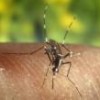
Space Agency Maps Mosquitoes to Combat Tropical Diseases
The European Space Agency will provide epidemiologists with maps of the habitat of mosquitoes that transmit tropical diseases.Ecobreves – LATIN AMERICA: Concerted Efforts Needed to Protect Whales
Close to 20 Latin American organizations devoted to the conservation of whales are urging Venezuela to resume full membership in the International Whaling Commission (IWC).Ecobreves – MEXICO: Japanese Turtles to be Tested for Traces of Radiation
Mexican scientists fear that loggerhead sea turtles (Caretta caretta) crossing the Pacific Ocean between the coasts of Asia and the Americas could be suffering the effects of the Japanese nuclear disaster.Ecobreves – BRAZIL: Plant Fibers Make Concrete More Resistant
Concrete blocks can be made more resistant with the addition of fibers from the sisal plant (Agave sisalana), commonly used to make rope and twine, according to research results from the São Carlos School of Engineering at the University of São Paulo.Iceland Pushes Energetically Ahead
Iceland’s national power company, Landsvirkjun, has announced that it intends to double its generating capacity over the next 15 years, with a blend consisting mostly of hydroelectric and geothermal plants but potentially using wind and tidal energy as well.LIBYA: Water Emerges as a Hidden Weapon
Libya’s enormous aquatic reserves could potentially become a new weapon of choice if government forces opt to starve coastal cities that heavily rely on free flowing freshwater.New Iran Sanctions Could Push Petrol Prices Even Higher
U.S. lawmakers have introduced a new package of unilateral sanctions targeting Iran that would challenge U.S. President Obama's discretionary authority to enforce such sanctions and would impose comprehensive restrictions on foreign entities that ship, refine or provide any other related services to Iran's energy sector.
DOMINICAN REPUBLIC: Macadamia Trees Offer Lifeline to Small Farmers
A project to help reforest after the devastation of Hurricane David 32 years ago has grown into a plan to lift small coffee farmers out of poverty, all by the introduction of a gourmet ice cream.
Key Fisheries Treaty to Lapse in Rebuke to U.S.
For the past quarter century, the United States' relations with Pacific island nations were framed by the South Pacific Tuna Treaty, which combines foreign aid, subsidies to the U.S. fleet of purse-seine fishing vessels and their largely unfettered access to the islands' waters, which contain the world's last major stocks of tuna.
World Bank Calibrating its Measurement of Sustainability
The World Bank is working to update the mechanisms it uses to measure the effects of the financing it provides, particularly in environmental and social terms, now that it is gearing up to administer the new Green Climate Fund.Europe Sowing the Seeds of Hunger
Europe is facing a hungry future unless it changes agricultural policies and makes farmers the main participants in agriculture research, a new report has found. And there is little hope of meeting Europe's recently announced goal of reducing the loss of biodiversity in ten years without making those changes.JAPAN: Woodpecker Finds Allies Against U.S. Helicopters
At the foot of the pristine Yanbaru forest at the northern tip of Okinawa, Japan, a small cluster of tents gives shelter to a group of protestors guarding the area against the planned construction of six new military helipads for the U.S. forces on the island.
A Dark Day for Brazil’s Amazon Jungle
The same day that the lower house of the Brazilian Congress approved a reform of the forestry code that would make it easier to clear land in the Amazon jungle for agriculture, a husband and wife team of activists who spent years fighting illegal deforestation in the rainforest were murdered.« Previous Page — Next Page »


Through our global network of local writers, we are continuing our award-winning coverage of global and local environmental challenges, with a focus on the people for whom the ecosphere matters in a direct way: rural dwellers who have little means to protect themselves against adverse conditions; communities that need to switch to sustainable development in order to survive; poor women and children, who are the most vulnerable in natural disasters. Sponsored by the United Nations Environment Program (UNEP), the United Nations Development Program (UNDP) and The World Bank (WB), IPS also maintains the award-winning Tierramérica, a specialised information service on environment and development.

The Week with IPS

Tracking global progress towards a sustainable world


