
Tuesday, October 13, 2026



News and Views from the Global South
Environment

East African Countries Seek Cross-border Cooperation to Combat Wildlife Trafficking
For many years, East African countries were considered wildlife trafficking hotspots. Now conservation organisations have started to mobilise all stakeholders to combat the illegal trade that targets animals – some to the edge of extinction.
Amplifying the SDGs Requires Fresh Storytelling Tactics
With the latest United Nations Sustainable Development Goals (SDGs) Report revealing that much progress toward the SDGs has been reversed, the UN has focused on how to amplify the goals and hold member states accountable for tackling them amid current crises.
Smallholder Farmers in Uganda Recruit Black Soldier Fly for Green Fertiliser
The conflict in Ukraine has led to an increase in fertiliser prices in Uganda and neighbouring Kenya. Amidst the shortages, some farmers are shifting to a more sustainable way of enriching their soils using frass from the Black Soldier Fly.
Clean Energies Seek to Overcome Obstacles in Argentina
The multitude of solar panels stands out along a dirt road in an unpopulated area. Although located just an hour's drive from Buenos Aires, the new solar park in the municipality of Escobar is in a place of silence and solitude, symbolic of the difficulties faced by renewable energies in making inroads in Argentina.
Webinar: Lessons in Development from the Global South: 50 Years of BRAC

This virtual event was hosted by BRAC, the Permanent Mission of Bangladesh to the UN, and the Permanent Mission of Rwanda to the UN on the sidelines of the 2022 UN High Level Political Forum.

Achieving the SDGs in Extraordinary Times
The start of the “Decade of Action” to achieve the United Nations’ Sustainable Development Goals (SDGs) has also marked the start of an unprecedented period of overlapping crises.
“Made in Chile” Electric Buses, Another Stride Towards Electromobility
The manufacture in Chile of an electric bus christened Queltehue, a wading bird native to the country, is another step towards electromobility and in the fight against pollution that triggers frequent environmental crises and smog emergencies in Santiago and other cities.
Soaring Temperatures Devastate Kashmir Farmers
The soaring temperatures this year in India’s northern state of Kashmir are proving calamitous for the region’s farming community. The place, otherwise known for its emerald streams, lush green hills, and ice sheets, is reeling under heat attributed to climate change this year. The heat wave of such intensity has left most of the water canals dead and dry, plunging the already conflict-torn region into a frightening agrarian crisis.
Education Cannot Wait Interviews USAID Deputy Administrator Isobel Coleman
Isobel Coleman was sworn in as Deputy Administrator for Policy and Programming at the United States Agency for International Development (USAID) in November 2021.

The World is Burning. We Need a Renewables Revolution
Nero was famously accused of fiddling while Rome burned. Today, some leaders are doing worse. They are throwing fuel on the fire. Literally.
Aid for Power in New Cold War
Long a means for powerful nations to influence developing countries, development finance has gained renewed significance in the new Cold War. Unlike during the US-Soviet Cold War, the rivalry now is between mixed market capitalist systems.
Decisions Based on Narrow Set of Market Values of Nature Underpin the Global Biodiversity Crisis
The way nature is valued in political and economic decisions is both a key driver of the global biodiversity crisis and a vital opportunity to address it, according to a four-year methodological assessment by 82 top scientists and experts from every region of the world.
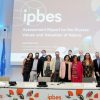
Narrow Valuation of Nature is Widening Biodiversity Loss
Nature has diverse values for different people, but it is poorly evaluated, and this is driving the global biodiversity crisis, top scientists say in a new report.
Wild Species Central to Human Survival, New IPBES Report Offers Options for their Sustainable Use
Fifty thousand wild species meet the needs of billions of people worldwide, providing food, cosmetics, shelter, clothing, medicine and inspiration. But now, a million species of plants and animals face extinction with far-reaching consequences, including endangering economies, food security and livelihoods.
Intersecting Crises are Impeding the UN’s Sustainable Development Goals, Threatening Peace & Security
This week marks the mid-way point to the 2030 Agenda on Sustainable Development and with it the release of the UN’s Sustainable Development Goals Report 2022.
UN Predicts 68 Percent of World’s Population will be Living in Urban Areas by 2050
When we think of urbanization we often end up referring to the increasing number of megalopolises that are sprawling around the world. Yet less thoughts are given on the fact that the future patterns of urbanization will be centered on secondary cities or semi urban spaces, now becoming extensions of these gigantic cities.
Tap Into Indigenous Knowledge To Preserve Our Forests
A few years ago, I found myself in the Baka indigenous sacred forest in Assok, in Cameroon in the course of my work in supporting them to preserve their forest against land grabbers. We were building a forest hut using only leaves and the knowledge of our indigenous partners.
Recovering Edible Food from Waste Provides Environmental and Social Solutions in Argentina
For 30 years, Tomasa Chávez visited the Central Market of Buenos Aires and rummaged through the tons of fruits and vegetables that the stallholders discarded, in search of food. Today she continues to do so, but there is a difference: since 2021 she has been one of the workers hired to recover food as part of a formal program launched by the Central Market.
The Rape of the Indian Ocean
The Story of the Yellow Fin Tuna
Over the last past several decades marine fish stocks worldwide have been under intense threat. There have been many high sounding declarations and agreements to reduce catch effort, to use more environmentally friendly fishing gear, to prevent illegal fishing and to impose “closed seasons” to allow stocks to recover.

Nature-Positive Ventures Crucial for Africa’s future, say experts at Africa Green Economy Conference
Africa’s unique natural capital assets were the center of conversation at the 2022 Africa Green Economy Conference. Held in a hybrid format from June 27 to 30, participants gathered to discuss the value of nature in Africa’s economy and call for more nature-positive ventures in development.
Smelter Finally Closes Due to Extreme Pollution in Chilean Bay
A health crisis that in 20 days left 500 children poisoned in the adjacent municipalities of Quintero and Puchuncaví triggered the decision to close the Ventanas Smelter, in a first concrete step towards putting an end to a so-called "sacrifice zone" in Chile.« Previous Page — Next Page »





Through our global network of local writers, we are continuing our award-winning coverage of global and local environmental challenges, with a focus on the people for whom the ecosphere matters in a direct way: rural dwellers who have little means to protect themselves against adverse conditions; communities that need to switch to sustainable development in order to survive; poor women and children, who are the most vulnerable in natural disasters. Sponsored by the United Nations Environment Program (UNEP), the United Nations Development Program (UNDP) and The World Bank (WB), IPS also maintains the award-winning Tierramérica, a specialised information service on environment and development.

The Week with IPS

Tracking global progress towards a sustainable world


