Languages
Wednesday, November 11, 2026



News and Views from the Global South
Featured

Coronavirus Claims its First UN Casualty
The deadly coronavirus COVID-19, which is spreading across China, Japan, South Korea, Iran, Italy-- along with new cases in Asia, Western Europe and the Middle East-- has claimed one of its first casualties at the United Nations.
Mexico’s Battle with Obesity
Paradoxically, when the number of people suffering from undernourishment or hunger has risen in the world, so, too, have those afflicted by overweight and obesity. Latin America’s second largest economy, Mexico, for instance, is currently battling one of the world’s largest epidemics of obesity and its success is bound to be emulated by countries of the South. The numbers involved are staggering. The director-general of the National Institute of Public Health, Dr Juan Rivera told the Financial Times that “seventy five percent of adults and 35 percent of children and adolescents are overweight or obese… The State has a duty to protect public health.”
Q&A: Misinformation in the Time of an Uncontainable Virus
Just a month since the World Health Organization declared the Coronavirus a public health emergency, it is now taking steps to contain misinformation being spread about the disease. Globally, there have been more than 82,000 cases of Coronavirus, which has claimed 2,800 lives -- the majority being in China, where the disease has been traced to.
The Italian Pyramid: Scientific Observatory at the Top of the World
 Hello! Are you Italian?
No, I’m from Nepal.
Oops.
Kaji Bista is the staff manager of the Ev-K2-CNR’s innovative Pyramid International Laboratory/Observatory (known as the Italian Pyramid) at 5,050 m a.s.l. located in Lobouche.

Climate-Smart Agriculture means More Time for Eswatini Women Farmers
Aside from the seven hours Mantfombi Msibi (63) would spend daily during the Eswatini farming season planting, applying herbicides and weeding her 1.2-hectare maize field, she would also spend E1 750 ($125) on tractor services. It was a huge cost of both time and money. But this season, Msibi will be benefiting from climate-smart farming technology that has opened up a new world of farming to her, saving her time in the process.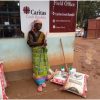
Biofortified Crop Project Reaches Refugees in Zambia
The Mutwales farm a small plot of land in the camp, growing primarily cassava and maize for food. They are also one of the 105 refugee farming families participating in an initiative during the 2019/2020 growing season to help them cultivate nutritious, vitamin A-biofortified orange maize, which was developed by the International Maize and Wheat Improvement Center (CIMMYT) in partnership with HarvestPlus.
Belize Passes Milestone Law to Safeguard Fisheries
 The Environmental Defence Fund and its partners in conservation are this month celebrating a major milestone in Belize’s efforts to safeguard its fisheries.

Tanzania Investigative Journalist Pays Heavily for Freedom
After six months in prison, Tanzanian investigative journalist Erick Kabendera has finally been released at a cost of $118,000.
Lucky Trump Looking Smug
Meeting the President of the Republic of Korea in September 2019, President Donald J Trump bragged that the “US economy is the envy of the world”. Trump reiterated such claims in his State of the Union address in early February, hailing his own policies with typical humility.
UN Chief Should Lead by Example on Human Rights
United Nations Secretary-General Antonio Guterres has long needed to overhaul his approach to human rights. Hopefully his call to action announced in Geneva yesterday is the start of something new.
Preserving World’s Biodiversity: Negotiations Convene at FAO Headquarters
“The world out there is watching and waiting for results,” Elizabeth Maruma Mrema warns while talking to IPS regarding the preservation of biodiversity of our planet.
India’s Orange Farmers Search for Sustainable Agriculture
Hillol Datta, 26, travelled for two days from Kolkata to Jampui Hills – a picturesque hill station in the north eastern province of India – to see its fruit-laden orange orchards. However, after driving for several hours, all the young traveller saw were bald patches along the hill slopes and scattered rows of areca (nut) palm trees.
No Country On Track to Ensuring a Better Future for its Children
There is no country that is on the right path to ensure the safety, health and proper environment for their children, an explosive report has claimed.
SDGs Corporate Tracker to Monitor Progress of UN’s Development Agenda
This year marks just ten years ahead of the deadline for completing the UN Sustainable Development Goals (SDGs) by 2030. These universally supported targets were always ambitious in their scope – yet what is clearer now than ever before is that quicker progress is crucial in the decade to come.
Women Bear the Burden of India’s Water Crisis
Across cities and villages in India, an impending water crisis is at our doorsteps. India will face a water shortfall of almost 50 percent by 2030, if our water use continues its current pattern. Last year, Chennai and Bangalore showed us what water scarcity looks like; the statistics are no longer just numbers on paper, they have become our reality.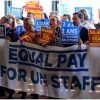
UN Accused of “Hypocrisy” Launching Equal Pay Day While Condoning Wage Discrimination
The United Nations, which has long preached the irrefutable concept of income equality to the outside world, is now accused of condoning wage discrimination in its own backyard.
A Post-2020 Global Biodiversity Framework Aims at Reinforcing Efforts to Save World’s Ecosystem
The UN’s highly-touted socio-economic agenda, which lays out an ambitious global plan for “people, planet and prosperity”, has been dominated by “goals, targets and deadlines.”
Zimbabwe’s Thin Line between Child Smuggling and Child Trafficking
Elton Ndumiso*, a bus-conductor who works the route from Zimbabwe’s capital, Harare, to neighbouring South Africa, sees it all the time: Zimbabwean women travelling with three or four children, who are clearly not their own kids, and taking them across the border.It’s a crime that most bus drivers or conductors either turn a blind eye to, or become accomplices in by assisting the women.

Fiscal Policies For Women’s Economic Empowerment
Making sure that opportunities to enter the workforce are fair and rewarding for women benefits everyone. Yet, the average female workforce participation rate across countries is still 20 percentage points lower than the male rate, largely because gender gaps in wages and access to opportunities, such as education, stubbornly persist.
Popular Pakistani Singer Pushes for Corporal Punishment to be Made a Crime
"He struck his head, his side, his stomach and went on hitting him. When Hunain said he could not breathe, the teacher slammed him against the wall, saying, 'Being dramatic are we?’" This is the eye witness account from a classmate of 17-year-old Pakistani student, Hunain Bilal, who was allegedly beaten to death by his teacher after he failed to memorise his lessons.
U.S. President’s Global Gag Rule is Having Negative Impact on the Health of Malawians: Report
A report released last week has detailed the complex ways in which President Donald Trump’s ‘Global Gag Rule’ (GGR), that blocks U.S. global health assistance to foreign non-governmental facilities providing abortion or abortion-related services, is affecting the population in Malawi, a country already hard hit with numerous climate change disasters.« Previous Page — Next Page »





The Week with IPS

NEXT STOP - SDGs
Tracking global progress towards a sustainable world
Tracking global progress towards a sustainable world
