Languages
Sunday, November 15, 2026



News and Views from the Global South
Global Geopolitics

Renovating an Embattled City
Every day, Anas Maraka sees his family’s home, but can’t go inside. “It’s hardest for my grandfather,” said Maraka, referring to the house overlooking Shuhada Street, once the central marketplace in Hebron’s old city.
U.N.’s Last Stand on Arms Trade Treaty
Amidst a politically divisive debate on gun control in the United States following a rash of mass shootings, the United Nations will meet in March to finalise an Arms Trade Treaty (ATT) after nearly two decades of negotiations.
The ‘Flattening’ of Gaza
On Nov. 17, four days into Israel’s eight-day assault on the Gaza Strip, deputy Israeli Prime Minister Eli Yishai publicly called for the Israeli army to “blow Gaza back to the Middle Ages, destroying all the infrastructure including roads and water”.
Bedouin Seek Democracy in Israel
As campaign posters pop up around Israel ahead of the country’s upcoming parliamentary elections, Bedouin citizens of the state are still reeling after being denied the chance to elect their own local council representatives.
Kerry Chosen for U.S. Secretary of State, Hagel Still in Limbo
U.S. President Barack Obama nominated Massachusetts Senator John Kerry on Friday to succeed Hillary Clinton as secretary of state, calling him "the perfect choice to guide American diplomacy in the years ahead".
The Politics of Polio in Pakistan
The murder of nine health workers vaccinating children against polio in Pakistan’s northwest cities of Peshawar and Charsadda in the Khyber Pakhtunkhwa (KP) province, and its southern port city Karachi, have elicited shock and outrage.
Marching Toward a Third Uprising?
While the Hamas-ruled Gaza Strip hasn’t been so quiet for the past two decades, it’s now the turn of the occupied West Bank to show signs of eruption.South Korea’s Park Wins Presidential Election
The daughter of South Korea's former military ruler has won the country's presidential election, promising in a speech to her supporters to heal a "divided society".
Neo-Cons, Israel Lobby Mobilise to Pre-empt Obama Pentagon Favourite
Neo-conservatives and leaders of the powerful Israel lobby are mobilising their forces in what looks like an all-out campaign to pre-empt the nomination by President Barack Obama of an outspoken former Republican senator and decorated Vietnam War hero to replace Leon Panetta as secretary of defence.
Ahead of Mali Resolution, Worries Grow over Military Intervention
Even as U.S. and French officials suggest that a United Nations resolution on military intervention in Mali could come by the end of the week, concerns are rising that such action could do far more harm than good.
The Frightening Scenario of the Nuclear War
Soon after President Barack Obama was elected in 2008, hundreds of leaders of the global medical community wrote an open letter to him, and to newly elected Russian President Dmitry Medvedev, urging them to make the abolition of nuclear weapons their highest priority:
Detained at the Eastern Border – Part 2
Twenty-two years ago today, on Dec. 18, 1990, the United Nations General Assembly adopted the International Convention on the Protection of the Rights of All Migrant Workers and Members of Their Families.
China is Opening a Confrontation on the Sea
The victory of the Liberal Democratic Party (LDP) in the recent Japanese elections, with Shinzo Abe coming back as prime minister after five years, will probably mean an escalation of tensions with China. Both countries are embarking on a fresh burst of nationalism, but for different reasons.
Rate of U.S., Russian Nuclear Disarmament “Slowing”
Although the United States and Russia have massively reduced their collective number of nuclear weapons since the heyday of the Cold War, the rate of that reduction is slowing, the Federation of American Scientists (FAS) warned Monday.
Remittances Soothe the Scourge of Militancy
Fifty-nine-year-old Sherdil Shah, a resident of South Waziristan – a hotbed of militancy in northern Pakistan’s Federally Administered Tribal Areas (FATA) – used to run a modest grain shop that fetched enough money to keep his family of 10 well-fed and looked after.
Kashmiri Separatists Scrabble for Political Relevance
Amid growing scepticism among Kashmiri people that the separatist leadership has lost relevance in the region’s fast-changing political landscape, the All Parties Hurriyat (Freedom) Conference – an alliance of separatist political parties and religious and social groups - is making a Herculean effort to reclaim some relevance in this disputed region.U.S. Pivot Heightens Asian Disputes
With newly re-elected President Barack Obama having chosen Southeast Asia as his first foreign destination, where he also attended the much-anticipated pan-Pacific East Asia Summit, the U.S. has underscored its commitment to its so-called strategic ‘pivot’ to the Asia-Pacific region.
OP-ED: A Universal Climate Change Agreement Is Necessary and Possible
The results of the United Nations climate change conference that closed in Doha, Qatar on Dec. 8 show once again that the international negotiations are moving steadily in the right direction, but alarmingly slow.
Washington Struggles for Relevance as Assad’s Fall Approaches
This week, the United States officially recognised the newly-formed National Coalition for Opposition and Revolutionary Forces as the legitimate representatives of the Syrian people, culminating a two-year process of legitimising the Syrian opposition with the U.S. government.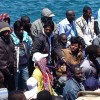
Despite Crises, Migration Still a Political Hot Potato
The United Nations will commemorate its annual International Migrants Day next week amidst reports of a rising tide of anti-migrant sentiments – primarily in Europe.
Brazil’s Economic Model Offers Ray of Hope
As governments struggle to find ways out of the persistent global financial crisis, Brazil’s development model offers an alternative path to recovery and growth, according to some economists and politicians.« Previous Page — Next Page »


Is the world dominated by three great empires -- the U.S.A, China and the European Union? How much power do the great behemoths of the south -- India, Brazil, and South Africa -- wield? And where does Russia fit in that equation? Are we in the middle of a new Cold War? What are the implications of the armed conflict with Georgia? What about the new axis: Venezuela-Russia? And what role does Turkey play? What about issues like Climate Change and other global forces like the food crisis and the high energy prices? How is all this reshaping the world's forces? IPS looks for some answers.

The Week with IPS

NEXT STOP - SDGs
Tracking global progress towards a sustainable world
Tracking global progress towards a sustainable world
