
Thursday, November 19, 2026



News and Views from the Global South
IPS UN: Inside the Glasshouse

Climate Negotiators “Sleepwalking” in Bonn
The 410,000 people who took to the streets for climate action in New York City during the U.N. Climate Summit would have been outraged by the 90-minute delay and same-old political posturing at the first day of a crucial round of climate treaty negotiations in Bonn at the World Congress Center.
The Nagoya Protocol: A Treaty Waiting to Happen
For over 20 years, Mote Bahadur Pun of Nepal’s western Myagdi district has been growing ‘Paris polyphylla’ - a Himalayan herb used to cure pain, burns and fevers.
OPINION: The Politics of Biodiversity Loss
To mainstream biodiversity concerns into development planning, we must offer a compelling rationale and demonstrate biodiversity’s relevance to wealth generation, job creation and general human wellbeing. Only a persuasive “why” resonating throughout society will successfully get us to urgently needed negotiations of who, what, where, when and how to halt disastrous biodiversity loss.
Ebola Outbreak Threatens Food Crisis in West Africa
The widespread outbreak of Ebola in West Africa, which has resulted in over 4,500 deaths so far, is also threatening to trigger a food crisis in the three countries already plagued by poverty and hunger.
Panama’s Indigenous People Want to Harness the Riches of Their Forests
For indigenous people in Panama, the rainforest where they live is not only their habitat but also their spiritual home, and their link to nature and their ancestors. The forest holds part of their essence and their identity.
We Must Think of “Security” in New Ways
Recent events in the Arab world and elsewhere have underscored the point that traditional notions of security being dependent solely on military and related apparatus are outmoded.
Protecting Biodiversity in Costa Rica’s Thermal Convection Dome in the Pacific
The vast habitat known as the Costa Rican Thermal Convection Dome in the eastern Pacific Ocean will finally become a protected zone, over 50 years after it was first identified as one of the planet’s most biodiversity-rich marine areas.
OPINION: Innovation Needed to Help Family Farms Thrive
Family farms have been contributing to food security and nutrition for centuries, if not millennia. But with changing demand for food as well as increasingly scarce natural resources and growing demographic pressures, family farms will need to innovate rapidly to thrive.
OPINION: Iraq’s Minorities Battling for Survival
Through all of Iraqi President Saddam Hussein’s campaigns of ‘Arabization’, they survived. The diverse Iraqi communities inhabiting the Nineveh plains – Yezidis, Turkmen, Assyrians and Shabak, as well as Kurds – held on to their unique identities and most of their historic lands.History of Key Document in IAEA Probe Suggests Israeli Forgery
Western diplomats have reportedly faulted Iran in recent weeks for failing to provide the International Atomic Energy Agency with information on experiments on high explosives intended to produce a nuclear weapon, according to an intelligence document the IAEA is investigating.
Family Farmers – Forward to the Future
"Who is more concerned than the rural family with regards to preservation of natural resources for future generations?"
OPINION: The Survivors
Oct. 18 is the EU’s Anti-Trafficking Day, as well as the United Kingdom’s Anti-Slavery Day. These events offer a good opportunity to talk about human trafficking within Europe’s borders, but we should not forget that there are victims and survivors all over the world.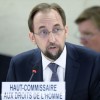
Cash-Strapped Human Rights Office at Breaking Point, Says New Chief
After six weeks in office, the new U.N. High Commissioner for Human Rights (UNHCHR) Zeid Ra'ad al-Hussein of Jordan launched a blistering attack on member states for insufficient funding, thereby forcing operations in his office to the breaking point "in a world that seems to be lurching from crisis to ever-more dangerous crisis."
Bamboo Could Be a Savior for Climate Change, Biodiversity
Bamboo Avenue is a two-and-a-half mile stretch of road in Jamaica’s St. Elizabeth parish. It is lined with giant bamboo plants which tower above the road and cross in the middle to form a shady tunnel. The avenue was established in the 17th century by the owners of the Holland Estate to provide shade for travelers and to protect the road from erosion.
Vanishing Species: Local Communities Count their Losses
The Mountain Chicken isn’t a fowl, as its name suggests, but a frog. Kimisha Thomas, hailing from the Caribbean island nation of Dominica, remembers a time when she could find these amphibians or ‘crapaud’ as locals call them “just in the backyard”.
Curbing Biodiversity Loss Needs Giant Leap Forward
When political leaders from climate-threatened Small Island Developing States (SIDS) addressed the U.N. General Assembly last month, there was one recurring theme: the urgent need to protect the high seas and preserve the world's marine biodiversity.
Facing Storms Without the Mangrove Wall
As the cyclonic storm Hudhud ripped through India’s eastern state of Andhra Pradesh, home to two million people, at a land speed of over 190 kilometres per hour on Sunday, it destroyed electricity and telephone infrastructure, damaged the airport, and laid waste to thousands of thatched houses, as well as rice fields, banana plantations and sugarcane crops throughout the state.
Family Farming – A Way of Life
It does not make the headlines, but 2014 is the International Year of Family Farming (IYFF) and family farming will be centre-stage at this year’s World Food Day on Oct. 16 at the Food and Agriculture Organisation of the United Nations (FAO).
Biodiversity, Climate Change Solutions Inextricably Linked
The remarkable biodiversity of the countries of the Caribbean, already under stress from human impacts like land use, pollution, invasive species, and over-harvesting of commercially valuable species, now faces an additional threat from climate change.
Corruption, Tax Evasion Fuel Inequality in Latin America
Corruption and tax evasion are flagrant violations of human rights in Latin America, where they contribute to inequality and injustice in the countries of the region, according to studies and experts consulted by IPS.
Cycle of Death, Destruction and Rebuilding Continues in Gaza
When the international pledging conference to rebuild a devastated Gaza ended in Cairo over the weekend - the third such conference in less than six years - the lingering question among donors was: is this the last of it or are there more assaults to come?« Previous Page — Next Page »


It was dubbed "The Glass House" by U.S. ambassador James Wadsworth in 1966. Half a century later, the United Nations has gradually expanded its role as agent of peace and protector of the world's vulnerable populations, while simultaneously facing internal pressures to become more inclusive, increase transparency and maintain legitimacy in the post-Cold War political and economic order. Highlighting the local impacts of global policies on economic development, environment, health and human rights, IPS's coverage goes beyond the edicts of the Security Council to illuminate the power struggles, successes and shortcomings of the 193-member institution as it grapples with crises like climate change, armed conflict, poverty and HIV/AIDS.

The Week with IPS
