Languages
Monday, November 9, 2026



News and Views from the Global South
Armed Conflicts

Contradictions Beset U.N. Response to Sexual Abuse by Peacekeepers
An internal United Nations expert report released Monday by the non-governmental organisation AIDS-Free World reveals serious contradictions in the U.N.’s reporting of sexual exploitation and abuse by U.N. peacekeepers.Women Often Forgotten In Cases Of Forced Disappearance
Governments must do more to address the impacts of forced disappearances of women, according to an international justice report released Monday.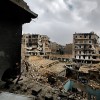
Middle East Conflicts Give Hefty Boost to Arms Merchants
The ongoing conflicts in Syria, Iraq, Libya and Yemen have helped spiral arms sales upwards to the Middle East, according to a study released Monday by the Stockholm International Peace Research Institute (SIPRI).
More Fighter Jets in Nicaragua, Second-Poorest Country in the Americas
Nicaragua, the second-poorest country in the Americas, is tapping into its depleted coffers to upgrade its ageing military fleet with costly new equipment from Russia – a move that has sparked controversy at home and concern among the country’s Central American neighbours.
Meet the 10 Women Who Will Stop at Nothing
On Apr. 6, 2013, Nadia Sharmeen, a crime reporter, was assigned to cover a rally organised by Hefazat-e-Islam, an association of fundamentalist Islamic groups in Bangladesh whose demands included a call to revoke the proposed National Women Development Policy.
Feeding a Warmer, Riskier World
Artificial meat. Indoor aquaculture. Vertical farms. Irrigation drones. Once the realm of science fiction, these things are now fact. Food production is going high tech – at least, in some places.
Humanitarian Aid Under Fire Calls for New Strategies
In the face of the growing number of crises taking place at the same time worldwide, humanitarian aid organisations – many of which have already reached their financial and logistic limits – are in desperate need of global coordination.
Eighty-Three Percent of Lights Have Gone Out in Syria
A single image can be more powerful, more descriptive and more potent than an entire essay – ‘ a picture says a thousand words,’ as the cliché goes.
What’s Driving the Merciless Asylum Seeker Policies in Australia?
As conflicts in the Middle East and elsewhere pushed the number of refugees to 13 million last year, the international community is struggling to shoulder the humanitarian responsibility of protecting those fleeing violence and persecution in their homelands.
First the Taliban, then the Army, now Hunger: The Woes of Pakistan’s Displaced
A doctor shakes his head in despair as he examines a 10-year-old child at the Jalozai refugee camp, about 35 km by road from Peshawar, capital of Pakistan’s northern Khyber Pakhtunkhwa (KP) province.
Opinion: A Year of Progress for “Children, Not Soldiers”
One year ago, representatives of the last eight governments of the world named by the U.N. secretary-general for the recruitment and use of children in their security forces gathered at the United Nations in New York to declare they were ready to take the steps necessary to make their security forces child-free.Congolese Citizens Forced to Pay for Police, Protection Services
Parts of the Democratic Republic of Congo are as dangerous and lawless as ever, with police and the state offering citizens little or no protection from armed groups.
Opinion: A Legally-Binding Treaty to Prohibit Nuclear Weapons
Five years after the adoption of the NPT (Nuclear Non-Proliferation Treaty) Action Plan in 2010, compliance with commitments related to nuclear disarmament lags far behind those related to non-proliferation or the peaceful uses of nuclear energy.
World Misses Its Potential by Excluding 50 Percent of Its People
The meeting is billed as one of the biggest single gatherings of women activists under one roof.Syrians “Have No Faith” in International Community to Solve Human Rights Crisis
Syrian citizens “have no faith” in the international community to solve the chaos and war raging across their country, according to a prominent human rights defender.An American Missionary Kidnapped in Nigeria as Neighbouring Countries Seethe
With kidnappings and violent attacks almost a daily occurrence in Nigeria, the disappearance of an American missionary appears to have stirred a new wave of outrage among the international community at the worsening conditions in the West African country, once considered a rising star and the largest economy on the continent.
Gaza Reconstruction, Hampered by Israeli Blockade, May Take 100 Years, Say Aid Agencies
Despite all the political hoopla surrounding an international pledging conference in Cairo last October to help rebuild Gaza, the reconstruction of the Israeli-devastated territory is apparently moving at the pace of paralytic snail.
Families See Hope for Justice in Palestinian Membership of ICC
"I have lost all meaning in life after the death of my child, I will never forgive anyone who caused the tearing apart of his little body. I appeal to all who can help and stand with us to achieve justice and punish those who killed my child."
U.N. Member States Accused of Cherry-Picking Human Rights
The United Nations High Commissioner for Human Rights (UNHCHR) Zeid Ra’ad Al Hussein has criticised member states for ‘cherry-picking’ human rights – advocating some and openly violating others – perhaps to suit their own national or political interests.
Syrian Conflict Has Underlying Links to Climate Change, Says Study
Was the four-year-old military conflict in Syria, which has claimed the lives of over 200,000 people, mostly civilians, triggered at least in part by climate change?
Environmental Damage to Gaza Exacerbating Food Insecurity
Extensive damage to Gaza’s environment as a result of the Israeli blockade and its devastating military campaign against the coastal territory during last year’s war from July to August, is negatively affecting the health of Gazans, especially their food security.« Previous Page — Next Page »





Armed conflicts are a sad constant on daily front pages worldwide. Wars, civil wars, revolts, coups, genocides, ethnic and political violence, and global terrorism capture our attention for the geopolitical landslides, human suffering, food crises and streams of migration that follow in their wake. As in times of natural disaster, man-made crises claim frequent casualties among the poor, women and children. IPS examines emerging and ongoing armed conflicts around the world with an eye on the underlying social and political dynamics, and special focus on the lived experiences of those most affected by armed conflict.

The Week with IPS

NEXT STOP - SDGs
Tracking global progress towards a sustainable world
Tracking global progress towards a sustainable world
