Languages
Thursday, November 26, 2026



News and Views from the Global South
Civil Society
World Bank Reports Major Global Support for Carbon Pricing
Seventy-three countries and 22 lower-level governments offered formal support Monday for a global price on carbon dioxide emissions, including China, Russia and the European Union.
U.N. High-Level Summits Ignore World’s Political Crises
As the 69th session of the General Assembly took off with the usual political pageantry, the United Nations will be hosting as many as seven "high-level meetings", "summits" and "special sessions" compressed into a single week - the largest number in living memory.
“No Planet B”: Marchers Demand Swift Action on Climate Change
 On Sunday, Sep. 21, at least 300,000 people filled the streets of New York City ahead of the U.N. General Assembly and special one-day Climate Summit Sep. 23 to protest the ongoing lack of political will to cut global CO2 emissions and kick-start a greener economy. They came by bus and bike and train. They came with their kids -- some in strollers, others old enough to proudly carry signs. By afternoon, it had become clear that the march in New York was the biggest climate-change gathering in history. Protesters also turned out in more than 150 other cities around the world.

Mongolia’s Poorest Turn Garbage into Gold
Ulziikhutag Jigjid, 49, is a member of a 10-person group in the Khan-Uul district on the outskirts of Mongolia’s capital Ulaanbaatar, which is producing brooms, chairs, containers, and other handmade products from discarded soda and juice containers.
Kenya’s Ogiek Women Conquer Cultural Barriers to Support their Families
Just two years ago, Mary Ondolo, a 50-year-old mother of nine from Kenya’s marginalised, hunter-gatherer community, the Ogiek, used to live in a grass thatched, mud house. She'd been living there for decades.
Only the Crazy and Economists Believe Growth is Endless
From the mid-20th century onwards, economic growth has come to count as a self-evident goal in economic policies and GDP to be seen as the most important index for measuring economic activities.
Half a Century of Struggle Against Underdevelopment
The idea of creating Inter Press Service (IPS) arose in the early 1960s in response to awareness that a vacuum existed in the world of journalism, which had two basic aspects.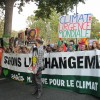
French Add Voice to Global Climate Action
As if to highlight the reality of climate change, the rain came pouring down here as demonstrators prepared to rally for political action to combat global warming.
Africa Seeks Commitment to Adaptation in Climate Deal
It is a critical time for international climate change negotiations. By December 2015, world leaders are due to decide on an international climate change agreement covering all countries that will take effect in 2020.
Environmental Funding Bypasses Indigenous Communities
When she talks about the forests in her native Kalimantan, the Indonesian part of the island of Borneo, Maridiana Deren’s facial expression changes. The calm, almost shy person is transformed into an emotionally charged woman, her fists clench and she stares wide-eyed at whoever is listening to her.
Will Governments Keep Their Promises on the Human Right to Water?
It was a dramatic moment at the United Nations when it voted in 2010 to affirm water and sanitation as a human right.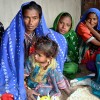
U.N. Urged to Reaffirm Reproductive Rights in Post-2015 Agenda
The U.N.'s post-2015 development agenda has been described as the most far-reaching and comprehensive development-related endeavour ever undertaken by the world body.
OPINION: Step Up Efforts Against Hunger
At the 1996 World Food Summit (WFS), heads of government and the international community committed themselves to reducing the number of hungry people in the world by half. Five years later, the Millennium Development Goals (MDGs) lowered this level of ambition by only seeking to halve the proportion of the hungry.
New Fund to Build on “Unprecedented Convergence” Around Land Rights
Starting next year, a new grant-making initiative will aim to fill what organisers say has been a longstanding gap in international coordination and funding around the recognition of community land rights.
Can ‘Womenomics’ Stem the Feminisation of Poverty in Japan?
Fifty-four-year-old Marlyn Maeda, an unmarried freelance writer living in Tokyo who never held a permanent job, is now watching her dream of aging independently go up in smoke.Promoting Human Rights Through Global Citizenship Education
Amid escalating conflicts and rampant violations of human rights all over the world, spreading “human rights education” is not an easy task. But a non-governmental organisation from Japan is beginning to make an impact through its “global citizenship education” approach.
Honduran Mothers and Grandmothers Search Far and Wide for Missing Migrants
United by grief and anxiety, the grandmothers, mothers and other relatives of people who disappeared on the migration route to the United States formed a committee in this city in northern Honduras to search for their missing loved ones.
Tackling Climate Change and Promoting Development: A “Win-Win”
A widespread perception exists that developing countries must make a choice between tackling climate change and fighting poverty. This assumption is incorrect, according to the authors of a new report on green growth.
Will the Upcoming Climate Summit Be Another Talkathon?
As the United Nations hosts a Climate Summit Sep. 23, the lingering question is whether the meeting of world leaders will wind up as another talk fest.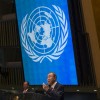
OPINION: A Climate Summit to Spark Action
On Sep. 23, I have invited world leaders from government, business, finance and civil society to a Climate Summit in New York so they can show the world how they will advance action on climate change and move towards a meaningful universal new agreement next year at the December climate negotiations in Paris.
Organic Farmers Cultivate Rural Success in Samoa
Rural farming families in Samoa, a small island developing state in the central South Pacific Ocean, are reaping the rewards of supplying produce to the international organic market with the help of a local women’s business organisation.« Previous Page — Next Page »


 Representatives of Civil Society, Sierra Leone. Credit: UN Photo/Eskinder Debebe
Civil society faces mounting threats worldwide, even as it remains essential for democratic accountability, especially in countries struggling with economic instability and social inequality. However, at the same time, nations with weak democratic governance structures also systemically suppress the power of civil society. Human rights activists across the Global South frequently challenge issues such as political persecution and gender oppression, but in return face state-sanctioned punishment for their advocacy. Imprisonment and exile are common mechanisms of punishment that seek to erode the strength of civil society. The 2026 World Press Freedom Index has reached its lowest level in 25 years, with more than half of the world’s countries now falling into the "difficult" or “very serious” category for press freedom. IPS seeks to highlight the work of civil society across the Global South as well as the challenges that they face.
Updated by Yilan Batista and Shuli Wong August 2026

The Week with IPS

NEXT STOP - SDGs
Tracking global progress towards a sustainable world
