Languages
Saturday, November 28, 2026



News and Views from the Global South
Civil Society

Cambodian Activists Challenge ASEAN Policies
For a brief moment last month, mainstream international media turned the spotlight on Cambodia, one of the world’s 48 least developed countries (LDCs), as a high-level visit from U.S. President Barack Obama and the annual summit of the Association of Southeast Asian Nations (ASEAN) gave this country of 14.3 million people a glamorous edge.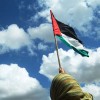
First Muslim Human Rights Commission to Launch End December
Gathering for the first time here in Washington, representatives of the newly established human rights commission of the Organisation of Islamic Cooperation (OIC) stated Thursday that they plan to start their substantive work by the end of the month.
Q&A: For Day Labourers, Life Is a Game of Russian Roulette
They wait in parking lots, hoping for someone to come and offer them a few days of work. This work could entail anything from cleaning to construction, and though they may not be trained or equipped for these types of jobs, they have little choice, for they are day labourers, undocumented immigrants with no legal or moral support and subject at the mercy of their employers.
Constitutional Poll Polarises Egypt
This Saturday, Egyptians will head to the polls to vote on a controversial draft constitution. The referendum has divided this nation – still pulsing with the revolutionary fervour that toppled former dictator Hosni Mubarak in early 2011 - with most Islamist parties and groups supporting the proposed national charter, while liberal, leftist and 'revolutionary' groups, in addition to Egypt's sizable pro-Mubarak demographic, are opposed to it.
War Widows Struggle in a ‘Man’s World’
Sita Tamang’s husband went missing sometime in 2004, two years before Nepal’s civil war came to an end. A native of Dharan, a town about 600 kilometres southeast of Kathmandu, Tamang waited seven years after his disappearance before she tried to claim compensation offered by the government after a 2006 peace deal ended this country’s bloodshed.
Major Study Suggests Crimes Against Humanity in Sudan
Reporting on the results of a two-year investigation, on Wednesday the U.S.-based Human Rights Watch presented findings that suggest that the Sudanese government’s aerial bombardment of civilians in the country’s south could amount to crimes against humanity.
Favelas – the Football in the Run-Up to Brazil’s World Cup
Opinions are divided in Morro da Providência, Brazil's oldest favela, over construction works for the 2014 FIFA World Cup and the 2016 Olympics. While some residents are optimistic about the improvements that lie ahead, others point out that hundreds of dwellings will be demolished.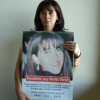
Outrage Over Acquittal in Argentine Sex Trafficking Case
The courtroom broke out in angry shouts and cries when judges in Argentina unexpectedly acquitted 13 defendants accused of kidnapping a young woman and forcing her into prostitution in 2002.
Dreams of a ‘Green Utopia’ Wither in the Maghreb
When the Desertec Industrial Initiative (DII), an alliance of 21 major European corporations, first unveiled plans to install a network of solar thermal, photovoltaic, and wind plants across the North African Maghreb region to generate electricity, the project was greeted as a ‘green utopia’.
Native Communities in Peru Take Charge of Environmental Monitoring
At the end of every month, with the skill of an environmental engineer, Wilson Sandi prepares a work plan that will be used by Achuar indigenous people, like him, to document the scars left by 40 years of oil drilling in the Peruvian Amazon region of Loreto.
Changing the Game to Achieve Nuclear Disarmament
Twenty-five years ago, on Dec. 8, presidents Mikhail Gorbachev and Ronald Reagan signed the Intermediate-Range Nuclear Forces (INF) Treaty. This historic agreement eliminated a modern class of land-based “theatre” weapons - the SS20s, cruise and Pershing missiles - that had been brought into Europe in the early 1980s.
U.S. Defends Low-Key Stance on Rwanda, Congo
President Barack Obama’s top diplomat on African affairs on Tuesday defended the U.S. administration’s response to the continued crisis in the Democratic Republic of Congo (DRC), in the face of stepped up criticism from both civil society and U.S. lawmakers.
Tunisia Gears Up to Host World Social Forum
Following in the wake of the wave of revolutions dubbed the ‘Arab Spring’, which originated here nearly two years ago, North Africa is gearing up to host the World Social Forum (WSF) for the first time.
Students Stuck With Shoddy Textbooks in Afghanistan
New textbooks, printed as part of an ambitious multi-million dollar exercise to reform the curriculum in Afghan public schools, have been found to contain glaring mistakes, adding yet another burden on a cash- and resource-strapped sector of this war-torn country.
Youth Call for ‘Change of Course’ to Solve Climate Crisis
While world leaders were wrapping up the United Nations conference on climate change (COP 18) in Doha, Qatar this past weekend with the annual vague promise to tackle the enormous crises brought on by extreme weather and global warming, a delegation of youth gathered far from the high-level conference halls to say “no” to advocacy without action.
Critics Brand Climate Talks Another Lost Opportunity
Rich countries came to the U.N. climate talks in Doha intent on delaying needed action on climate change for another three years and a still to be hammered out new global treaty.Off the Blacklist Doesn’t Imply Improvement in Human Rights in Colombia
Colombia will be removed from the Inter-American Commission on Human Rights “blacklist” next year. In exchange, the government of Juan Manuel Santos facilitated a visit to the country by a delegation from the Commission.
Haitian Community Radio Reopens After Protests
A community radio station silenced by Haitian authorities is open again thanks to the mobilisation of other stations as well as organisations and associations both inside and outside of Haiti.
Longer Lives, Lower Incomes for Japanese Women
When Hiroko Taguchi retired this past April, at the age of 64, from her job as an insurance sales agent, she joined the rapidly growing ranks of Japan’s aging women who now outnumber their male counterparts.
The Civilian Toll of Israel’s Bombs
When Israeli bombs struck the Abu Khadra complex for civil administration, they also gutted the sixth floor of the Abu Shabaan complex, located ten metres across the road. According to the Palestinian Centre for Human Rights (PCHR), eight Israeli warplane-fired bombs levelled roughly half of the government compound in eastern Gaza City in the early hours of Nov. 21.
Doha Climate Summit Ends With No New CO2 Cuts or Funding
The United Nations climate talks in Doha went a full extra 24 hours and ended without increased cuts in fossil fuel emissions and without financial commitments between 2013 and 2015.« Previous Page — Next Page »


 Representatives of Civil Society, Sierra Leone. Credit: UN Photo/Eskinder Debebe
Civil society faces mounting threats worldwide, even as it remains essential for democratic accountability, especially in countries struggling with economic instability and social inequality. However, at the same time, nations with weak democratic governance structures also systemically suppress the power of civil society. Human rights activists across the Global South frequently challenge issues such as political persecution and gender oppression, but in return face state-sanctioned punishment for their advocacy. Imprisonment and exile are common mechanisms of punishment that seek to erode the strength of civil society. The 2026 World Press Freedom Index has reached its lowest level in 25 years, with more than half of the world’s countries now falling into the "difficult" or “very serious” category for press freedom. IPS seeks to highlight the work of civil society across the Global South as well as the challenges that they face.
Updated by Yilan Batista and Shuli Wong August 2026

The Week with IPS

NEXT STOP - SDGs
Tracking global progress towards a sustainable world
