Languages
Sunday, November 29, 2026



News and Views from the Global South
Civil Society

Clinton Announces “Targeted Easing” of Sanctions on Myanmar
Two days after hailing Sunday's parliamentary by-elections in Myanmar, U.S. Secretary of State Hillary Clinton announced that Washington would begin a process of "targeted easing" of longstanding economic sanctions against the Southeast Asian nation.European NGOs Put IFIs Under Microscope
European civil society organisations continue to demand that international financial institutions (IFIs) such as the World Bank and the International Monetary Fund apply the same standards of transparency and accountability to their internal affairs that they demand for governments across the world.Europe’s Austerity Programme Spawns ‘Lost Generation’
The recent dramatic rise of youth unemployment across Europe – particularly in the Mediterranean member countries of the Eurozone most affected by the sovereign debt crisis and so-called ‘remedial’ austerity programmes – indicates that the continent is sacrificing its future on the altar of short-term budget consolidation.
Maldivian Women Fight for Rights
Maldivian women, long used to taking a backseat in the Muslim-dominated Indian Ocean country, say they are determined to ensure that they are not deprived of their rights under the new regime of President Mohammed Waheed Hassan.When Europe Develops, and Israel Destroys
The European Commission has released a document that lists projects it funded that were destroyed or damaged by the Israel Defence Forces between May 2001 and October 2011.Afghan Women Victims Not Perpetrators of ‘Moral Crimes’
Mursal, a beautiful 19-year-old girl who has run away from home to escape a mentally ill husband, is just one of many Afghan women and girls who are now considered criminals under the country’s laws on ‘morality.’U.S. Praises Myanmar Poll
The administration of U.S. President Barack Obama Monday hailed Sunday's parliamentary by-election in Myanmar, also known as Burma, which the opposition National League for Democracy (NLD) led by Nobel Peace Laureate Aung San Suu Kyi won in a landslide.OP-ED: Hope for Iran’s Youth
The vast majority of political power in Iran today lies in the hands of old bearded men in robes and turbans, plus the minor exception of a short cartoonish-looking man with a penchant for provocation and Members Only jackets.Suu Kyi as Lawmaker
Following her historic victory in Sunday’s by-elections Aung San Suu Kyi takes on a new role as opposition lawmaker, after a 22-year existence as Myanmar’s most famous political prisoner.Malaysian Socialists on Bumpy Road to Revival
As Prime Minister Najib Razak prepares to dissolve parliament for snap polls, Malaysia’s socialists are seeing an opportunity to make a comeback after nearly five decades in the political wilderness.
Women Pay for Kashmir’s Water Woes
Naseema Akhtar, 38, worries that her daily treks to collect clean water from the mountain springs around her village of Bonpora, in Kashmir’s Kupwara district, are getting longer. She is already doing more than seven km every day.
New Generation Protests Crimes of Brazil’s Dictatorship
Outside the Military Club in Rio de Janeiro, where a commemoration of the anniversary of the 1964 coup d'état was being held, hundreds of demonstrators, many of them teenagers, shouted slogans and threw eggs at arriving members in protest.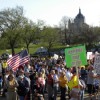
U.S.: Forming Coalitions, Tea Party Continues to Brew
In the three years since its inception, the Tea Party has cemented its place in U.S. politics, routinely making waves in political races of national interest. At the same time, some local Tea Party groups are beginning to build post-partisan coalitions that are both surprising and counterintuitive.
Displaced Guatemalan Peasants Demand Answers
"We want land where we can live and grow food to feed ourselves," said Pedro Ichich, one of several thousand indigenous farmers who marched to the Guatemalan capital to demand solutions to the ageold conflict over land.
Could Coffee Eliminate Borders?
A diverse blend of coffee is going to pervade the city of Milan in 2015. World producers will come together to show, exchange and market their coffee in a global alliance without geographical-based membership.
Native People in Argentina Demand a Say in Lithium Mining
Native communities in northwest Argentina turned to the Supreme Court to claim their right to be consulted about projects for prospecting and mining of lithium, regarded as the mineral of the future, located under an enormous salt flat.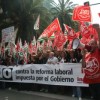
Spanish Officials Turn Deaf Ear to General Strike
Spain’s centre-right government stood firm and announced that it would not modify the labour reforms that tens of thousands of people protested Thursday in a 24-hour general strike.
Winds of Lent Blowing in Cuba
Debates in civil society, tension with internal opposition groups, demands from outside the country and inevitable comparisons with John Paul II’s visit to this socialist island in 1998 surrounded Benedict XVI’s visit 14 years later to a very different Cuba.Kazakhstan Divided Over Fugitive Banker
As the trial began this week of 37 alleged participants in a strike-related riot, the man who did the most to help the striking oil workers and to publicise their cause, Mukhtar Ablyazov, remained far beyond the Kazakhstan government’s grasp.OP-ED: Narcotics Watchdog Turns Blind Eye to Rights Abuses
In a world where drug offences are punishable with the death penalty, torture or arbitrary detention, we must ask how far States can go to enforce the global prohibition on drugs.
Women Lead Poverty Reduction in Bangladesh
Kalpana Rani Pal’s pottery business is modest by any yardstick but it is small enterprises like these that are helping reduce poverty levels in Bangladesh.« Previous Page — Next Page »


 Representatives of Civil Society, Sierra Leone. Credit: UN Photo/Eskinder Debebe
Civil society faces mounting threats worldwide, even as it remains essential for democratic accountability, especially in countries struggling with economic instability and social inequality. However, at the same time, nations with weak democratic governance structures also systemically suppress the power of civil society. Human rights activists across the Global South frequently challenge issues such as political persecution and gender oppression, but in return face state-sanctioned punishment for their advocacy. Imprisonment and exile are common mechanisms of punishment that seek to erode the strength of civil society. The 2026 World Press Freedom Index has reached its lowest level in 25 years, with more than half of the world’s countries now falling into the "difficult" or “very serious” category for press freedom. IPS seeks to highlight the work of civil society across the Global South as well as the challenges that they face.
Updated by Yilan Batista and Shuli Wong August 2026

The Week with IPS

NEXT STOP - SDGs
Tracking global progress towards a sustainable world
