Languages
Monday, November 16, 2026



News and Views from the Global South
Development & Aid

Taliban: The Return of Misogynistic Gynophobes in Afghanistan
 Gynophobia is defined as an intense and irrational fear of women or hatred of women, it may be characterized as a form of specific phobias, which involves a fear that is centered on a specific trigger or situation, which in the case of gynophobia is women.

Small-Scale Fishers in Central America Demand Social Security Policies
At the pier, Salvadoran fisherman Nicolás Ayala checked the pocket of his pants to make sure he was carrying the hypertension pills he must take when he is at sea on a 24-hour shift. He smiled because he hadn’t forgotten them.
Challenge for 2023: Guaranteeing Sufficient Food Production
If the war in Ukraine and other conflicts around the world continue, the challenge for 2022 will be to guarantee greater access to existing food supplies, and sufficient food production by 2023.
Bilingual Intercultural Education, an Endangered Indigenous Right in Peru
"I always express myself in Quechua and I don't feel I’m less of a person," said Elías Ccollatupa, 47, who has been a bilingual intercultural teacher for more than two decades in the Chinchaypujio district, one of the nine that make up the province of Anta, in the department of Cuzco, in the southern Andean region of Peru.
Frankincense and Myrrh Have New Economic Resonance for Women in Kenya’s Arid North
Clad in traditional regalia and necklaces of richly coloured beads that form magnificent patterns around their necks, an army of women from the pastoral Rendile community that resides at the heart of Marsabit, a county in Kenya’s arid north, is on a mission.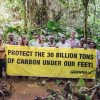
Congo’s Oil Ministry Accused of Greenwashing
Nine of the 16 oil blocks to be auctioned in the Democratic Republic of Congo (DRC) next month overlap Protected Areas, according to a review of official government maps by Greenpeace Africa.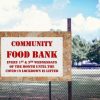
Ending Hunger in America: Here’s What the White House Conference on Hunger, Nutrition and Health Should Do to Be Inclusive
This September, the White House will convene a conference on Hunger, Nutrition, and Health. Leading up to the conference, the White House is organizing several virtual listening sessions across America to hear firsthand from people impacted by food insecurity and to collect ideas about how to end hunger and hunger-related diseases and disparities.
Researchers Strive for Technological Innovations to Achieve Food Security in Africa
A few years ago, after coming up with a project of launching the first-ever unmanned aerial systems (UAS) in Rwanda, entrepreneur Mamy Muziga Ingabire identified the need to provide farmers with information related to their activity – such as the health status of crops.
Despite Unspeakable Hardships, Migrants Keep One Billion People Alive
Here goes another fact: 230 million migrant workers are now a major life-saving source for up to one billion people starving in the world’s poorest communities, as well as a vital lifeline for the economy of their countries of origin.
Elder Abuse: Human Rights Have an Expiration Date
1 in 6 people over 60 years of age –nearly 141 million people globally– suffers from abuse, according to World Health Organization (WHO) estimates.
Disability Inclusion Lifts Rural Ugandan Families From Poverty
Lawrence Akena was born 32 years ago with microcephaly. Because of his neurological condition, he didn't go to school or benefit from skills training.
The Weaponization of Energy & Europe’s Way Out
The fast-changing environment requires Europe’s energy system not only to adapt but to also find the right mechanisms to ensure its unity in the face of turbulent challenges.
SWIFT Dollar Decline
US-led sanctions are inadvertently undermining the dollar’s post-Second World War dominance. The growing number of countries threatened by US and allied actions is forcing victims and potential targets to respond pro-actively. SWIFT strengthened dollar The instant messaging system of the Society for Worldwide Interbank Financial Telecommunication (SWIFT) informs users, both payers and payees, of payments made. Thus, it enables the smooth and rapid transfer of funds across borders.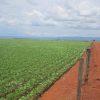
Brazil: Inequality Sharpened, Social Policies Dismantled, More Millions Pushed into Hunger
Right now, out of a total of 211.7 million Brazilians, 116.7 million are experiencing some level of food insecurity, 43.4 million do not have enough food, and 19 million were facing hunger, reveals a June 2022 report by the Brazilian Research Network of Food and Nutrition Sovereignty and Security (Rede PENSSAN).
Southern Winds in Magallanes Fuel Green Hydrogen in Chile
Patagonia’s strong winds are driving projects that will place Magallanes, in the extreme south of Chile, in a privileged position to produce and export green hydrogen and help the country move towards carbon neutrality.
How to Stop the ‘Hunger Pandemic’ During COVID-19
Johnny, living in the United States (US), goes to his school and gets free breakfast and lunch there. There may not be enough food for dinner at home. But he knows that he can get fed at school. Sadly, however, after the pandemic, schools were closed, which meant no breakfast and no lunch for him.
Should Sri Lanka Join the Ranks of the “Poorest of the World’s Poor”?
As one of the world’s foremost international humanitarian organizations, the United Nations has pledged to provide food and medicines to cash-strapped Sri Lanka --a country suffering from a major financial crisis. As of last week, a UN team, led by the Resident Coordinator in Colombo, Hanaa Singer-Hamdy has appealed to international donors for more than $47 million in “life-saving assistance” to 1.7 million people in a country with a population of over 22 million.
Why Biden Just Declared Heat Pumps and Solar Panels Essential to National Defense
Solar panels, heat pumps and hydrogen are all building blocks of a clean energy economy. But are they truly “essential to the national defense”?
At Half-time, the European Green Deal is Still Grounded
This month marks the mid-point of the much-heralded European Green Deal. Taking office at the end of 2019, the European Commission went into rhetoric overdrive. This was Europe’s ‘man on the moon’ moment, we were told. The Green Deal would herald an economic paradigm shift, and “reconcile the economy with our planet…to make it work for our people” the new President, Ursula von der Leyen, said.
Farmers in Senegal Adopt Farming as a Business to Beat Climate Change
Onions and rice are a conspicuous part of every meal in Senegal, including the famous Poulet Yassa. However, climate change makes it hard for smallholder farmers to grow enough staple food with extra to sell for income.
Land in South Africa Shall Be Shared Among Those Who Work It
In March 2022, United Nations (UN) Secretary-General António Guterres warned of a ‘hurricane of hunger’ due to the war in Ukraine. Forty-five developing countries, most of them on the African continent, he said, ‘import at least a third of their wheat from Ukraine or Russia, with 18 of those import[ing] at least 50 percent’. Russia and Ukraine export 33% of global barley stocks, 29% of wheat, 17% of corn, and nearly 80% of the world’s supply of sunflower oil. Farmers outside of Russia and Ukraine, trying to make up for the lack of exports, are now struggling with higher fuel prices also caused by the war. Fuel prices impact both the cost of chemical fertilisers and farmers’ ability to grow their own crops. Maximo Torero Cullen, chief economist at the UN’s Food and Agriculture Organisation, said that ‘one of every five calories people eat have crossed at least one international border, up more than 50 percent from 40 years ago’. This turbulence in the global food trade will certainly create a problem for nutrition and food intake, particularly amongst the poorest people on the planet.« Previous Page — Next Page »


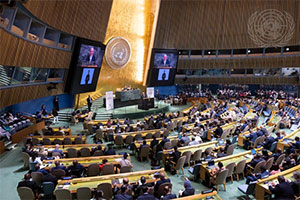 2026 High-level Political Forum on Sustainable Development. Credit: UN Photo/Eskinder Debebe
In 2015, the United Nations and its Member States adopted the Sustainable Development Goals (SDGs) in an effort to make the world a more sustainable and peaceful place for future generations. Progress on the 17 SDGs has been uneven, and inequality persists across the globe. 10 years after adoption, the 2025 UN SDGs Report revealed that only 35% of the SDG targets are on track, with more than half moving too slowly, and 18% moving backwards from the 2015 baseline. Poverty remains one of the world’s most pressing issues, with hunger, violence, and inequality impeding the opportunities for all people to achieve success. In September 2024, the United Nations Summit of the Future introduced a new goal: to eradicate global poverty by 2030, ensure universal rights to basic services, and increase the overall standard of living in terms of industrialization, economic well-being, citizen health, and literacy. Furthermore, recent shifts in United States foreign aid policy – notably, major budget cuts to USAID and the termination of thousands of development programmes– have severely threatened vital lifelines of financial aid to impoverished communities around the world. Additionally, the United States’ withdrawal from the Paris Climate Agreement has undercut international efforts at sustainable development. With the upcoming 2030 deadline, the UN Secretary-General has called for urgent multilateralism across six priority areas: food systems, energy, digital connectivity, education, jobs and social protection, and climate and biodiversity. IPS sheds light on marginalized communities that struggle on a daily basis to survive and have their stories heard and respected.
Updated by Yilan Batista and Shuli Wong August 2026

The Week with IPS

NEXT STOP - SDGs
Tracking global progress towards a sustainable world
Tracking global progress towards a sustainable world
