Languages
Friday, November 20, 2026



News and Views from the Global South
Development & Aid

Europeans Mobilising for New IMF Head
In the grand European political reshuffle of 2019, it turned out that Christine Lagarde was the answer to the conundrum of who should replace Mario Draghi at the European Central Bank. But her move opens another question. Who succeeds Lagarde at the International Monetary Fund?
Migration and Human Solidarity
The migrant and refugee crisis has become a serious test for the unity of Europe as a political project. The inflow of destitute migrants and refugees has tested Europe’s political unity to an unprecedented extent. With a long-term solution to the migrant and refugee crisis nowhere in sight, the adverse impact of the current situation has the potential to unfold further and to give rise to a broader crisis with long-term implications, affecting Europe and the MENA region alike.
Tackling Inequality: A Focus on Cities can Improve Upward Economic Mobility
Tackling inequality in the 21st century requires us to understand and address barriers to upward mobility that segments of people face within countries. In a world with high and increasing levels of urbanization, the conversation on challenges to mobility must start with cities.
Social Norms & Women’s Access to Financial Services
How do financial services providers (FSPs) shape gender norms that restrict or expand women’s access to financial services? In more ways than you might think, and there are good reasons why FSPs should be aware of this.
A Rural Sanitation Model That Works
Research and experience across more than two decades in rural Odisha, India, show that an effective rural sanitation model requires both financial assistance and an integrated water supply.
Free Speech and the Hong Kong Protests
Sometime in the summer of 1974, I was leaning against the gunwale of the ferry between Calais and Dover, watching the moonlight streaming dark waters. When I turned to the left I found that a Chinese lady also looked out over the calm sea. What she told me changed my world view.
Businesses Crucial to the Success of SDGs
We all know that the UN Sustainable Development Goals are ambitious and will take huge collaborative and international effort to achieve. Government action alone is not enough. So how can the private sector actively contribute – and what can be done to ramp up the participation of businesses around the world?
Bretton Woods Institutions: From Solution to Problem
July 2019 saw the 75th anniversary of the historic conference of 44 countries held at the Bretton Woods (BW) resort in New Hampshire during July 1-22, 1944. Conference At BW, John Maynard Keynes, representing the UK, and Harry Dexter White, for the USA, both sought a new international monetary system following the Great Depression, which many attributed to the functioning of the gold standard before World War II.
Power is a Privilege & a Responsibility: Q&A with Justin Trudeau, Prime Minister of Canada
It’s on all of us to make gender equality a reality – which means harnessing our collective power to build a gender equal world. By empowering girls and women, realizing sexual and reproductive health and rights, tackling gender-based violence, and confronting the combinations of sexism, misogyny, racism, and colonialism, we can take steps towards true gender equality.
Bangladesh and the fight to end torture
On June 26, the world comme-morated the International Day in Support of Victims of Torture—an opportunity to uphold the dignity of life, access to justice, and freedom from torture, which is a right of all people, to be enjoyed without discrimination, regardless of their civil, cultural, economic, political or social position or status.
Is Civil Society Arguing Itself out of Political Space?
As some of you will know I have a new book out Stakeholder Democracy: Represented Democracy in a Time of Fear. (other contributors to the book were: Jan-Gustav Strandenaes, Carolina Duque Chopitea, Minu Hemmati, Susanne Salz, Bernd Lakemeier, Laura Schmitz, and Jana Borkenhagen).
Using Renewable Energy and the Circular Economy to Fight Poverty in Argentina
On the outer edges of Buenos Aires proper, where the paved streets end and the narrow alleyways of one of Argentina’s largest shantytowns begin, visitors can find the En Haccore soup kitchen.
Women, Power, & Changing Face of Political Representation in Latin America & the Caribbean
Gender inequality is about power asymmetries. In the late 1970s, Robert Putnam reflected on the status of women in policy decisions in his comparative study on political elites. Quoting Elizabeth Vallance, he concluded that, “where power is, women aren’t.”.
Money Grows on Trees–Don’t Uproot Them
Jennifer Handondo, a small scale farmer of Choma district in southern Zambia, plants food crops such as maize mostly for her family’s needs. Because of uncharacteristically high temperatures and low rainfall during the rainy season in March, the divorced mother who single-handedly supports her three children, has not been able to harvest as much as she usually does. So she has diversified into selling seedlings of neem, Moringa and other medicinal trees.
How Widespread is Human Trafficking in the US?
The United States is no exception to the practice of modern day slavery—a crime for which it is rarely held accountable at the United Nations.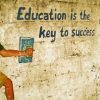
The Role of Education in Breaking down the Walls of Ignorance
Education constitutes an important building block to enhance inter-faith dialogue, cultural exchange between ethnic and linguistic groups, counter violent extremist narratives and promote peaceful and inclusive societies. The founder of Modern India, Mahatma Gandhi, once said: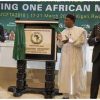
Nigeria Finally Throws its Weight Behind African Continental Free Trade Area
On 7 July 2019, Nigeria finally threw its weight behind the African Continental Free Trade Area (AfCFTA) when President Muhammadu Buhari signed the treaty at a summit of African heads of state in Niamey. In normal circumstances, that shouldn’t have been big news.
As SDGs Falter, the UN Turns to the Rich and Famous
The Sustainable Development Goals (SDGs) are in trouble. United Nations officials are concerned and say so publicly. Secretary-General António Guterres joined in raising an alarm in mid-July when he introduced the most recent official UN report.
Horn of Africa Drought Threatens Re-run of Famines Past
Humanitarian groups and the United Nations are warning of another drought in the Horn of Africa, threatening a repeat of the deadly dry spell and famine that claimed lives in Somalia and its neighbours eight years ago.
Switzerland announces support to UN Resident Coordinator function in Kenya to advance UN Reforms and contribution to national development priorities
The Government of Switzerland is pleased to announce support for the ongoing UN reforms implementation in Kenya through a two-year cost-sharing arrangement that will strengthen the capacity of the Resident Coordinator’s Office, with focus on coordination of the integrated cross-border initiative and the SDG Partnership Platform, expanding partnerships and diversifying financial modalities for realising the SDGs.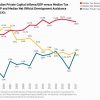
Foreign Private Investment in Low-Income Countries: More Important Than You Think
In a world of stagnating public aid, limited fiscal space, and rising public debt in low-income countries (LICs), can they realistically expect to rely more on private finance from foreigners? What does the evidence suggest?« Previous Page — Next Page »


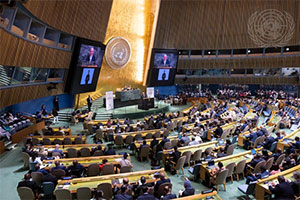 2026 High-level Political Forum on Sustainable Development. Credit: UN Photo/Eskinder Debebe
In 2015, the United Nations and its Member States adopted the Sustainable Development Goals (SDGs) in an effort to make the world a more sustainable and peaceful place for future generations. Progress on the 17 SDGs has been uneven, and inequality persists across the globe. 10 years after adoption, the 2025 UN SDGs Report revealed that only 35% of the SDG targets are on track, with more than half moving too slowly, and 18% moving backwards from the 2015 baseline. Poverty remains one of the world’s most pressing issues, with hunger, violence, and inequality impeding the opportunities for all people to achieve success. In September 2024, the United Nations Summit of the Future introduced a new goal: to eradicate global poverty by 2030, ensure universal rights to basic services, and increase the overall standard of living in terms of industrialization, economic well-being, citizen health, and literacy. Furthermore, recent shifts in United States foreign aid policy – notably, major budget cuts to USAID and the termination of thousands of development programmes– have severely threatened vital lifelines of financial aid to impoverished communities around the world. Additionally, the United States’ withdrawal from the Paris Climate Agreement has undercut international efforts at sustainable development. With the upcoming 2030 deadline, the UN Secretary-General has called for urgent multilateralism across six priority areas: food systems, energy, digital connectivity, education, jobs and social protection, and climate and biodiversity. IPS sheds light on marginalized communities that struggle on a daily basis to survive and have their stories heard and respected.
Updated by Yilan Batista and Shuli Wong August 2026

The Week with IPS

NEXT STOP - SDGs
Tracking global progress towards a sustainable world
Tracking global progress towards a sustainable world
