Languages
Thursday, November 19, 2026



News and Views from the Global South
Editors' Choice

Saudis Compensate Civilian Killings with 274 Million in Humanitarian Aid to Yemen
Saudi Arabia’s right hand does not know what its left foot is up to, belittles an Asian diplomat, mixing his metaphors to describe the political paradox in the ongoing military conflict in Yemen.
The U.N. at 70: A View from Outer Space
When the founding fathers of the United Nations met in San Francisco 70 years ago, an American banker named Beardsley Ruml made a remark:
Tailings Ponds Pose a Threat to Chilean Communities
Chile lives under the constant threat of spillage from tailings ponds, which became even more marked in late March after heavy rains fell in the desert region of Atacama leaving over two dozen people dead and missing and thousands without a home.
From Slavery to Self Reliance: A Story of Dalit Women in South India
HuligeAmma, a Dalit woman in her mid-forties, bends over a sewing machine, carefully running the needle over the hem of a shirt. Sitting nearby is Roopa, her 22-year-old daughter, who reads an amusing message on her cell phone and laughs heartily.
Giving African Artists Their Names
Quick now, can you name a famous African sculptor from the 1800s or even the early 20th century?
Tribunal Ruling Could Dent “Monster Boat” Trawling in West African Waters
It was five in the afternoon and Buba Badjie, a boat captain, had just brought his catch to the shore. He had spent twelve hours at sea off Bakau, a major fish landing site in The Gambia.
Women Farmers Rewrite Their History in Chile’s Patagonia Region
More than 100 women small farmers from Chile’s southern Patagonia region have joined together in a new association aimed at achieving economic autonomy and empowerment, in an area where machismo and gender inequality are the norm.
Q&A: Iranian Balochistan is a “Hunting Ground” – Nasser Boladai
Nasser Boladai is the spokesperson of the Congress of Nationalities for a Federal Iran (CNFI), an umbrella movement aimed at expanding support for a secular, democratic and federal Iran. IPS spoke with him in Geneva, where he was invited to speak at a recent conference on Human Rights and Global Perspectives in his native Balochistan region.
Fears Grow for Indigenous People in Path of Massive Ethiopian Dam
A United Nations mission is due to take place this month to assess the impact of Ethiopia’s massive Gilgel Gibe III hydroelectric power project on the Omo River which feeds Lake Turkana, the world’s largest desert lake, lying mostly in northwest Kenya with its northern tip extending into Ethiopia.
Rural Women in Latin America Define Their Own Kind of Feminism
Rural organisations in Latin America are working on defining their own concept of feminism, one that takes into account alternative economic models as well as their own concerns and viewpoints, which are not always in line with those of women in urban areas.
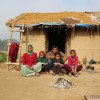
Clean Cookstoves Could Change the Lives of Millions in Nepal
When 26-year-old Laxmi married into the Archaya household in Chhaimale village, Pharping, south of Nepal’s capital Kathmandu, she didn’t think she would be spending half the day in the kitchen inhaling smoke from the stove.
Antigua Draws a Line in the Vanishing Sand
Jabberwock beach, located on the northeastern coast of Antigua, features a mile-long white sand beach and is a favourite with locals and visitors alike.
Acid Attacks Still a Burning Issue in India
Vinita Panikker, 26, considers herself "the world's most unfortunate woman".
Cyclone Pam Worsens Hardship in Port Vila’s Urban Settlements
Severe Tropical Cyclone Pam, which swept through the South Pacific Island state of Vanuatu in mid-March, has deepened hardships faced by people living in the informal settlements of the capital, Port Vila. Winds of up to 340 kph and torrential rain shattered precarious homes, cut off fragile public services and flooded communities with unsealed roads, poor drainage and sanitation.
U.N. Warns of Growing Divide Between Nuclear Haves and Have-Nots
As she prepared to leave office after more than three years, High Representative for Disarmament Affairs Angela Kane painted a dismal picture of a conflicted world: it is “not the best of times for disarmament.”
Nepal: A Trailblazer in Biodiversity Conservation
At dusk, when the early evening sun casts its rays over the lush landscape, the Chitwan National Park, a UNESCO World Heritage Site about 200 km south of Nepal’s capital, Kathmandu, is a place of the utmost tranquility.
Plunging Oil Prices Won’t Kill Vaca Muerta
Despite the precipitous fall in global oil prices, Argentina has continued to follow its strategy of producing unconventional shale oil, although in the short term there could be problems attracting the foreign investment needed to exploit the Vaca Muerta shale deposit.
Opinion: Moment of Truth for the Nobel Peace Prize
The Nobel Peace Prize is about to bow out to critics. As of Jan. 1, the Oslo-based Norwegian Nobel Committee that selects the winners has a new secretary, Olav Njølstad, who announced that “changes loom” in a recent interview.
In Bangladesh, Gender Equality Comes on the Airwaves
Judging by how often they make headlines, one might be tempted to believe that women in Bangladesh don’t play a major role in this country’s affairs.
‘Cli-fi’ to Heat Up Literature Course in India
University lecture halls in North America are no strangers to the ''cli-fi" genre of climate-themed novels and movies, but now India is getting into the act as well, thanks to the pioneering work of Professor T. Ravichandran of the Indian Institute of Technology Kanpur (IITK) in Uttar Pradesh.
Land Seizures Speeding Up, Leaving Africans Homeless and Landless
There is a new scramble for Africa, with ordinary people facing displacement by the affluent and the powerful as huge tracts of land on the continent are grabbed by a minority, rights activists here say.« Previous Page — Next Page »


The Week with IPS

NEXT STOP - SDGs
Tracking global progress towards a sustainable world
Tracking global progress towards a sustainable world
