Languages
Thursday, November 19, 2026



News and Views from the Global South
Editors' Choice

Land Seizures Speeding Up, Leaving Africans Homeless and Landless
There is a new scramble for Africa, with ordinary people facing displacement by the affluent and the powerful as huge tracts of land on the continent are grabbed by a minority, rights activists here say.
Women Still Struggling to Gain Equal Foothold in Nepal
Kali Sunar, 25, a resident of the Dumpada village in the remote Humla District in Far-West Nepal, lives a life that mirrors millions of her contemporaries.
Israeli Forces Target Journalists in West Bank
It is becoming increasingly risky to cover clashes and protests between Israeli security forces and Palestinian protesters in the West Bank as the number of journalists injured, in what appears to be deliberate targeting by Israeli security forces, continues to rise.
Taking Child Workers Out of El Salvador’s Sugar Cane Fields
The participation of children and teenagers in the sugar cane harvest, a dangerous agricultural activity, will soon be a thing of the past in El Salvador, where the practice drew international attention 10 years ago.
Environmental Terrorism Cripples Palestinian Farmers
“Exactly which olive trees do you want to see? The Israeli settlers have cut down thousands. Can you be more specific?” asked the taxi driver, telling IPS that he wished to remain anonymous.
Recycling Revives Art of Glass-Blowing in Lebanon
In the Khalife workshop, in the southern coastal village of Sarafand, four men stand beside an oven, fixed in concentration despite the oppressive temperature. Blowing through a long tube, one of the group carefully shapes white-hot melted glass into a small ball, while two others coax it into the form of a beer glass. The fourth, the veteran of the group, cuts off the top of the glass, creating an opening from which beer will one day flow.
Civil Society and Politics March for Negev Bedouin Recognition
There was a symbolic dimension to a recent four-day march from the periphery of Israel to the corridors of power in Jerusalem to seek recognition for Bedouin villages.
Effective War Crimes Inquiry Could Heal Sri Lanka’s Old Wounds
Jessi Joygeswaran seems like your typical 23-year-old young woman. She has an infectious smile and laughs a lot when she talks. Like many other young women anywhere in the world, her life is full of dreams.
Deforestation in the Amazon Aggravates Brazil’s Energy Crisis
In Brazil water and electricity go together, and two years of scant rainfall have left tens of millions of people on the verge of water and power rationing, boosting arguments for the need to fight deforestation in the Amazon rainforest.
No Rest for the Elderly in India
As more and more people in India enter the ‘senior citizen’ category, ugly cracks are beginning to appear in a social structure that claims to value the institution of family but in reality expresses disdain for the bonds of blood.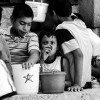
U.N.’s Next Stop: Humanitarian Summit to Resolve Exploding Refugee Crisis
As the world's spreading humanitarian crisis threatens to spill beyond the borders of Syria and Iraq into Libya and Yemen, the United Nations is already setting its sights on the first World Humanitarian Summit scheduled to take place in Istanbul next year.
Curbing Tobacco Use – One Step Forward, Two Steps Back
The numbers are in, and there’s not much to celebrate: every year, about six million people die as a result of tobacco use, including 600,000 who succumb to the effects of second-hand smoke.
Opinion: World Leaders Lack Ambition to Tackle Climate Crisis
World governments expect to agree to a new global treaty to combat climate change in Paris in December. As the catastrophic impacts of climate change become more evident, so too escalates the urgency to act.
Lesbians Receiving Unequal Treatment from Cuban Health Services
In addition to other forms of discrimination, lesbian and bisexual women in Cuba face unequal treatment from public health services. Their specific sexual and reproductive health needs are ignored, and they are invisible in prevention and treatment campaigns for women.
Nicaragua’s Future Canal a Threat to the Environment
The new interoceanic canal being built in Nicaragua has brought good and bad news for the scientific community: new species and archeological sites have been found and knowledge of the local ecosystems has grown, but the project poses a huge threat to the environment.
There’s No Such Thing as Equality in India’s Labour Force
It calls itself the ‘world’s largest democracy’ but the 380 million working-aged women in India might disagree with that assessment.
Why So Many Palestinian Civilians Were Killed During Gaza War
The U.N. investigation into Israel’s devastating military campaign against Gaza, from July to August 2014, has been delayed until June and in the interim Israel and the Palestinians are waging a media war to win the moral narrative as to why so many Palestinian civilians were killed during the bloody conflict.
Impunity Fuels Abuse in Immigrant Detention Centres in Spain
“They mistreat you, they don’t respect you. I’ve seen beatings, suffering, and you can’t defend yourself. When you’re locked in there it’s as if you were in another world,” Salif Sy, a Senegalese man who in 2011 spent eight days in an immigrant detention centre (CIE) in Madrid, told IPS.
Israel Using Live Ammunition for Palestinian Crowd Control
A Palestinian youth lost his fight for life this week after lying critically injured in Ramallah Hospital for days after Israeli soldiers used live ammunition as a method of crowd control against stone-throwing Palestinians near a Palestinian refugee camp.
Afghanistan’s Economic Recovery: A New Horizon for South-South Partnerships?
First the centre of the silk route, then the epicenter of bloody conflicts, Afghanistan’s history can be charted through many diverse chapters, the most recent of which opened with the election of President Ashraf Ghani in September 2014.
Pollution a Key but Underrated Factor in New Development Goals
Pollution is likely to be the most pressing global health issue in the coming years without effective prevention and clean-up efforts, experts say.« Previous Page — Next Page »


The Week with IPS

NEXT STOP - SDGs
Tracking global progress towards a sustainable world
Tracking global progress towards a sustainable world
