Languages
Wednesday, November 11, 2026



News and Views from the Global South
Editors' Choice
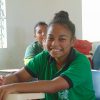
The Future Pacific Island Children Want
For 13-year-old Karen Semens, growing up on Pohnpei -- one of the four main island states in the Federated States of Micronesia, which comprises of more than 600 islands in the western Pacific Ocean -- the main challenge is being a girl. “In our culture, girls don’t have the same rights and opportunities nor do they get credit and recognition for their achievements as boys do. This prevents us from speaking our minds. For example in family meetings, only men make the decisions. I would like all girls to be treated as equals and have a say in decision making,” the 8th grade pupil from the Ohmine Public Elementary school in Pohnpei, tells IPS.
Q&A: ‘Place Gender Equality at the Heart of our Work’
Ambassador Mona Juul started her role as the Permanent Representative of Norway to the United Nations in January 2019, and is also the president of the United Nations Economic and Social Council (ECOSOC).
Indonesia’s Laws Ineffective against Human Trafficking
When her uncle offered her an opportunity to work in Jakarta almost a decade ago, the then 15-year-old Afra Burga Ambui immediately agreed and soon she was boarding a two-hour flight to the country’s capital and away from her village on Flores Island in East Nusa Tenggara, southern Indonesia.
It is Time for Action! Uniting for Africa’s Transformation
Twenty-five years ago, thousands of representatives adopted the Beijing Declaration, one of the most progressive universal agreement to advance women’s rights.
Helping Advance Women’s Political Rights in Ecuador
Inclusion of women in political processes is one of the key ingredients of sustainable peace. Although the number of women in political office has increased worldwide over the past 25 years, progress has been slow.
Q&A: Misinformation in the Time of an Uncontainable Virus
Just a month since the World Health Organization declared the Coronavirus a public health emergency, it is now taking steps to contain misinformation being spread about the disease. Globally, there have been more than 82,000 cases of Coronavirus, which has claimed 2,800 lives -- the majority being in China, where the disease has been traced to.
Climate-Smart Agriculture means More Time for Eswatini Women Farmers
Aside from the seven hours Mantfombi Msibi (63) would spend daily during the Eswatini farming season planting, applying herbicides and weeding her 1.2-hectare maize field, she would also spend E1 750 ($125) on tractor services. It was a huge cost of both time and money. But this season, Msibi will be benefiting from climate-smart farming technology that has opened up a new world of farming to her, saving her time in the process.
Belize Passes Milestone Law to Safeguard Fisheries
 The Environmental Defence Fund and its partners in conservation are this month celebrating a major milestone in Belize’s efforts to safeguard its fisheries.

Tanzania Investigative Journalist Pays Heavily for Freedom
After six months in prison, Tanzanian investigative journalist Erick Kabendera has finally been released at a cost of $118,000.
India’s Orange Farmers Search for Sustainable Agriculture
Hillol Datta, 26, travelled for two days from Kolkata to Jampui Hills – a picturesque hill station in the north eastern province of India – to see its fruit-laden orange orchards. However, after driving for several hours, all the young traveller saw were bald patches along the hill slopes and scattered rows of areca (nut) palm trees.
SDGs Corporate Tracker to Monitor Progress of UN’s Development Agenda
This year marks just ten years ahead of the deadline for completing the UN Sustainable Development Goals (SDGs) by 2030. These universally supported targets were always ambitious in their scope – yet what is clearer now than ever before is that quicker progress is crucial in the decade to come.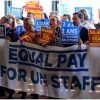
UN Accused of “Hypocrisy” Launching Equal Pay Day While Condoning Wage Discrimination
The United Nations, which has long preached the irrefutable concept of income equality to the outside world, is now accused of condoning wage discrimination in its own backyard.
A Post-2020 Global Biodiversity Framework Aims at Reinforcing Efforts to Save World’s Ecosystem
The UN’s highly-touted socio-economic agenda, which lays out an ambitious global plan for “people, planet and prosperity”, has been dominated by “goals, targets and deadlines.”
Zimbabwe’s Thin Line between Child Smuggling and Child Trafficking
Elton Ndumiso*, a bus-conductor who works the route from Zimbabwe’s capital, Harare, to neighbouring South Africa, sees it all the time: Zimbabwean women travelling with three or four children, who are clearly not their own kids, and taking them across the border.It’s a crime that most bus drivers or conductors either turn a blind eye to, or become accomplices in by assisting the women.

Fiscal Policies For Women’s Economic Empowerment
Making sure that opportunities to enter the workforce are fair and rewarding for women benefits everyone. Yet, the average female workforce participation rate across countries is still 20 percentage points lower than the male rate, largely because gender gaps in wages and access to opportunities, such as education, stubbornly persist.
As Planet Burns, One Million Species in World’s Eco-System in Danger of Extinction
When UN Secretary-General Antonio Guterres addressed the 193-member General Assembly last December, he focused on the smoldering climate crisis-- pointing out that the last five years have been the hottest ever recorded.
Will Zimbabwe Allow Freedom of Airwaves and Freedom of Speech too?
Zimbabwe is making fresh commitments to open up its airwaves with government promising to issue licences to private television and community radio stations before the end of the year.
That Mobile Game that’ll Generate Climate Solutions from Players Around the World
The United Nations Development Programme is leading a climate change effort that might finally address concerns many advocates have: bridging the gap between people and governments.
From Cocoa to Chocolate, Made With Love in Africa
A premium chocolate maker in São Tomé and Príncipe is on a drive to promote the taste for "made in Africa" chocolate, and tap into a $100 billion global indulgence associated with Valentine’s Day.
Restoring Competition in ”Winner-took-All” Digital Platform Markets
Digital platforms are at the centre of the global economy and daily lives of consumers. A handful of these platforms have become dominant in specific markets without facing meaningful competition. They include Amazon as a marketplace, Facebook in social networking, Google in search engines and Apple and Google in application stores.
War No More
75 years ago following the end of the Second World War and the first time any state has dropped an atomic bomb, not once, but twice, on Hiroshima and Nagasaki, 51 countries from all continents met to create the United Nations.« Previous Page — Next Page »





The Week with IPS

NEXT STOP - SDGs
Tracking global progress towards a sustainable world
Tracking global progress towards a sustainable world
