
Monday, November 23, 2026



News and Views from the Global South
Environment
U.S.: Obama Rejects Giant Keystone Pipeline Scheme
In a decision fraught with political risk, U.S. President Barack Obama Wednesday rejected the permit for the proposed giant Keystone XL pipeline project, insisting that his administration needed more time to determine whether it served the national interest.JAPAN: Pushing Nuclear Exports After Fukushima
Japan plans to boost civilian nuclear exports even as it tries to appease its population angered at radiation leaks from the Fukushima Daiichi nuclear power plant, crippled by an earthquake and tsunami on Mar. 11, last year.Montevideo Tackles Gas Emissions from Solid Waste
The government of the Uruguayan capital plans to reduce greenhouse gas emissions from the solid waste produced by its 1.3 million inhabitants, through a project set to enter into operation in March. The carbon credits generated will be purchased by the World Bank.CANADA: Opposition Builds to New “Tar Sands” Pipeline
As public hearings began earlier this month into a controversial pipeline that would transport crude oil from the Alberta tar sands to tankers along the coast of British Columbia, environmental groups and First Nations communities have raised staunch opposition to the project, which they say puts both the environment and their traditional way of life at risk.KENYA: Key Lakes Succumb to Human Activities
Several years ago, Lakes Kamnarok and Ol Bollosat in Kenya were vibrant water bodies that supported and shaped the ecosystems around them. But today they are shells of their former selves, due to heavy siltation caused by human activities.PAKISTAN: Forests Fall Victim to the Taliban
The forests of northwestern Pakistan have become the latest victim of the Taliban’s increasingly desperate quest for resources to sustain and fund its military programme.Melting Ice Makes Arctic Access a Hot Commodity
China, Brazil and India want seats on the Arctic Council as global warming creates new opportunities for shipping and resource extraction in the vast Arctic region.Saudi Arabia and Iran Spar over Oil Embargo
Saudi Arabia will make up for any shortfall in world oil supply caused by sanctions against Iran, the country's oil minister has said, despite warnings from Iran that such a move would provoke unspecified "consequences".Ecobreves – HONDURAS: New Earthquake Shelter Opened
The Japan International Cooperation Agency (JICA) has joined forces with the local beneficiary population to build the first earthquake shelter in Honduras.Ecobreves – BRAZIL: Sea Level Rising More Rapidly Near São Paulo
The sea level of the Atlantic Ocean is rising increasingly rapidly on the northern coast of the southern Brazilian state of São Paulo, according to a new university research study.Ecobreves – MEXICO: Air Pollution Standards Demanded
The poor air quality in the Mexican capital points to the urgent need for regulations on the use of clean fuel and the control of motor vehicle emissions, warned a non-governmental organization.INDIA: Indigenous Rights Versus Wildlife Rights? – Part 2
As the amount of protected forest dwindles rapidly in India, indigenous groups and wildlife find themselves living cheek to jowl in an increasingly contested space.GUATEMALA: For the Maya, the World Isn’t Ending – the Environment Is
The end of the Maya long-count calendar does not predict a global catastrophe, let alone the end of the world, say native activists and elders who spoke to IPS in Guatemala. But what are coming to an end are the world's natural resources, as a result of human activity, they warn.INDIA: Indigenous Rights Versus Wildlife Rights? – Part 1
Tucked away in a dense and ecologically diverse tiger reserve in Southern India, tribes-people and wildlife defenders are locked in a battle of indigenous peoples’ rights versus wildlife rights.NIGERIA: Corruption Fuels Public Anger
As a nationwide strike and protests against the lifting of the fuel subsidy paralysed Nigeria for the third day in a row Wednesday, analysts say the billions of dollars a year lost to corruption in the oil industry could have been used to leave the subsidy in place.Rio+20: The Moment When Everything Changed?
Humanity is driving Earth's climate and ecosystems towards dangerous tipping points, requiring radical new forms of international cooperation and governance, experts say.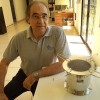
CLIMATE CHANGE: Clean, Efficient Wood Stoves Good for People and the Planet
In his quest to make the most efficient possible use of energy generated through wood combustion, Salvadoran René Núñez developed a simple but highly efficient wood stove that produces no smoke and reduces greenhouse gas emissions by 95 percent.SOUTH AMERICA: Responsible Tourism at the “End of the World”
An innovative responsible tourism initiative in the Beagle Channel - a narrow strait linking the Atlantic and Pacific near the southernmost tip of South America - ensures the compatibility of the observation and conservation of unique bird and mammal species.KAZAKHSTAN: Riot Town Has Its Say
Kazakhstan this week canceled, then re-authorised elections in a remote oil town where recent riots stemming from an oil workers strike left at least 16 dead and more than 40 buildings burned.Brown Revolution Brings New Hope
Picking spots for cattle to graze could reverse desertification and even do its bit to retard climate change, new experiments in Zimbabwe have shown. It’s what is coming to be called the Brown Revolution.Ecobreves – HONDURAS: Solar Power for Coffee Drying
Small-scale coffee growers in the northern Honduran region of Subirana are promoting the use of solar power to dry coffee beans in order to mitigate the pollution caused by other processes. Similar initiatives are also underway in Costa Rica and Nicaragua.« Previous Page — Next Page »


Through our global network of local writers, we are continuing our award-winning coverage of global and local environmental challenges, with a focus on the people for whom the ecosphere matters in a direct way: rural dwellers who have little means to protect themselves against adverse conditions; communities that need to switch to sustainable development in order to survive; poor women and children, who are the most vulnerable in natural disasters. Sponsored by the United Nations Environment Program (UNEP), the United Nations Development Program (UNDP) and The World Bank (WB), IPS also maintains the award-winning Tierramérica, a specialised information service on environment and development.

The Week with IPS

Tracking global progress towards a sustainable world


