
Monday, November 23, 2026



News and Views from the Global South
Environment
SOUTH AMERICA: Coming Together to Preserve the La Plata Basin
Five South American countries have launched a joint sustainable management programme for the Río de la Plata basin, to preserve one of the largest fresh water reserves in the world.
NEPAL: Community Forestry Unfazed by Political Turmoil
Nepal’s joint forest management system has taken such deep roots that the country’s prolonged political instability has had little effect on it.
The future of carbon markets: Taking politics seriously
Strong rewards are needed for those businesses that are willing to invest in a low carbon future.Ecobreves – HONDURAS: Recycling Project in Garifuna Communities
Four Garifuna communities (made up of descendants of Caribbean indigenous and African peoples) in the northern Honduran department of Atlántida will begin participating in December in a waste recycling project that encompasses environmental education, the creation of micro-enterprises and the sale of recycled products.Ecobreves – BRAZIL: Studying the Impact of Climate Change on Estuary Birds
A project carried out by the Mater Natura Environmental Studies Institute of Brazil will assess the potential impacts of climate change on estuary birds and propose ways to conserve their habitat.Ecobreves – VENEZUELA: Miners Move Into Canaima National Park
Indigenous communities report that illegal gold mining has now penetrated into Canaima National Park, which covers 30,000 square kilometers in southeastern Venezuela.
UGANDA: Single Mothers Left Behind in Flooded Swampland
Life in Bwaise – a slum on the outskirts of the capital of Uganda – has never been easy. But increasingly erratic rains over the last three years have brought constant floods to the former swampland. Residents who can afford to are moving out, leaving the poorest – often single mothers and grandmothers – behind.
Oil discoveries hold back agriculture
 Zuki Zimela reports from Libreville, Gabon: Farmers organisation say oil discoveries in Africa are holding back agricultural development.
CLIMATE CHANGE: Himalayan Nations Yet to Break the Ice
Chungda Sherpa, a former herder from eastern Nepal, has a warning tale ahead of the United Nations climate change conference in Durban.INDIA: Dangers of a Lax Nuclear Strategy
On August 26, Japanese Prime Minister Naoto Kan resigned, taking responsibility for the disastrous meltdown of the Fukushima Daiichi nuclear power plant, which was caused by the March 2011 undersea earthquake and ensuing tsunami.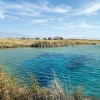
Unique Mexican Oasis in Danger of Vanishing
A rare wetlands ecosystem in the Chihuahuan desert in northern Mexico that may hold key information about the origins of life on earth – and even about possible life on Mars – is in serious danger of disappearing if water continues to be extracted by agribusiness concerns, local scientists warn.
AFRICA: Wanted: Greener Cities
In Africa, where urbanisation will be one of the major developments over the next few decades, it will be key for cities to figure out how to handle rapid urban expansion and much-needed economic growth, while creating more environmentally-friendly cities and reducing their carbon footprint at the same time.
CENTRAL ASIA: Together They Lose
Rarely have so many donor countries spent so much for so long to achieve so little. In fact, the scores of Western countries ranging from the Netherlands to the United States that have tried for 20 years to coax the Central Asian nations to use their water cooperatively and create a win-win situation for all have found that the Central Asians are cooperating less and less, not more and more.
CLIMATE CHANGE: Himalayan Task Ahead
Prime ministers of Bhutan, Nepal, Bangladesh and India gather here on Saturday (Nov. 19) for the 'Climate Summit for a Living Himalayas', aiming to adopt an ambitious ten-year roadmap for regional adaptation strategies.
AFRICA: Change the Donors Climate
When donor-funded horticultural projects failed in Kalacha village at the edge of the Chalbi Desert in North Eastern Province, Kenya, the local pastoralist community proposed their own idea, which turned out to be the solution to their problems.
The Rush for Oil in West Africa – The New Wild West?
There is a new oil rush off the coast of West Africa. But there are fears that the sector is not sufficiently regulated, and watchdog groups are raising concerns about transparency and governance in the region.US-IRAN: Key Senator Pushes “Nuclear Option” Against Central Bank
Amid simmering tensions surrounding Iran's nuclear programme, a key pro-Israel U.S. senator has tabled legislation that would effectively ban international financial companies that do business with the Central Bank of Iran (CBI) from participating in the U.S. economy.Q&A: The Finer Points of Rising Sea Levels
Long before the Pacific will rise to a level that will leave its estimated 30,000 islands submerged, most of them might be severely affected by frequent flooding and storms.African Sun Prepares to Power Europe
Solar thermal power plants are indispensable to meet Europe’s energy demands and to reduce greenhouse gases emissions substantially, according to a new study by a European scientific commission.ASIA-PACIFIC: Refugees of Climate Change Rising Steadily
Asian countries, home to about 60 percent of the world's population, will be hit hardest by changing weather patterns and a degrading environment, research indicates.Floods Leave Thai Economy Gasping
No guns are needed in this battle. Only the muscle of Thai soldiers defending a sprawling industrial estate on the eastern end of this city from an advancing enemy - flood waters.« Previous Page — Next Page »


Through our global network of local writers, we are continuing our award-winning coverage of global and local environmental challenges, with a focus on the people for whom the ecosphere matters in a direct way: rural dwellers who have little means to protect themselves against adverse conditions; communities that need to switch to sustainable development in order to survive; poor women and children, who are the most vulnerable in natural disasters. Sponsored by the United Nations Environment Program (UNEP), the United Nations Development Program (UNDP) and The World Bank (WB), IPS also maintains the award-winning Tierramérica, a specialised information service on environment and development.

The Week with IPS

Tracking global progress towards a sustainable world


