Languages
Wednesday, November 11, 2026



News and Views from the Global South
Featured

Poor Communities on the Salvadoran Coast Face Constant Threat of Eviction
Small farmer Francisco Martínez pushed his son’s wheelchair to another part of the courtyard of their house, located in a small coastal community in El Salvador, before saying sadly: "It would be a great injustice if they kicked us out of here."
Africa Should Bargain Hard for COVID Vaccine Equity: Lessons from Indonesia during Avian Flu
Many countries around the world have punished most of the African continent for the scientific discovery of the Omicron variant through the imposition of travel bans.
Global Arms Industry Thrives Amid Worldwide Pandemic Devastation
The 21-month long pandemic, which began with the outbreak of the deadly corona virus back in March 2020, ravaged hundreds and thousands of businesses and industries resulting either in widespread losses, closures or bankruptcies.
Zero-Leprosy in Pandemic: Experts, Advocates Discuss New Strategies
As 2021 nears its end, public health systems worldwide remain severely strained by COVID 19, which is showing no sign of ending. But even as countries battle to control the deadly pandemic, they must also maintain the progress made against other diseases, including leprosy, global leprosy experts and advocates have urged.
Social Distance, Science and Fantasy
In these times of COVID isolation, social distance get on the nerves of several of us and the effects may be long-lasting, even endemic. Many schoolchildren have interacted and still meet with their teachers through computer networks, while the same phenomenon applies to their contact with others. Technical devices are with an ever-increasing scope becoming an integral part of all communication, teaching, and entertainment, in short – of social interaction. When it comes to education, given all the poor and even harmful educators we are forced to encounter during our lifetime, mechanization of education might be perceived as a step forward. Nevertheless, too much dependence on the internet might undoubtedly have its pitfalls; contributing to an abstraction of our existence where real adventures and life-changing encounters with other human beings become all the rarer. The world may be demystified, losing its wonder and magic.
Act to Save Children Living Precarious Lives in Cameroon’s Forgotten and Neglected Conflict
Education is under attack in Cameroon. As one of the most complex humanitarian crises in the world unfolds, Education Cannot Wait’s director Yasmine Sherif and the Secretary-General of the Norwegian Refugee Council, Jan Egeland, say the children are pawns for grown men in a political conflict.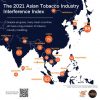
Big Tobacco Industry Rides COVID-19 Pandemic as Countries Grapple for a Response
Almost two years into the COVID-19 pandemic, many countries in the developing world continue to grapple with basic issues such as securing sufficient vaccines and providing essential medical care for their sick. Many economies are in recovery mode as governments scramble to resuscitate them with recovery packages and build back better plans.
Volunteerism: Central to the Creation of a New Social Contract
The International Volunteer Day, on December 5, is not just one of the many internationally observed days that the United Nations commemorates annually.
African Network Fosters Unity, Fights Gender Discrimination & Advances Sustainable Development
The widespread 21-month-old lockdown, triggered by the corona virus pandemic, had a destructive impact on the global economy, claimed over 5.2 million lives, destabilized governments and radically changed lifestyles worldwide.
What Will it Take to Turn Farmers Toward Climate-Resilient Superfood Millet?
Millet could be Africa’s silver bullet for combating anaemia – and apart from health benefits, it is climate-resilient.
Global Solutions Needed for Pandemics, So All Can Live in Dignity
COVID-19 highlighted significant gaps in the world’s ability to deal with pandemics, and it’s crucial these are addressed to mitigate the impacts of future global health problems, Masato Kanda, Japan’s Vice Minister of Finance for International Affairs, told a recent online meeting of parliamentarians.
Inequality is Set to Kill Millions – “We Have to Fight it Together.”
This week I called out to the world to warn them that inequalities are making us all unsafe. I noted starkly our new analysis that we face millions of additional AIDS deaths – 7.7 million in the next decade alone – as well continued devastation from pandemics, unless leaders address the inequalities which drive them. We have to treat this threat as an emergency, as a red alert.
Fighting Loss of the Greater Mekong’s Prized Rosewood Forests
The famed Rosewood forests of the Greater Mekong region in Southeast Asia produce dark, richly grained timbers zealously sought after worldwide by manufacturers of luxury furniture, flooring and musical instruments, among other products. But their high value has also made them a major commodity in transnational organized crime.
How to Tackle the Femicide Epidemic
Since the start of the Covid-19 pandemic, the increase in domestic violence rates has led the United Nations to declare a ‘shadow pandemic’ of gender-based violence. In the most brutal cases, the violence has led to murder – or ‘femicide’, as the World Health Organisation calls the killing of women specifically because of their gender.
High Global Fertiliser Prices Overshadow Malawi’s Farm Subsidy Programme
Ellena Joseph, a small-scale maize farmer in Chiradzulu District in Southern Malawi, finished preparing her field early in October.
Pakistan: Gender-Intentional Policy Can Make Agent Banking Work Better
Many women in Pakistan remain financially excluded. In 2020, only 7% of the female population had a formal account. One of the reasons for this is that agent networks — the bridge between the cash economy and digital financial services — remain largely inaccessible to many women. Approaching policy and regulation through a gender-intentional lens that considers prevailing social norms can help regulators affect positive change in this arena.
School Meals Coalition Hopes to Provide a Meal to Every Child
Meals at schools not only give each child a nutritious meal but increase enrolments, among other benefits.
Growing Amazon Deforestation a Grave Threat to Global Climate
For three weeks, the Brazilian government concealed the fact that deforestation in Brazil’s Amazon rainforest increased by nearly 22 percent last year, accentuating a trend that threatens to derail efforts to curb global warming.
New Pan-African Payments System Provides Big Relief for African Traders
When Fidelis Adele, the CEO of Freetown-based Solid Graphics, a printing and communications company, needed to order some printing equipment from Nigeria in September, he paid an extra $165 on top of a $10,000 bank transfer to the seller. Yet it took three days for the money transferred in Sierra Leone to be credited to the beneficiary’s account in Nigeria.
How to Tackle Africa’s Employment Crisis
The Covid-19 pandemic aggravated Africa's already severe employment crisis. The solution lies in a long-term political and economic transformation.
Ethiopia’s Civil War Fueled by Weapons from UN’s Big Powers
In Hollywood movies, the legendary Wild West was routinely portrayed with gunslingers, lawmen and villains—resulting in the ultimate showdown between the “good guys and the bad guys”. Linda Thomson-Greenfield, US ambassador to the UN, told the Security Council early this month that the warring parties in the devastating 12-month-long civil war in Ethiopia involve the Ethiopian National Defense Forces, the Eritrean Defense Forces, the Amhara Special Forces, and the Tigrayan People’s Liberation Front.« Previous Page — Next Page »





The Week with IPS

NEXT STOP - SDGs
Tracking global progress towards a sustainable world
Tracking global progress towards a sustainable world
