Languages
Saturday, November 21, 2026



News and Views from the Global South
Featured
French firm attacks Ugandan tax using ISDS
The heavily criticized legal mechanism, known as ISDS, is an important tool for European companies to pressurize developing countries. This year Uganda joins the rank of developing nations asking themselves: "Why have we ever signed this?"UN Sees Key Role for Women in Post-2015 Development Agenda
The United Nations, which has launched an intense world-wide campaign to ensure the full implementation of its post-2015 development agenda, is unequivocal in asserting that gender equality and women’s empowerment are indispensable to the realization of the 17 Sustainable Development Goals (SDGs) adopted by world leaders last September.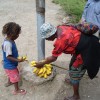
Malnutrition a Silent Emergency in Papua New Guinea
High up in the mountainous interior of Papua New Guinea (PNG), the most populous Pacific Island state of 7.3 million people, rural lives are marked by strenuous work toiling land in rugged terrain with low access to basic services.
WTO: Giant Steps in the World Conference
World Trade Organization (WTO) members concluded the Tenth Ministerial Conference in Nairobi on 19 December by securing an historic agreement on a series of trade initiatives. The “Nairobi Package” pays fitting tribute to the Conference host, Kenya, by delivering commitments that will benefit in particular the organization’s poorest members.
Mexican Government Ignores Social Impact of Energy Projects
Mexico’s hydrocarbons law stipulates that oil contracts must include a social impact assessment. But this has not been done in the case of the oilfields granted to the country’s former oil monopoly, Pemex, or to private companies since the industry was opened up to private investment.Despite Health Risks, Many Argue GMOs Could Help Solve Food Security
Cameroon is on the path to introduce genetically modified organisms (GMO’s). This would be overseen by the Cameroon Academy of Sciences, in collaboration with the National Biosafety Committee, if the Cameroon Cotton Corporation successfully implements a three-year test cultivation of cotton.
Climate Smart Coffee and Banana Set to Boost East African Farmers’ Income
 Ugandan farmers are increasingly inter-planting coffee, the country’s primary export, and banana, a staple food, as a way of coping with the effects of climate change.
World’s Poor Trailing Far Behind Rich in Digital Technology
The world’s developing nations, numbering over 130, are still lagging far behind the 34 rich industrialized countries in the race for digital technology.
Disabled Persons Not Part of AIDS Success in Zimbabwe
Wheelchair-bound, her body now skeletal from full blown AIDS, disabled 38-year-old Melisa Chigumba attempts to wave away a swarm of flies hovering around her face as she sits outside her home in Chachacha, a remote area in Shurugwi, 278 kilometers south of the capital, Harare.
Accord Calls for First Global Conference on Peace
On 21 November 2015, during ACCORD’s 2015 Africa Peace Award celebration, I made a call for the United Nations to convene the first ever UN Global Conference on Peace.
Indigenous Villagers Fight “Evil Spirit” of Hydropower Dam in Brazil
At dusk on the Tapajós River, one of the main tributaries of the Amazon River in northern Brazil, the Mundurukú indigenous people gather to bathe and wash clothes in these waters rich in fish, the staple of their diet. But the “evil spirit”, as they refer in their language to the Sao Luiz Tapajós dam, threatens to leave most of their territory – and their way of life – under water.Companies Sue Developing States through Western Europe
Many Europeans fear the Transatlantic Trade and Investment Partnership (TTIP) because it could enable American companies to file claims against their states. The strange thing, however, is that Western Europe is becoming a big hub in this mechanism, called the Investor-State Dispute Settlement (ISDS), leading to billion dollar claims against poorer countries.
UN Discovery of Secret Detention Centre Revives Nightmares
Details of a secret detention center, where serious human rights abuses took place, deep inside the sprawling Tricomalee Naval base in the east of Sri Lanka are slowly emerging.COP21 Solved a Dilemma Which Delayed a Global Agreement
One of the most significant aspects of the international conference on climate change, concluded in Paris on December 12, is that food security and ending hunger feature in the global agenda of the climate change debate.UN Seeks Hefty 20 Billion Dollars for Humanitarian Needs in 2016
The world’s refugee crisis – triggered mostly by conflicts and persecutions – will continue to be one of the biggest problems facing the United Nations next year.
Coffee Rust Aggravates Poverty in Rural El Salvador
Sitting in front of a pile of coffee beans that she has just picked, Ilsy Membreño separates the green cherries from the ripe red ones with a worried look on her face, lamenting the bad harvest on the farm where she works in western El Salvador and the low daily wages she is earning.
Alaa Arsheed: A Refugee’s Sweet Sound of Success
“In Beirut I was like a bird in a cage, I felt like a prisoner. Today, I have the chance to let my dreams come true, make a living with my music, realizing my dad’s project: open a new Alpha – my family’s cultural center, destroyed during the war- to share Syrian culture and help my people in Europe,” Alaa Arsheed, a Syrian refugee, told IPS.
Cancer, Not Clashes, the Number One Killer in Kashmir
In an isolated ward of one of Kashmir’s largest government-run hospitals, 54-year-old Ashraf Ali Khan is finding it hard to sleep properly. His 15-year-old son, Asif, is sitting on a bench near the bed staring at his ailing father.
Mexico to Export Nixtamalisation of Grains to Africa
Every day in the wee hours of the morning Verónica Reyes’ extended family grinds corn to make the dough they use in the tacos they sell from their food truck in Mexico City.
Should The World Emulate US Crop Insurance?
With the increased frequency and severity of extreme weather events adversely affecting agricultural outputs and farmers’ incomes, commercial crop insurance has been touted as the solution for vulnerable farmers all over the world. Financial and farm interests have been promoting US crop insurance as the solution. It is instructive to consider lessons from the 2012 drought.
Another Himalayan Blunder
South Asian integration remains a distant dream as some member countries like Nepal resent India’s big brotherly dominance in the region. They perceive that they have no stakes in India’s rise as an economic power. Ensuring unrestricted market access perhaps would have made a big difference in this regard. Their resentment has only deepened as this hasn’t happened. Instead they have registered growing trade deficits with India! The on-going travails of the Himalayan kingdom vis-a-vis India exemplify the problematic nature of integration in a region that accounts for 44 per cent of the world’s poor and one-fourth of its’ population.« Previous Page — Next Page »


The Week with IPS

NEXT STOP - SDGs
Tracking global progress towards a sustainable world
Tracking global progress towards a sustainable world
