Languages
Friday, November 20, 2026



News and Views from the Global South
Gender
EL SALVADOR: Women Demand to Be Included in Climate Solutions
Some 100 rural women in El Salvador demanded that the government halt mining and hydroelectric projects that are harming their communities and establish specific programmes with a gender perspective for combating climate change.JAPAN: Mothers Rise Against Nuclear Power
Japan’s nuclear power industry, which once ignored opposition, now finds its existence threatened by women angered by official opaqueness on radiation from the Fukushima Daiichi nuclear plant after it was struck by an earthquake- driven tsunami on Mar. 11.
Conflict Minerals Law Hold-up Threatens Lives in DR Congo
Electronics are at the top of many holiday gift lists in the U.S. this season, but some of those products could be made using minerals from areas of the world where conflicts have led to widespread human rights abuses.
Moving Towards a Food-Secure Ghana
In Dundo village in Nyankpala district, Northern Ghana, 10 women are busy weeding a rice field on a piece of land donated to them by the village chief.ARGENTINA: Things Slowly Getting Better for Transgender People
Transvestites and transsexuals in Argentina, who were among the most marginalised minority populations, have seen respect for their rights grow in recent years, especially since same-sex marriage became legal in this country a year and a half ago.
CLIMATE CHANGE: Waiting for the “Heavens to Weep”
Duduzile Sibanda takes a break from preparing her long stretch of land for her maize crop in rural Mberengwa, in Zimbabwe’s Midlands province. She wipes her brow under the scorching sun and looks upwards. The sparse clouds are a cause of concern as she studies the sky and wonders aloud when the "heavens will weep."
KENYA: A Shelter for Safe Delivery
The Garissa Maternal Shelter in North Eastern Province, Kenya is the only such facility in an area with the country’s highest maternal mortality rate. At 1,000 deaths per 100,000 live births, it is almost double the country’s average.
INDIA: ‘Rape’ Stands in the Way of Love
A few days after his wedding in 2008, Imran* was thrown behind bars in Srinagar’s central jail for the alleged abduction and rape of his wife Shafeen. Shafeen denied the charge against her newlywed husband. It was her parents, furious that the couple married against their wishes, who ensured that the young bridegroom languished in prison for two years, until he was bailed out in 2010.
MALAWI: Women’s Education the Path to the Presidency
On an elegant veranda adorned with a red carpet, Malawi's Vice President Joyce Banda recalls how her childhood friend Chrissie Mtokoma was always top of their class and how she struggled to beat her. But now decades later Banda is a likely contender for the country's presidency in 2014, while Mtokoma lives in poverty.
SOUTH SUDAN: Women Aim to Protect Their Rights in a Young State
As South Sudan maps out its economic future at the South Sudan International Engagement Conference (IEC) this week in Washington, women from the new country called on donors to invest in projects that ensure women benefit equally from development plans.
NIGERIA: Fearing the Floods – Sleeping with One Eye Open
The women of Makoko, a low-lying slum close to the Lagos Lagoon along Nigeria’s Atlantic coast, always sleep with one eye open. Many live in fear that when they go to sleep at night they will wake to flooded homes and business.
CLIMATE CHANGE: City Apartheid Built Turns Green
Something unusual is happening in Atlantis. Created in the 1970s to fulfill the apartheid government's agenda to evict "coloured" South Africans from Cape Town, Atlantis has always been best known as the city that apartheid built.
Civil Society organisations are sticking to their guns: Women will be hardest hit by the climate change.
 Civil Society organisations are sticking to their guns: Women will be hardest hit by the climate change. Zuki Zimela reports from COP 17 in Durban.

Mauritian men work to change attitudes
Mauritian men are standing up against violence against women. Nasseem Ackbarally reports that some are now joining organisations to change attitudes towards women in society.

INDIA: Education and Employment Bring Abuse
Increased education and employment opportunities for women in Kashmir might have brought monetary independence and a degree of empowerment but it also has women ensnared in a vicious trap of domestic violence.
‘Walk the Busan Talk’
Women’s rights champions are not prepared to let the dust settle on the Fourth High Level Forum on Aid Effectiveness that ended in this South Korean port city on Dec. 1 with the customary nod towards gender equality and empowerment.
SOUTH AFRICA: Climate Change Affecting Fisherwomen’s Livelihoods
Having observed changes in the sea and the life cycles of the rock lobsters that their livelihoods depend on, a group of fisherwomen from the Western Cape, South Africa are calling on government to adjust fishing seasons to adapt to what they claim are climate change-related alterations.BURMA: Rape Used as Military Weapon
The Burmese army has been following a policy of systematically raping women and girls to subjugate the country's rebellious ethnic minorities, according to a new report.
Armed Societies, Another Tragedy for Women
Kairobis Arcia, 25, died from a bullet to her head shot by her husband, Oswaldo Mendoza, 32, who said he was blinded by jealousy in an argument fuelled by alcohol and drugs.
HONDURAS: Indigenous Cooperatives Cultivate Success
Thanks to the quality and freshness of their produce, indigenous Lenca farmers in western Honduras are regular suppliers of seven supermarket chains. This year they won the National Environmental Prize, in the community initiatives category.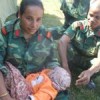
NEPAL: Giving Up Guns for Motherhood
Sonikumari Jha puts on her green camouflage fatigues, deftly laces up her boots and is ready to step out and announce her decision to embrace a new life. Her four-year-old son, who has been watching the same rote for years, is puzzled by an important omission. "Mama, you have forgotten your gun," he calls out.« Previous Page — Next Page »


Women make up half the world's population, but don't nearly share half of the world's wealth, well-being and opportunity. Two-thirds of the world poor are women, disproportionally exposing women to precarious living conditions, disease and unmitigated natural disasters. The media, meanwhile, remains a male-dominated sector in much of the world, contributing to women's voices lacking a crucial amplifier to put their concerns on political agendas and unleash the development potential of their ingenuity. Rather than then stereotypical victims of local and global forces, women are also organizer, innovators, conservators and community builders. These are some of their stories.

The Week with IPS

NEXT STOP - SDGs
Tracking global progress towards a sustainable world
Tracking global progress towards a sustainable world
