Languages
Friday, November 20, 2026



News and Views from the Global South
Gender

ENVIRONMENT-INDIA: Women Turn Waste Into Wealth
Standing on the shimmering white beach and gazing out at the turquoise blue waters of the Arabian sea, it is hard to believe that a decade ago this international tourist destination was under siege by mounting heaps of garbage.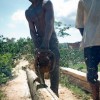
UGANDA: Deforestation Robbing Communities of their Income
From a distance, Bugala Island in Lake Victoria is a patchwork of green and brown. The pattern is a result of dense forest retreating in the wake of recently planted palm tree plantations.
US: For Many Women, a Prison Sentence Also Means Abuse
While most of the one million women in prison in the U.S. are incarcerated for non-violent offences, many experience harsh treatment that advocates say violates their human rights.
Mountain magic turning tragic
 A mountainous country that boasts of eight of the 14 highest peaks in the world, including Mt Everest, Nepal is threatened by both deluge and drought with climate change shrinking its glaciers by 21 percent in 30 years. As rising temperature disturbs the balance of snow, ice and water in the Hindu Kush Himalayan region where it is located, millions of mountain people and 1.3 billion people living downstream in Asia's major river basins face the loss of livelihood, homes and lives due to flash floods and droughts.

Climate Change Killing Womens’ Livelihoods
Talata Nsor, a 54-year-old woman from Bolgatanga community in Northern Ghana, has been weaving the cultural Bolga baskets, which are named after her community, her entire life.
Busan Skirts Gender Equality
Gender champions have lauded the Fourth High Level Forum on Aid Effectiveness for providing gender equality and the empowerment of women a special session, but there is dissatisfaction with Thursday’s Busan outcome document.
Andean Migrant Women Create Opportunities
Women make up a majority of migrants from South America's Andean region and they send more money home to their families than men, according to a study carried out in Bolivia, Colombia, Ecuador and Peru.For Big Financial Institutions, Profit Trumps Women’s Rights
This year, for the first time, the World Bank dedicated its 2012 annual flagship World Development Report to women as indispensable players in the global economy and launched a media campaign to "think equal".To Women’s Rights, Financial Institutions Pay Lip Service Only
On day seven of "the 16 days of activism to end violence against women" campaign, women's rights organisations around the world are asking what the biggest international financial institutions (IFIs) are really doing to protect women's rights, which are under daily assault.
LATIN AMERICA: Female Condoms in Short Supply
In spite of the growing spread of HIV/AIDS among women in Latin America and the Caribbean, the female condom, which could put them in charge of their health, is not readily available.
Lessons from the Andes on Budgeting to Close the Gender Gap
Three countries in South America's Andean region, Bolivia, Ecuador and Peru, have a great deal to teach and share with those meeting in Busan, South Korean this week to discuss, among other things, how to make sure that development aid incorporates a gender focus in order to be effective.
‘Nothing at Busan for African Women, Children’
Although there has been considerable progress towards reducing maternal and infant mortality, millions of women and children in Africa are still in need of better health services, food and sanitation.
Q&A: “Gender Budgets Help You Think About People”
Gender responsive budgeting (GRB), a U.N. Women tool to curb inequality, "helps you think about people...and to use resources in a more effective manner," says Lorena Barba.
Global Fund for Education Gathers Momentum
If the international community can successfully raise billions of dollars to fight deadly diseases, why not a similar fund to promote education, asks Gordon Brown, former British prime minister.
West African farmers see climate changing
 Women in West Africa have over the years relied on fishing and farming as their traditional source of income. But as Sam Olukoya reports from Lagos, changing weather patterns caused by climate change have put their livelihood under threat.

South-South Ties Reshape Aid Paradigm
When the G-8 countries, comprising the world’s largest industrialised nations, decided that improving Internet access to developing countries should be a priority, scores of leaders from developing world opposed the move.
The Aid From Women No One Counts
Gender responsive budgeting becomes important when seen in the background of unpaid but important care work done by women, say delegates to an international meet on aid effectiveness in this South Korean city.
Arab Women Seek a Place in the Spring
As several countries in the Middle East and North Africa (MENA) elect bodies to write new constitutions, women are looking to expand their rights through legislation.
Mobilising Men to End Violence Against Women
Since it launched in 1997, the United Nations Trust Fund to End Violence Against Women has distributed more than 78 million dollars to 339 projects around the world, but even these resources fall far short, meeting less than five percent of demand.
Q&A: Climate Talks Must Ensure That “Words Become Reality”
Involving women in decision-making and resource management is a basic necessity for any effective plan to address the multi- layered and life-threatening consequences of climate change, says the head of UN Women.
US: Battered Bodies, Broken Families: Remembering Immigrant Women
Today marks the first of "16 Days of Activism Against Gender Based Violence", a campaign launched in 1991 to insist that 'women's rights are human rights'.« Previous Page — Next Page »


Women make up half the world's population, but don't nearly share half of the world's wealth, well-being and opportunity. Two-thirds of the world poor are women, disproportionally exposing women to precarious living conditions, disease and unmitigated natural disasters. The media, meanwhile, remains a male-dominated sector in much of the world, contributing to women's voices lacking a crucial amplifier to put their concerns on political agendas and unleash the development potential of their ingenuity. Rather than then stereotypical victims of local and global forces, women are also organizer, innovators, conservators and community builders. These are some of their stories.

The Week with IPS

NEXT STOP - SDGs
Tracking global progress towards a sustainable world
Tracking global progress towards a sustainable world
