Languages
Wednesday, November 4, 2026



News and Views from the Global South
Gender

Taking Humanitarianism Hostage – the Case of Afghanistan & Multilateral Organisations
Can you imagine what it would be like if women were simply not allowed to step outside of their homes, let alone to work for a living? When women choose to do so, and they can afford it, then it is a matter of choice. When women mostly cannot, as is the case in Afghanistan now, not only is half the population imprisoned, but children go hungry, and communities sink deeper into poverty.
African Parliamentarians Strongly Committed to Population and Development
Many Ghanian Members of Parliament (MPs) champion adolescent reproductive health rights to stop the practice of child marriage, which is prevalent in some areas of the country even though the country’s Constitution and Children’s Act outlaw it, Dr Rashid Pelpuo (MP) told IPS in an exclusive interview.
Women Commuters Travel Safe in Innovative Bus Scheme in Pakistan
A bus rapid transport (BRT) system in Peshawar is benefiting female students and working women by providing a safe journey – something women passengers could not take for granted on regular public transport.
Africa’s Maternal Deaths Need Urgent Action to Meet SDG Goals
As the effects of COVID-19 on Africa’s health sector become clearer, it looks the continent will need to take urgent steps to overcome the disruptions suffered in the breakdown in antenatal and postnatal care for women and newborns and neonatal intensive care units. The pandemic brought some setbacks to the gains achieved in maternal mortality over the past decade.
All Girls Must be Allowed to Return to Education in Afghanistan
Education Cannot Wait stands in solidarity with every girl and woman in Afghanistan. Each one has an inherent human right to education. We also stand in solidarity with every Afghan father, brother, husband and son, suffering the pain of seeing their daughter, sister, wife and mother brutally denied their right to an education.
War, Famine, Disease, Disasters – 2022 – a Year Staring at Apocalypse
A year that started with Russia’s invasion of Ukraine and is ending with famine in Africa, while still spreading death and misery through an enduring pandemic and a deteriorating climate crisis -- 2022 has been an apocalyptic warning of the frailty of our planet and the woeful shortcomings of humankind.
The Trap: A Journey from Afghanistan to Europe
Maliha looks confident in a café in Athens as she tells the story of her journey from Afghanistan to Europe. But as she starts recounting how a smuggler assaulted her in Turkey two years ago, she pauses, looking the other way and fiddling with her loose hair.
Raising the Alarm on the Slow Pace of Family Law Reform
In September 2021, in the midst of a pandemic-related lockdown, a 15-year-old Muslim girl from Colombo, Sri Lanka was married off by her relatives to a much older man.
Gender Parity at the UN Willfully Ignores the Facts
There are two sides to the problem of Gender Parity at the United Nations. On the one hand, member states need to appoint more women to their senior ambassadorial ranks. There is always tremendous competition for the post of UN ambassador, especially if a member state is on the UN security Council.
Gender Inequality: A Question of Power in a Male-Dominated World, Declares UN Chief
UN Secretary-General Antonio Guterres has singled out Gender Parity as one of his key priorities in his second term in office, beginning 2023. Describing it as “a strategic goal of the Organization,” he pointed out some of the “notable advances achieved in the past five years.”
Gender Target at COP15: Russia’s Single Word Objection Holds Up Process
Since the beginning of the high-level segment, tensions have been steadily rising at the 15th meeting of the conference of the parties to the UN Convention on Biological Diversity (CBD COP15) among all participants, including members of country delegation teams, NGOs, observers, monitors, and media. At the press events held daily at the media center and various other events in the Montreal Convention Center, an outburst of anger and frustration have become a common sight.
COP15: Impact of Mega Infrastructure Projects on Biodiversity Stay Off-Radar
As the COP entered its crucial second week, negotiations are intensifying now. A slew of new contact groups – meeting mostly behind closed doors – are discussing the minutest details of the Global Biodiversity Framework and the contentious issues within or around it, such as Digital Sequencing Information, Access, and Benefit Sharing. The core aim of all these groups is to talk and resolve all issues and produce a draft treaty that will be acceptable to all parties.
COP27 Fails Women and Girls – High Time to Redefine Multilateralism
The African women and Girls were deeply concerned about the lack of commitment by UNFCCC Parties as climate change continues to impact negatively on the continent victimizing more women and girls.
COP27 Fails Women & Girls – High Time to Redefine Multilateralism
Three weeks have gone by since the much-ballyhooed mega-gathering of the 27th Conference of Parties (COP) to the UN Framework Convention on Climate Change (UNFCCC), generally known by its easy-to-say-and-remember title - COP27, concluded at the resort city Sharm El-Sheikh in Egypt.
Battling the Twin Challenge of HIV and Cervical Cancer
Damaris Anyango* was recently discharged from Kenyatta National Hospital, battling the twin challenge of cervical cancer and HIV. She is 50 years old and was diagnosed with HIV nearly ten years ago.
Three Ways to End Gender-based Violence
How are the multiple shocks and crises the world is facing changing how we respond to gender-based violence? Almost three years after the COVID-19 pandemic triggered high levels of violence against women and girls, the recent Sexual Violence Research Initiative Forum 2022 (SVRI) shed some light on the best ways forward.
Push Forward – Act Now to End Violence Against Women and Girls
Five years ago, the global #MeToo movement brought new urgency and visibility to the extent of violence against women and girls. Millions of survivors came forward to share their experience. They forced the world to recognise a reality that shames every one of us. Their courage and voice led to a powerful collective activism and a sea-change in awareness.
End Violence Against Women and Girls
As we now have entered the 21st century, we must end violence against girls and women. Attacking and abusing girls and women as a means of warfare, the war-machinery or domestic violence as a result of crisis, is absolutely abhorrent and unacceptable. Exposing half of the world’s population to the risks of violence because of their gender is not only a violation of international and domestic laws, but a disgraceful and brute breach of our very own humanity.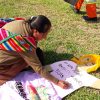
Pandemic Aggravated Violence against Women in Latin America
Violence against women has failed to decline in the Latin American region after the sharp rise recorded during the COVID-19 pandemic, while preventing the causes of such violence remains a major challenge.
Ending Violence against Women: from Rhetoric to Action
Violence against women is a global crisis, prevalent in every community and society around the world. Globally, estimates published by WHO indicate that about 1 in 3 (30%) of women worldwide have been subjected to either physical and/or sexual intimate partner violence or non-partner sexual violence in their lifetime. Yet, there is limited coordination and insufficient funding to truly address the scale of the issue.
Ugandan Women Tackle Domestic Violence with Green Solutions
Constance Okollet Achom, a Ugandan woman from Tororo, a rural village located in Eastern Uganda, has helped several dozens of her peers affected by domestic violence to address the issue by equipping victims with skillsets to manufacture eco-friendly biofuels from agro-forestry waste.« Previous Page — Next Page »





Women make up half the world's population, but don't nearly share half of the world's wealth, well-being and opportunity. Two-thirds of the world poor are women, disproportionally exposing women to precarious living conditions, disease and unmitigated natural disasters. The media, meanwhile, remains a male-dominated sector in much of the world, contributing to women's voices lacking a crucial amplifier to put their concerns on political agendas and unleash the development potential of their ingenuity. Rather than then stereotypical victims of local and global forces, women are also organizer, innovators, conservators and community builders. These are some of their stories.

The Week with IPS

NEXT STOP - SDGs
Tracking global progress towards a sustainable world
Tracking global progress towards a sustainable world
