Languages
Sunday, November 22, 2026



News and Views from the Global South
Headlines

What Explains Vaccination Rates in EBRD Regions?
Officially reported deaths from Covid-19 started to rise again in autumn 2021 in a number of economies in the EBRD regions. While in advanced economies in Europe the mortality rate has remained low despite the pick-up in Covid-19 cases, in the EBRD regions the mortality and infection rates continued to move in tandem.
A Nuclear-Weapons-Free-Zone in the Middle East— & the Elephant in the Room
Israel’s nuclear presence in the Middle East is best characterized as “the elephant in the room” -– an obvious fact intentionally ignored with deafening silence.
Refugee Voices Matter – Nothing about Us, Without Us
Over the past two years, the global refugee response has been tested. The world is being rocked by the greatest pandemic in over a century, while waves of refugees have fled from Afghanistan, Myanmar, Belarus, and Tigray. So, where do we go from here? Next week, the international community will convene to take stock of the successes and shortcomings of the Global Compact on Refugees (GCR), a unique multilateral mechanism built to ensure the protection of one of the most vulnerable populations. This marquee Compact is up for review, but unlike other review processes, the participation of the people whose lives are shaped by the decisions to be made in the review process will be marginal. Unfortunately, only 1 in 50 of the invited attendees at the UNHCR High-Level Official’s Meeting (HLOM) to discuss the GCR are refugees.
Belarusian Journalists Keep Reporting From Exile – Here’s How
Independent journalism has come increasingly under attack in Belarus, as the country has become a regional hotspot of media repression. Lately, as many as six media outlets have closed shop to ensure the security of their staff. Some media workers have fled the country.
Time for Public Conversation, Justice after ‘Blasphemy’ killing in Pakistan, say Rights Activists
Mukhtiar’s heart sank when he saw the grisly incident of lynching of a man in the industrial city of Sialkot, in Punjab province.
Omicron & Developing Countries – Where Threats are the Greatest
On 25 November, news emerged from South Africa of a new COVID-19 variant. It has since been identified as Omicron, a Greek alphabet derivation the World Health Organization (WHO) reserves for virus variants “of concern”.
Climate Change: Adapt for the Future, Not the Past
Funding for developing countries to address global warming is grossly inadequate. Very little finance is for adaptation to climate change, the urgent need of countries most adversely affected. Also, adaptation needs to be forward-looking rather than only addressing accumulated problems.
All Humans Are Born Equal in Rights? That’s Still Far from Being True
”All human beings are born free and equal in dignity and rights.” These words are a sound introduction to the transcendental issue of human rights and equalities, as stated by the 1948 Universal Declaration of Human Rights (UDHR).
Poor Communities on the Salvadoran Coast Face Constant Threat of Eviction
Small farmer Francisco Martínez pushed his son’s wheelchair to another part of the courtyard of their house, located in a small coastal community in El Salvador, before saying sadly: "It would be a great injustice if they kicked us out of here."
Africa Should Bargain Hard for COVID Vaccine Equity: Lessons from Indonesia during Avian Flu
Many countries around the world have punished most of the African continent for the scientific discovery of the Omicron variant through the imposition of travel bans.
Global Arms Industry Thrives Amid Worldwide Pandemic Devastation
The 21-month long pandemic, which began with the outbreak of the deadly corona virus back in March 2020, ravaged hundreds and thousands of businesses and industries resulting either in widespread losses, closures or bankruptcies.
Zero-Leprosy in Pandemic: Experts, Advocates Discuss New Strategies
As 2021 nears its end, public health systems worldwide remain severely strained by COVID 19, which is showing no sign of ending. But even as countries battle to control the deadly pandemic, they must also maintain the progress made against other diseases, including leprosy, global leprosy experts and advocates have urged.
Social Distance, Science and Fantasy
In these times of COVID isolation, social distance get on the nerves of several of us and the effects may be long-lasting, even endemic. Many schoolchildren have interacted and still meet with their teachers through computer networks, while the same phenomenon applies to their contact with others. Technical devices are with an ever-increasing scope becoming an integral part of all communication, teaching, and entertainment, in short – of social interaction. When it comes to education, given all the poor and even harmful educators we are forced to encounter during our lifetime, mechanization of education might be perceived as a step forward. Nevertheless, too much dependence on the internet might undoubtedly have its pitfalls; contributing to an abstraction of our existence where real adventures and life-changing encounters with other human beings become all the rarer. The world may be demystified, losing its wonder and magic.
Act to Save Children Living Precarious Lives in Cameroon’s Forgotten and Neglected Conflict
Education is under attack in Cameroon. As one of the most complex humanitarian crises in the world unfolds, Education Cannot Wait’s director Yasmine Sherif and the Secretary-General of the Norwegian Refugee Council, Jan Egeland, say the children are pawns for grown men in a political conflict.
Partnering with Persons with Disabilities Toward an Inclusive, Accessible and Sustainable Post-COVID-19 World
As the world observes the International Day of Persons with Disabilities today, we honour the leadership of persons with disabilities and their tireless efforts to build a more inclusive, accessible and sustainable world. At the same time, we resolve to work harder to ensure a society that is open and accommodating of all.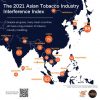
Big Tobacco Industry Rides COVID-19 Pandemic as Countries Grapple for a Response
Almost two years into the COVID-19 pandemic, many countries in the developing world continue to grapple with basic issues such as securing sufficient vaccines and providing essential medical care for their sick. Many economies are in recovery mode as governments scramble to resuscitate them with recovery packages and build back better plans.
Building a Disability-Friendly Workplace: Why Includability Matters
In her famous speech ‘The Danger of a Single Story’, Nigerian writer Chimamanda Ngozi Adichie warns us against a singular narrative of a person—a stereotype. This, Adichie asserts, is not because stereotypes are untrue, but because they are incomplete—“They make one story become the only story.” This is true in all walks of life, including in our interactions with people with disabilities at workplaces.
Clean Energy Alone Won’t Uplift Impoverished Nations — We Must Invest in People
Last month, at the COP 26 climate conference in Glasgow, a consortium of philanthropies, led by The Rockefeller Foundation, announced a massive program to fund renewable electricity projects for impoverished people in developing countries.
Volunteerism: Central to the Creation of a New Social Contract
The International Volunteer Day, on December 5, is not just one of the many internationally observed days that the United Nations commemorates annually.
African Network Fosters Unity, Fights Gender Discrimination & Advances Sustainable Development
The widespread 21-month-old lockdown, triggered by the corona virus pandemic, had a destructive impact on the global economy, claimed over 5.2 million lives, destabilized governments and radically changed lifestyles worldwide.
What Will it Take to Turn Farmers Toward Climate-Resilient Superfood Millet?
Millet could be Africa’s silver bullet for combating anaemia – and apart from health benefits, it is climate-resilient.« Previous Page — Next Page »


