Languages
Sunday, November 22, 2026



News and Views from the Global South
Headlines

Afghanistan: A Swedish Officer’s Point of View
Like most of us, I rely on news media to find an explanation to tragedies I watch on TV. Neverthelss, some of my opinions about the Afghan tragedy have furthermore been influenced by talks I once had with my friend Bernth Dagerklint. We had for some years been working as teachers at a high school, though this was not Bernth’s main occupation. Most of the time, he served as an officer during international, armed campaigns supported by the Swedish government. He had been to former Yugoslavia, the West Bank and not the least in Afghanistan, where he since 2003 on several occasions worked as ”instructor” for Afghan officers.
Afghanistan – Another Viet Nam?
There are several points of similarity between the war in Afghanistan and the war in Viet Nam. The Taliban, like the North Vietnamese and the Viet Cong, proved to be formidable tacticians and fighters. They managed to contain a far better equipped opponent and mount effective counteroffensives; access sufficient domestic and foreign funding to pay their fighters and support their families; build a formidable intelligence network; and acquire necessary technical capabilities in areas such as repair and maintenance of small arms.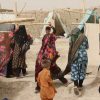
Afghanistan – a Turning Point?
Headlines in the press, live TV and internet coverage of the chaos at Kabul airport following the American withdrawal from Afghanistan has generated an impression around the world of an American foreign policy debacle, belittling the supremacy of American military power.
Journalists in Hiding to IPS: Silencing Women Journalists, is Silencing the Voice of Afghan Women
“If I fall into the hands of the Taliban, not only me but my family will be killed,” said AB, 23*, who worked as a broadcast journalist for the past seven years and is a well-known face on the television screen.
Internationally Trained Medical Doctors are Part of the Solution in Post-Covid-19 Canadian Healthcare System
Access to quality healthcare is a basic human right, but for many, especially those in vulnerable communities, the right is not fully realized.
The Future of Food & Water Systems in Pakistan & Central Asia?
An intense monsoon season in Pakistan means the country’s food system faces the challenge of both extreme floods and extended droughts. In an effort to address these challenges through cross-sectoral collaboration, Dr. Mohsin Hafeez, IWMI’s Country Representative for Pakistan and Regional Representative for Central Asia, convened a regional dialogue in advance of the UN Food Systems Summit (which is scheduled to take place at the United Nations, September 23) .
Africa’s Farmers Deserve Choices
In a few weeks, the United Nations will host the first international Food Systems Summit. The goal is to create a global movement committed to solving the many dietary, economic and environmental problems linked to the way food is produced, sold and consumed today.
IUCN Congress to Push for Stronger Regulations against ‘Imported Deforestation’
As Arti Prasad rode the Kuala Lumpur Pavilion mall escalator up to the third floor, a pair of luscious lips pouted down at her. Next to the towering and oversized lips, the vibrant red shades of lipstick on the giant screen immediately caught the 36-year-old Indian tourist’s fancy.
Biden’s Revenge: Fueling ‘Madness of Militarism’ in Afghanistan
Joe Biden provided a stirring soundbite days ago when he spoke from the White House just after suicide bombers killed 13 U.S. troops and 170 Afghans at a Kabul airport: “To those who carried out this attack, as well as anyone who wishes America harm, know this: We will not forgive. We will not forget. We will hunt you down and make you pay.”
Innovative Use of World’s First Malaria Vaccine Generates Remarkable Results and a Life-Saving Opportunity
In the midst of the tragedy and turmoil caused by the COVID-19 pandemic, it’s gratifying to see work continuing in Africa to find new ways of fighting malaria, a very old disease that has been a formidable foe for thousands of years and still kills 400,000 people every year, most of them African children under five years old.
South Korea’s Women Fire Back
A strong movement of feminism is sweeping South Korea. While women feel empowered to stand their ground, the men are retaliating. When South Korean archer An San won two gold medals in just two days during the recent Tokyo Olympics, the response the 20-year-old received at home was a mixed. Some men were angered and said her medals should be taken away. Why? Because her short hair was a sign that she was a ‘man-hating’ feminist.
Taliban’s Quest for Legitimacy – and a Seat at the United Nations
When the Taliban captured power back in 1996, one of its first political acts was to hang the ousted Afghan President Mohammed Najibullah in Ariana Square in Kabul. The newly-installed government played a triple role: judge, jury and hangman, all three rolled into one.
Fiddling in Nairobi While Africa Goes Hungry
As the United Nations gears up for its Food Systems Summit September 23, the urgent need for structural changes in how we grow, harvest, distribute, and consume food has never been more apparent.
‘COVICANE’ – How One Caribbean Country is Coping with the Hurricane Season during COVID-19
Around 2 pm on August 18, 89-year-old farmer Whitnel Louis and his wife Ayma began packing up their unsold produce, hoping to leave the capital of Roseau and get home way ahead of the 6 pm curfew recently put in place to curb the spread of the COVID-19 virus.
Data Platform Helps Pacific Island Countries Collect, Analyse and Act on Information
Do you know if midwife services are available at the Saupia Health Centre in Paunangisu, on the island of Efate in Vanuatu, in the Pacific Islands? I do, and I’ve never been within 1,000 kilometres of the facility — I found the information online within seconds thanks to a data platform called Tupaia.
Is Canada Missing out on Leveraging ITMDs in Its Healthcare Plans?
With elections right round the corner in Canada, Prime Minister Justin Trudeau recently said that a re-elected Liberal government would spend billions in the coming years to hire family doctors. This report says, Justin Trudeau promised that the Liberals would spend $3 billion over four years starting in 2022 to hire 7500 family doctors and nurses as well as tax and student loan incentives for health professionals who set up shop in rural or remote communities and also pledges an extra $6 billion to wrestle with wait lists.
Social Protection at a Crossroad—and Poverty On the Rise
How can we ensure a resilient and inclusive recovery from COVID-19? How can we hold on to the target of eradicating poverty and hunger by 2030, with the pandemic still ongoing?
Allow Least Developed Countries to Develop
The pandemic is pushing back the world’s poorest countries with the least means to finance economic recovery and contagion containment efforts. Without international solidarity, economic gaps will grow again as COVID-19 threatens humanity for years to come.
Argentina Takes Controversial Step Backwards in Biofuel Production
Argentina, historically an agricultural powerhouse, has become a major producer of biofuels in recent years. However, this South American country is now moving backwards in the use of this oil substitute in transportation, a decision in which economics weighed heavily and environmental concerns have been ignored.
Closed Borders and Hostile Receptions Await Afghan Refugees
Whether desperately trying to get a place on the last evacuation flights out of Kabul or trekking to the borders with neighbouring Pakistan and Iran, tens of thousands of Afghans are fleeing their country once more. Events are unfolding at speed. The Taliban are establishing a central government in the capital to fill the void of the collapsed western-backed administration, but they do not control all the country as the protracted civil war enters a new stage. The UN refugee agency UNHCR says that in its “worst case scenario” it is preparing for around 500,000 new refugees in the region by the end of this year. As with many past estimates that could prove optimistic.
Jamaica Walking a Tightrope Between Boosting the Economy and Cutting Emissions in COVID-19 Era
Even as COVID-19 walloped Jamaica’s economy last year, the government overhauled its energy emissions milestones to create what many described as a post-pandemic recovery package, based on stronger carbon targets for the farming and forestry sectors.« Previous Page — Next Page »


