Languages
Friday, November 27, 2026



News and Views from the Global South
Headlines

Renewables to Become the Norm for the Caribbean
Jamaica and other Small Island Developing States (SIDS) are embracing renewable energy as part of their plans to become decarbonised in the coming decades.
Land Conservation: A Risky Business
In light of land degradation and climate change, the protection of the environment is crucial—but the protection of the very people working tirelessly and with much risk to preserve nature should be just as important.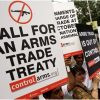
US Takes Back Signature on Arms Trade Treaty
The United States dropped a political bombshell when President Donald Trump announced his administration would withdraw from the historic Arms Trade Treaty (ATT) which the former Obama administration signed in September 2013.
Improving the Lives of Millions of Mothers and Children
It is slightly after 3pm on a hot Wednesday afternoon in Chipata district, eastern Zambia, and a group of women are gathering for a meeting. It is Elizabeth Tembo’s turn to stand amongst the other mothers like herself and share key lessons on nutrition.
Muslim Terrorists Heading Towards a Jihadist Hell Hole
The history of terrorism in Sri Lanka reveals a clear pattern. The first to take up arms in the post-Independent era were the misguided Sinhala youth. They were educated youth desperately running in search of a quick solution to establish their classless paradise. Their violence did not take them anywhere.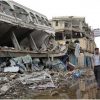
US & Western Arms in Yemen Conflict Signal Potential War Crime Charges
When US political leaders urged the Trump administration to either reduce or cut off arms supplies to Saudi Arabia – largely as a punishment for its indiscriminate bombings of civilians in the four-year old military conflict in Yemen—President Trump provided a predictable response: “If we don’t sell arms to Saudi Arabia, the Chinese and the Russians will.”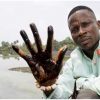
A Treaty to End Corporate Immunity?
When Ecuadorean diplomat Luis Gallegos first proposed a “Binding Treaty on Business and Human Rights,” many countries and environmental activists welcomed the idea with open arms.
Women and Girls “Preyed on as the Spoils of War”
“They forcefully took us away and kept us like prisoners,” Lydia Musa, a former Boko Haram captive who was abducted at the age of 14 during an attack on her village in Gwoza, in Nigeria’s north eastern Borno State, tells IPS. Musa and two other underaged girls were captured and forced to marry Boko Haram fighters in spite of their protests that they were too young to marry.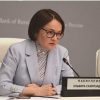
Russia’s First Female Central Bank Governor in a Challenging Job
Within a few short months after taking up her post as governor of the Central Bank of Russia in 2013, Elvira Nabiullina faced a growing economic crisis brought on by plunging oil prices, geopolitical tensions, and sanctions.
After the Rain: The Lasting Effects of Storms in the Caribbean
Sustainability is constitutive of the concept of development. Just as economist Amartya Sen has argued that there is no point in discussing the relationship between development and democracy, because democracy is constitutive of the concept of development, there is no point of trying to disentangle sustainability from the notion of development itself.
Against All Odds, Indigenous Villages Generate Their Own Energy in Guatemala
In the stifling heat, Diego Matom takes the bread trays out of the oven and carefully places them on wooden shelves, happy that his business has prospered since his village in northwest Guatemala began to generate its own electricity.
Bleak Outlook for Press Freedom in West Africa
When former footballer George Weah became president of Liberia in 2018, media practitioners felt they had in him a democrat who would champion media freedoms. “But we were mistaken,” journalist Henry Costa told IPS.
Why Climate Action Plans are not Good Enough to Deliver a Low-Carbon Future in Cities
Though climate policies aim to reduce GHG emissions, they miss out on emphasizing the importance of urban planning policies Cities that have ratified the Paris Agreement and pledged to reduce carbon emissions are adopting climate action plans aimed at reducing greenhouse gas (GHG) emissions.
Privatization Promotes Collusion and Corruption
At the risk of reiterating what should be obvious, the question of private or public ownership is distinct from the issue of competition or market forces. Despite the misleading claim that privatization promotes competition, it is competition policy, not privatization, that promotes competition.
Lost in the Cyberworld? The Enigmatic Mr Assange
Trump´s electoral success was preceded by a rise of chauvinistic politics in most of Europe, paired with electoral triumphs of far-right candidates in several other countries. A development accompanied by revelations of corrupt leaders laundering and transferring illegally obtained money, aided by financial institutions finding the means to do so. The world seems to move away from a rule-based order to a state of affairs dominated by might and wealth. World leaders´ private business dealings thrive within a global environment where laws intended to protect human rights are becoming increasingly ineffective. Foreign policies appear to be adapted to private gains and personal vendettas. Global financial systems seem to be crafted to facilitate kleptocracy and money laundering, while repression and violence smite whistle-blowers and daring journalists. Endeavours supported by propaganda and smear campaigns orchestrated by political/financial consultants and private investigation firms. All this is made possible through complicated schemes using the internet.
Sri Lanka’s Easter Sunday Carnage: Quo Vadis?
I returned from attending a three-hour Easter Sunday mass at the Fordham University Church around midnight New York time on April 20, 2019, when my phone rang and a colleague asked me what’s going on in Sri Lanka? I said what is going on? He said there were a series of coordinated terrorist bombings with multiple fatalities and scores of injuries in my native country. For the next four and a half hours I was on the phone trying to piece together what happened, including reaching out to Sri Lanka’s Secretary of Defence Hemasiri Fernando.
Economic Empowerment of Women Good for All
Government staffer Souhayata Haidara enjoys talking about her life in a patriarchal society. Her career is a triumph of patience and perseverance, she tells Africa Renewal with a smile and a wink.
Global Energy Consumption is Up — So Are Emissions
Our acceptance of climate change doesn’t keep pace with our energy consumption reduction. However, the latest International Energy Agency’s (IEA’S) Global Energy and CO2 Status Report for 2018 has some good news.
Media Landscape Marked by “Climate of Fear”
Journalists around the world are increasingly seeing threats of violence, detention, and even death simply for doing their job, a new press index found.
**UPDATED: Activists Spotlight Education for Development and Rights
“Communicate something to your partner in silence.” The pairs of strangers or acquaintances who received this instruction gesticulated, smiled, shook their heads, touched their hearts and otherwise tried to transmit a message.
Women in Ethiopia Still Struggle Despite Leadership in Government
Following 2018 elections in Ethiopia, a record-breaking number of women now hold leadership positions in the country's government. But women still struggle to rise up the ranks in other sectors.« Previous Page — Next Page »


