
Monday, November 9, 2026



News and Views from the Global South
Indigenous Rights

Displaced Guatemalan Peasants Demand Answers
"We want land where we can live and grow food to feed ourselves," said Pedro Ichich, one of several thousand indigenous farmers who marched to the Guatemalan capital to demand solutions to the ageold conflict over land.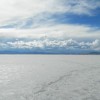
Native People in Argentina Demand a Say in Lithium Mining
Native communities in northwest Argentina turned to the Supreme Court to claim their right to be consulted about projects for prospecting and mining of lithium, regarded as the mineral of the future, located under an enormous salt flat.
More Ecology, Less Economy for Rio+20
Hundreds of non-governmental organisations and social movements from around the world hope to counter the failure of the United Nations Conference on Sustainable Development (Rio+20), which they consider inevitable, with the success of the alternative People’s Summit.
Emerald Energy Exploits Colombian Andes
A thick fog flows over the eastern range of the Colombian Andes. Here and there, the constant wind lifts the clouds to reveal lagoons, cloud forests, and páramo, an Andean alpine ecosystem known as a "mountaintop sponge" for its massive water-holding capacity.
Q&A: “We Are on the Road to Overcoming Impunity” in Guatemala
"To achieve peace, it is necessary for the truth to come out, and for the victims to receive reparations. And part of this is that cases of genocide and crimes against humanity against the Maya people must come to trial," says Guatemalan indigenous leader Rosalina Tuyuc.Myanmar Ethnic Groups Resist Forced Labour
In a move expected to deepen political reform, the quasi-civilian government in Myanmar (also known as Burma) is permitting the distribution of leaflets that will help thousands of people in the country’s ethnic enclaves learn to resist forced labour.
PERU: Time to Adapt to Climate Change Impact on Women’s Lives
This year’s unusually rainy season in Peru is having a negative effect on the wellbeing and health of women in rural areas who are forced, for example, to spend three times as much time walking to collect firewood and water. But the authorities continue to turn a blind eye to the problems they face.
Q&A: No Magic Solutions for the Extinction of Species
The Earth's life support system, which generates the planet's air, water and food, is powered by 8.7 million living species, according to the latest best estimate. We know little about 99 percent of those unique species, except that far too many are rapidly going extinct.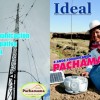
Airwaves Cut Distances in Rural Peru
The Onda Rural communication for development initiative in Peru has come up with a range of strategies to get information out to remote villages, to help them with decision-making on questions like climate change adaptation or disaster preparedness.
DR CONGO: Farmers’ Organisations Slam New Agriculture Law
Farmers' organisations in the Democratic Republic of Congo say the country's new Agriculture Law – enacted last December – could lead to many smallholder farmers losing their land.
Burmese Hinge Hopes on Free, Fair Polls
As campaigning for the Apr. 1 poll in Burma (also Myanmar) gets into full-swing, there are misgivings on whether the National League for Democracy (NLD) party of pro-democracy leader Aung San Suu Kyi will get a fair deal.
Paper Industry Decimating Indonesia’s Tigers
The survival of Sumatra's tigers, elephants, orangutans, rhinos, as well as indigenous communities, is threatened by the "world's fastest deforestation rate", caused by none other than the pulp and paper industry, according to the World Wildlife Fund (WWF).
Native Farmers in Mexico Drive Local Eco-Friendly Farming
The largely invisible work of small local groups of indigenous farmers in Mexico who are spearheading the defence of their territory and identity and of native seeds is strengthening ecologically sound family farming, experts say.CHINA: Radio Keeps Tibetans Tuned In
No road leads to Motuo County. There is no post office or newspaper. But, for the 10,000 residents of one of the planet’s remotest corners, a local radio station serves as the vital link to the outside world.Native Peruvians See Loopholes in Prior Consultation Law
Indigenous communities in Peru have a long list of comments and objections to the proposed regulations for the law governing prior consultation on initiatives affecting their territories.“Occupy” is the Watchword at Thematic Social Forum
Traditional social movements of homeless and landless people have for years been organising occupations as a pressure tactic. Now "occupying" is a key element for fighting the capitalist system in its hour of crisis, and also in the realm of virtual reality.MIDEAST: And At Last There Was Water
Only days ago, turning on the tap was cause for concern. Would there be running water? Now, it’s reason for celebration.GUATEMALA: Rios Montt to Stand Trial for Genocide
After a hearing that lasted more than 11 hours, a Guatemalan court ordered the trial of former dictator Efraín Ríos Montt (1982-1983), who could face up to 30 years in prison if he is convicted of genocide and crimes against humanity.INDIA: Male Activists Enhance Pre and Postnatal Care
The primitive Juang tribe in remote Nola village on Chandragiri hill experienced its first three institutional childbirths only a month ago.Mayans Demand Voice in “Doomsday Tourism” Boom
The indigenous people of southeast Mexico are demanding to be included in the official programmes planned for 2012 to take advantage of the world's interest in the "Mayan prophecy", while at the same time fearing a "doomsday tourism" that could damage and contaminate their sacred sites.CANADA: Opposition Builds to New “Tar Sands” Pipeline
As public hearings began earlier this month into a controversial pipeline that would transport crude oil from the Alberta tar sands to tankers along the coast of British Columbia, environmental groups and First Nations communities have raised staunch opposition to the project, which they say puts both the environment and their traditional way of life at risk.« Previous Page — Next Page »





The planet's roughly 350 million indigenous peoples took notable steps on the international stage in the last decade. They got the world's governments to agree to create a body to represent them at the United Nations, the Permanent Forum on Indigenous Issues, and to appoint a special rapporteur responsible for their human rights. In 2007 a Universal Declaration on the Rights of Indigenous Peoples was approved by the UN. Yet the living conditions of most "tribal", "aboriginal", "native" or "first" peoples remain precarious. IPS, with its network of contributors at the UN and linked to indigenous communities worldwide, is committed to tracking the world community's efforts to do justice to the rights and aspirations of these peoples, with a special current focus on Latin America's 40 million rural indigenous peoples.

The Week with IPS

Tracking global progress towards a sustainable world
