
Monday, August 24, 2026



News and Views from the Global South
Indigenous Rights

Peace Lost in the Libyan Desert
The recent outbreak of violence between the largely segregated Zwai and Tabu tribes in Libya’s remote, Saharan town of Kufra shattered the uneasy calm that held since last February’s clashes, resulting in more than 100 deaths. The clashes illustrate the challenges in building a new state.
Tribal Farming Beats Climate Change
Tribal farmer Harish Saraka has rediscovered the key to sustainable farming in this rain-dependent hinterland of eastern Odisha state – mixed cropping.
Armed Groups in Northern Mali Raping Women
Increasing numbers of Malian women are being raped by Tuareg rebels and armed groups that have swept across the north of Mali since the beginning of year, expelling all government troops from the region.
Millennium Goals Mock Nepal’s Slave Girls
Five years after Nepal abolished Kamalari, a system of girl slavery, thousands of young women are still awaiting promised rehabilitation and support from the new democratic republic.
Abya Yala Speaks
During the closing session of the Social Forum of the Sixth Summit of the Americas, the broadcast signal was cut off, triggering protests from participating indigenous leaders. But that did not stop the voice of Abya Yala - the ancestral name of the continent - from being heard.OP-ED: Get Your Boot Off My Neck
Last weekend, my 14-year-old daughter, Michaela, and I were en route to Easter Sunday mass in Acapulco. We were stopped, harassed, threatened, and detained by eight soldiers in battle fatigues brandishing automatic weapons.
Brazil is a Model for the Rights of Forest Communities
Brazil is one of the most advanced countries in the world when it comes to legally guaranteeing the rights of forest communities and reducing deforestation, says economist Jeffrey Hatcher in this interview.
Native Andean Women Weave a Future in Bolivia
Their skill and dexterity in weaving textiles, to be worn on festive occasions or displayed in windows for sale to tourists, have become the mainstay of indigenous women and their families in Cochabamba, Bolivia.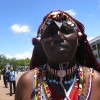
Tourism Goes Indigenous
As today’s conscientious travellers seek authentic experiences with the people of the lands they visit, tourism can be a vehicle for preserving ancient cultures, while socially and economically empowering marginalised or remote indigenous communities.
Displaced Guatemalan Peasants Demand Answers
"We want land where we can live and grow food to feed ourselves," said Pedro Ichich, one of several thousand indigenous farmers who marched to the Guatemalan capital to demand solutions to the ageold conflict over land.
Native People in Argentina Demand a Say in Lithium Mining
Native communities in northwest Argentina turned to the Supreme Court to claim their right to be consulted about projects for prospecting and mining of lithium, regarded as the mineral of the future, located under an enormous salt flat.
More Ecology, Less Economy for Rio+20
Hundreds of non-governmental organisations and social movements from around the world hope to counter the failure of the United Nations Conference on Sustainable Development (Rio+20), which they consider inevitable, with the success of the alternative People’s Summit.
Emerald Energy Exploits Colombian Andes
A thick fog flows over the eastern range of the Colombian Andes. Here and there, the constant wind lifts the clouds to reveal lagoons, cloud forests, and páramo, an Andean alpine ecosystem known as a "mountaintop sponge" for its massive water-holding capacity.
Q&A: “We Are on the Road to Overcoming Impunity” in Guatemala
"To achieve peace, it is necessary for the truth to come out, and for the victims to receive reparations. And part of this is that cases of genocide and crimes against humanity against the Maya people must come to trial," says Guatemalan indigenous leader Rosalina Tuyuc.Myanmar Ethnic Groups Resist Forced Labour
In a move expected to deepen political reform, the quasi-civilian government in Myanmar (also known as Burma) is permitting the distribution of leaflets that will help thousands of people in the country’s ethnic enclaves learn to resist forced labour.
PERU: Time to Adapt to Climate Change Impact on Women’s Lives
This year’s unusually rainy season in Peru is having a negative effect on the wellbeing and health of women in rural areas who are forced, for example, to spend three times as much time walking to collect firewood and water. But the authorities continue to turn a blind eye to the problems they face.
Q&A: No Magic Solutions for the Extinction of Species
The Earth's life support system, which generates the planet's air, water and food, is powered by 8.7 million living species, according to the latest best estimate. We know little about 99 percent of those unique species, except that far too many are rapidly going extinct.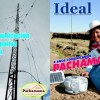
Airwaves Cut Distances in Rural Peru
The Onda Rural communication for development initiative in Peru has come up with a range of strategies to get information out to remote villages, to help them with decision-making on questions like climate change adaptation or disaster preparedness.
DR CONGO: Farmers’ Organisations Slam New Agriculture Law
Farmers' organisations in the Democratic Republic of Congo say the country's new Agriculture Law – enacted last December – could lead to many smallholder farmers losing their land.
Burmese Hinge Hopes on Free, Fair Polls
As campaigning for the Apr. 1 poll in Burma (also Myanmar) gets into full-swing, there are misgivings on whether the National League for Democracy (NLD) party of pro-democracy leader Aung San Suu Kyi will get a fair deal.
Paper Industry Decimating Indonesia’s Tigers
The survival of Sumatra's tigers, elephants, orangutans, rhinos, as well as indigenous communities, is threatened by the "world's fastest deforestation rate", caused by none other than the pulp and paper industry, according to the World Wildlife Fund (WWF).« Previous Page — Next Page »


The planet's roughly 350 million indigenous peoples took notable steps on the international stage in the last decade. They got the world's governments to agree to create a body to represent them at the United Nations, the Permanent Forum on Indigenous Issues, and to appoint a special rapporteur responsible for their human rights. In 2007 a Universal Declaration on the Rights of Indigenous Peoples was approved by the UN. Yet the living conditions of most "tribal", "aboriginal", "native" or "first" peoples remain precarious. IPS, with its network of contributors at the UN and linked to indigenous communities worldwide, is committed to tracking the world community's efforts to do justice to the rights and aspirations of these peoples, with a special current focus on Latin America's 40 million rural indigenous peoples.

The Week with IPS

Tracking global progress towards a sustainable world
