
Monday, August 24, 2026



News and Views from the Global South
Indigenous Rights

Poverty Rates Strikingly High Among Indigenous Populations
Although they are only five percent of the global population, indigenous people account for up to 15 percent of the world’s poor, according to a new study published by members of the World Bank.
Q&A: Battle for Human Rights in Rio Is “Far From Over”
Human rights should be explicitly recognised as an indispensable ingredient of sustainable development at the Rio+20 summit in Brazil, says Navanethem Pillay, United Nations High Commissioner for Human Rights.
Indigenous Message to Rio+20: Leave Everything Beneath Mother Earth
Indigenous leaders from all over South America are making their way by foot, canoe and eventually on buses to be part of the Kari-Oca Caravan to Rio de Janeiro, to talk to world leaders at the United Nations Conference on Sustainable Development, Rio+20.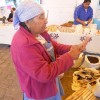
MEXICO Farmers Use Traditional Knowledge to Deal with Climate Change
Small farmers in Mexico, who receive little institutional support, are drawing on their traditional knowledge to deal with and adapt to climate change, experts say.
Youth Reaffirm Indigenous Identity
Barefoot and clad in traditional clothes, over a hundred indigenous Aetas gathered around a bonfire in a community nestled in the mountains of Capas town, in the Philippines’ Tarlac province. They had come together to celebrate their traditions and to instill in youth a sense of pride in their cultural identity.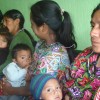
Midwives Play Key Social Role in Guatemala
"Midwives in Guatemala attend to women during pregnancy, the birth and the post-partum period. They give the women warmth and support, because they speak the same language and belong to the same culture," said Silvia Xinico with the Network of Organisations of Indigenous Women for Reproductive Health.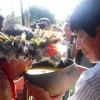
Brazilian Indigenous Community Seeks Survival Through Carbon Credits
Less than 45 years ago, the Paiter-Suruí, an indigenous people living deep inside the Amazon rainforest in Brazil, had never been in contact with the outside world. Today they hope to ensure their survival through the complex mechanisms of the carbon market.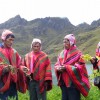
Elders in Peruvian Andes Help Interpret Climate Changes
A unique response to the challenge of global warming is happening in rural areas of Peru, where a network of indigenous elders is working out how to adjust weather forecasts in the light of climate change, while taking measures to safeguard their crops.Native Canadians See Way of Life Under Assault
Canada's West Coast First Nations are feeling overwhelmed by crises affecting their land rights, economic well-being and health, prompting warnings in one territorial dispute with a local energy company that the country risks a degeneration of Aboriginal-federal government relations to a level unseen in two decades.
Runaway Gold Prices Spark Major Headaches for Guyana
Fabian George drank and generally used water from jungle rivers near his mountainside home for decades until world market prices for gold began climbing in recent years.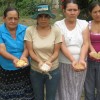
Rural Women in Peru Key to Adaptation of Seeds to Climate Change
For ages, rural women in the Peruvian highlands have been selecting and storing seeds, ensuring their preservation. But the authorities have failed to tap into this storehouse of knowledge and experience, despite the contributions it could make to the design of effective policies for adaptation to climate change, which poses a growing threat to the women’s livelihoods.Report Exposes Holes in Taiwan’s Human Rights Record
Earlier this week a coalition of rights organisations issued a ‘shadow report’ on Taiwan’s compliance with two international human rights covenants, which it incorporated into domestic law in 2009, probing the country’s track record on human rights.
India’s Economic Growth Leaves Human Development in the Dust
Ahead of the Universal Periodic Review (UPR) of India, a coalition of NGOs denounced the gap between the country’s growth rate and the rate of poverty, malnutrition and lack of health and sanitation.
COLOMBIA: Amnesty Denounces Impunity for Human Rights Crimes
There have been "few tangible improvements" in human rights in Colombia, says Amnesty International’s new report, which also points to legal loopholes that ensure impunity, as well as government attacks on court rulings.
Guatemalan Communities Have No Say in Exploitation of Resources
"People haven’t been coming in for the past month or so because they are afraid again, like during war-time," complained Juan Gaspar, a shopkeeper in the northwestern Guatemalan town of Santa Cruz Barillas, where a fierce battle is raging between locals opposed to a hydropower dam and the security forces.
Native People of El Salvador Finally Gain Recognition
After decades of struggle, indigenous people in El Salvador will finally be recognised in the constitution – a first step towards recovering their community identity, which they have been denied by the state and by society at large.Chile’s Native Communities Find Ally in Supreme Court
Indigenous groups in Chile celebrated a recent court ruling that represented the latest victory in the struggle for respect for their right to be previously consulted about major projects which directly affect their communities.
Q&A: Mother Earth Should Not Be “Owned, Privatised and Exploited”
For centuries, indigenous peoples and their rights, resources and lands have been exploited. Yet long overdue acknowledgment of past exploitation and dedicated efforts by indigenous peoples have done little to end or prevent violations of the present, stated indigenous leaders in the Manaus Declaration of 2011.
Native Peoples Aim to End Historic and Current Injustices
Leaders of the world's 370 million indigenous people are urging governments not only to replace laws that violate the natives' rights to protect their lands, resources and culture but also to introduce legislation that protects their rights.
Indigenous Peruvian Community Locked in Dispute with Oil Company
An indigenous group in the Amazon rain forest took its anti-oil message to Canada in a case rife with accusations of social and environmental damage that highlights the issue of securing consent prior to commencing exploration operations.
U.N. Wraps Up Contentious Study of Native American Communities
A United Nations special envoy on Friday called on the U.S. government to step up efforts to address historical injustices that continue to affect the country's indigenous population.« Previous Page — Next Page »


The planet's roughly 350 million indigenous peoples took notable steps on the international stage in the last decade. They got the world's governments to agree to create a body to represent them at the United Nations, the Permanent Forum on Indigenous Issues, and to appoint a special rapporteur responsible for their human rights. In 2007 a Universal Declaration on the Rights of Indigenous Peoples was approved by the UN. Yet the living conditions of most "tribal", "aboriginal", "native" or "first" peoples remain precarious. IPS, with its network of contributors at the UN and linked to indigenous communities worldwide, is committed to tracking the world community's efforts to do justice to the rights and aspirations of these peoples, with a special current focus on Latin America's 40 million rural indigenous peoples.

The Week with IPS

Tracking global progress towards a sustainable world
