Languages
Monday, October 12, 2026



News and Views from the Global South
Migration & Refugees

Southern African Migrants Excluded as COVID-19 Pandemic Grows
Migrants across the Southern Africa region are massively disadvantaged as they find themselves excluded from vaccine programmes – even when the global vaccine initiative COVAX often funds these programmes.
Salvadoran Migrants Still Look to the U.S. to Lift Themselves Out of Poverty
The Joe Biden administration's call for undocumented Central American migrants not to go to the United States, as requested by Vice President Kamala Harris during a June visit to Guatemala, appears to have fallen on deaf ears.
We Were Born to Do This!
The first time I visited South Sudan in 2004 - prior to its independence - I travelled across the entire the country which was then a region devastated by man’s inhumanity to man. Although South Sudan is slightly larger than France, I could find only one concrete school building in Rumbek.
Between Horror and Hope in the Villages of Ituri
“We have buried twenty-eight people. I have seen them with my own eyes. We also found three bodies in the fields and buried them too. I can show them to you. It’s not far from here. We buried them there.” The man points to the hills. He doesn’t want to show his face or say his name, but he agrees that his voice can be recorded, so that his words don’t get lost. The camera can’t shoot him; it can only look at the tall grass or at the forest towards the countryside where it is no longer possible to cultivate food. The man talks while music from Lengabo’s catholic church marks the time of truce and hope.
DR Congo, Ituri. Fleeing War, Weaving Life in IDP Camps of Bunia
He moves aside the curtain, thin as gauze, and then bends over. The darkness dazzles for a few seconds when one enters the house—actually, a den made of earth where air and light filter through the narrow entrance. Jean de Dieu Amani Paye holds her tiny baby, wrapped in an elegant fabric, in his arms. He was a teacher of French and Latin and had a small business. He also cultivated the land: cassava, corn, sorghum, and beans.
Revamped UN System Crucial for a Changing World
From an international humanitarian perspective, the first half of 2021 has been disappointing. We’re no further ahead in ending the conflict in Syria and Yemen. From the fledgling democracy that it had become, Myanmar has descended into what most of its people had hoped was a bygone era of military rule. And in Ethiopia, where its Prime Minister, Ably Ahmed, was awarded the Nobel Peace Prize in 2019, armed conflict in Tigray is preventing the 2020 winners of the very same prize, the World Food Programme, from delivering the food needed to stop at least 350,000 Ethiopians from starving to death.
Honour Killings – Religion or Culture?
There is nothing honourable about murder. And murdering someone of your own family, your own child - a daughter, someone you held in your arms and rocked to sleep when they were babies? This is such a horrifying crime that there are no words to describe it – certainly not the word Honour. And yet it happens! It happens in Pakistan and to the shame of all of us in the diaspora, it has been brought to Italy.
Latin America Sets an Example in Welcoming Displaced Venezuelans
The exodus of more than five million Venezuelans in the last six years has led countries in the developing South, Venezuela's neighbours, to set an example with respect to welcoming and integrating displaced populations, with shared benefits for the new arrivals and the nations that receive them.
Pakistanis in Italy: 22 Yards to Cultural Integration
Following Prime Minister Imran Khan’s comments about the need to promote ‘Pakistaniyat,’ a debate has been underway on what constitutes this ideology and what unites Pakistanis around the world. While this may be a contentious and polarising debate, one thing is for certain: the game of cricket is something which brings us all together.
The Fight for the “Lost Souls.”
In June, the Department of Homeland Security made a critical announcement. For the first time in U.S. history, more than 15 national and local agencies and civilian organizations conducted a simultaneous major binational operation to find missing children inside and outside the United States.
Nothing About Us, Without Us, Asian Youth Tell Parliamentarians
Youth advocates from Asian countries called for an overhaul of a system that excluded young people from participation in policymaking. During an interaction with parliamentarians from 23 countries, youth representatives considered an enabling political framework to be the most crucial reform required to remove inequities.
Bridging the Gap and Crossing the Bridge
It may be a challenge, but it is also an absolute necessity: bridging the gap between international law and reality and quickly crossing the bridge to reach all crisis-affected children and youth left furthest behind. Inclusive and equitable quality education is the right of every girl and boy and the objective of Sustainable Development Goal 4.
USMCA Agreement: Towards a New Economic Relationship in North America?
The visit of the Vice President of the United States to Mexico on June 8 served to address various issues on the bilateral agenda . The media gave importance especially to the migration issue, but Mrs. Harris gave a prominent place , also , to the labor question. Her appointments deserve some comments.
ECW Interviews Jan Egeland, Secretary General of the Norwegian Refugee Council
Jan Egeland has been the Secretary General of the Norwegian Refugee Council since August 2013, a role which oversees the work of the humanitarian organisation in over 30 countries affected by conflict and disaster.
COVID-19 as Instigator of Bigotry, Chauvinism and Megalomania
By the end of April 2019, a government campaign to vaccinate more than 40 million children under five against polio in Pakistan was suspended after a series of attacks on health workers and police. On 23 April, a police officer protecting polio workers was gunned down in Bannu, the same day a polio worker was in Lahore seriously wounded by a father “protecting his child from vaccination”, these incidents were followed by the murder of another police and a health worker under his protection. Health workers were also seriously wounded in the districts of Sindh, Balochistan and Punjab. Afghanistan and Pakistan are the only countries where polio remains, in all other nations of the world vaccination campaigns have eliminated the disease. In April this year, three female polio vaccine providers were killed in Afghanistan.
Canada Must Acknowledge its Problematic Bill 21
The June 5th attack on the Muslim family in London, Ontaria, has left many in Canada in a state of shock. A driver intentionally struck the Afzaal family while they were out for a stroll, killing four, because of their Islamic faith. Canadian Prime Minister Justin Trudeau called the killing, “a terrorist attack and a brazen act of violence.”‘What Will Happen to My Child?’
I first met six-year-old Amina in the Kutupalong refugee camp in 2019. I couldn't help noticing the forlorn image of life in the camps she depicted—a child alone in a corner, playing with a pair of matchboxes instead of a toy. Later, Amina's mother told me that she was hiding under the bed when the Myanmar military surrounded their household in Rakhine. She watched them kill her father and grandfather, and lay hidden while they gang-raped her mother. She hadn't said a word to anyone outside of her family since then.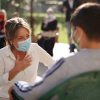
Education Cannot Wait for Refugee Children in Crisis, says Yasmine Sherif
With financing, the number of out-of-school refugees could be reduced to zero, Yasmine Sherif, Director of Education Cannot Wait (ECW) says, as the world commemorates World Refugee Day.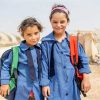
World Refugee Day
"Education will prepare refugee children and youth for the world of today and of tomorrow. In turn, it will make the world more resilient, sustainable and peaceful." ~ Filippo Grandi, UN High Commissioner for Refugees
Central Sahel: Ground Zero in Tackling Climate Change Through Education
The climate crisis is amplifying the effects of instability and violence in the world’s poorest countries. Nowhere is this more visible than in Africa’s Central Sahel region, where increasing temperature, floods, droughts and other climate change-induced disasters are triggering conflicts, displacement, and pushing girls and boys into the shadows.
Britain Must Fix Its Anti-Muslim Sentiment Problem
In 2015, When Rabina Khan was running as an independent candidate in the Tower Hamlets’ mayoral elections in London, a male voter asked her what colour her hair was under her veil. Rabina replied and said, it was pink. This small interaction is what got Rabina inspired to write her book, My Hair is Pink Under This Veil.« Previous Page — Next Page »





Human migration is a matter of global concern. Flows of migrants and refugees influence and change the social, economic and political dynamics of their destinations -- and the places they have left behind. IPS covers crucial issues such as migrant and refugee rights, irregular or undocumented migration, human trafficking, remittances, displaced persons and forced labour. And the positive: in many cases migration creates a new dialogue among civilisations. Migrants themselves become the building blocks of bridges connecting different cultures.

The Week with IPS

NEXT STOP - SDGs
Tracking global progress towards a sustainable world
Tracking global progress towards a sustainable world
