Languages
Sunday, November 22, 2026



News and Views from the Global South
Human Rights

When Helping Hands Make a Disaster Worse
Relief work done by emergency responders during natural disasters may inadvertently exacerbate problems caused by climate change and lead to further disasters, recent reports suggest.
Brazil’s Two-Party System Leaves Amazon Activist Behind
The dream of electing Brazil’s first black president, an environmental activist from the Amazon jungle, lasted only 40 days and was frustrated in Sunday’s elections. In the end, it is the two parties that have dominated Brazilian politics for the last 20 years that will face off in the second round of voting on Oct. 26.
OPINION: Put People Power Back at Centre of Citizen Action
A few weeks ago, I co-signed perhaps the most important open letter of my career. It was an open provocation to my fellow activists and colleagues, to the members of our organisation, and to all those who, like me, earn their living in the civil society sector.
Schools Open In Iraqi Kurdistan … But for Refugees Not Students
“We had ten minutes to leave our hometown,” says 33-year-old Kamal Faris who, together with his entire family, was forced to flee the threat of Islamic State (IS) fighters approaching his village.U.S. Anti-ISIL Strategy Drawing Growing Scepticism
Hopes that the strategy announced by President Barack Obama a month ago against the Islamic State of Syria and the Levant (ISIL) might yield a relatively quick victory have disappeared amidst growing fears that the U.S.-led air campaign has at most only slowed the radical group’s advance.Azerbaijan Pursues Drones, New Security Options
Heightened tensions with longtime foe Armenia over breakaway Nagorno Karabakh and mediator Russia’s Ukrainian adventure appear to be pushing Caspian-Sea energy power Azerbaijan ever more strongly toward a military strategy of self-reliance.
Q&A: “The Battle Continues”
The Programme of Action adopted at the landmark 1994 International Conference on Population and Development (ICPD) included chapters that defined concrete actions covering some 44 dimensions of population and development, including the need to provide for women and girls during times of conflict, the urgency of investments in young people’s capabilities, and the importance of women’s political participation and representation.
Panama, a Country and a Canal with Development at Two Speeds
With the expansion of the canal, Panama hopes to see its share of global maritime trade rise threefold. And many Panamanians hope the mega-engineering project will reduce social inequalities in a country where development is moving ahead at two different speeds.
New Global Declaration “Insufficient” to Tackle Deforestation
Heads of state, civil society groups and the leaders of some of the world’s largest companies this week urged their peers to sign on to a landmark new global agreement aimed at halting deforestation by 2030, even as others are warning the accord is too lax.
Documents Detail Secret Talks Between Washington and Havana
In a new book cataloguing the recent history of clandestine exchanges between the U.S. and Cuba, the reliance on secret intermediaries belies the common perception that the two governments rarely communicated during the decades that followed the Cuban revolution in 1959.
OPINION: On Reproductive Rights, Progress with Concerns
For most of human history, reproductive rights essentially meant men and women accepting the number, timing and spacing of their children, as well as possible childlessness. All this changed radically in the second half of the 20th century with the introduction of new medical technologies aimed at both preventing and assisting human reproduction.
Zimbabwe’s Family Planning Dilemma
Pregnant at 15, Samantha Yakubu* is in a fix. The 16-year-old boy she claims was responsible for her pregnancy has refused to accept her version of events, insisting that he was “not the only one who slept with her”.
Boosting Incomes and Empowering Rural Women in Cuba
Leonor Pedroso’s sewing machine has dressed children in the Cuban town of Florida for 30 years. But it was only a few months ago that the seamstress was able to become formally self-employed.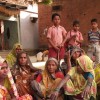
Lack of Accountability Fuels Gender-Based Violence in India
On a bright March morning, a 17-year old tribal girl woke as usual, and went to catch fish in the village river in the Chirang district of India’s northeastern Assam state.U.S. to Create National Plan on Responsible Business Practices
The United States will begin developing a national action plan on responsible business practices, following on several years of related advocacy from civil society.
‘Youth Exodus’ Reveals Lack of Opportunities
The small South Pacific island state of Samoa, located northeast of Fiji, attracts tourists with its beaches, natural beauty and relaxed pace of life, but similar to other small nations with constrained economies, it is experiencing an exodus of young people, who are unable to find jobs.
Militarising the Ebola Crisis
Six months into West Africa’s Ebola crisis, the international community is finally heeding calls for substantial intervention in the region.
Arms Trade Treaty Gains Momentum with 50th Ratification
With state support moving at an unprecedented pace, the Arms Trade Treaty will enter into force on Dec. 24, 2014, only 18 months after it was opened for signature.Iraq Looking for an ‘Independent’ Sunni Defense Minister
Iraqi President Fouad Massoum said this past week that the government was looking for an independent Sunni Muslim to fill the post of defense minister in an effort to improve chances of reunifying the country and defeating the group that calls itself the Islamic State (IS).Zero Nuclear Weapons: A Never-Ending Journey Ahead
When the United Nations commemorated its first ever "international day for the total elimination of nuclear weapons," the lingering question in the minds of most anti-nuclear activists was: are we anywhere closer to abolishing the deadly weapons or are we moving further and further away from their complete destruction?
Living on a Ballpoint Pen in Kabul
Seventy-year-old Mohamad Arif still earns a living in the streets of Kabul. He prepares all kind of documents for those who cannot read or write – in other words, the majority of people in this country of 30.5 million people.« Previous Page — Next Page »


One world, one humanity, now one court to defend its rights. Another step towards universal human rights, but not remotely a step far enough. The United Nations adopted the Universal Declaration of Human Rights more than half a century ago, but that has done little to stop violations the world over, just as the Geneva Convention has not protected prisoners of war enough. Democracy itself and the freedom it presupposes has not been protective enough. This is the century to move from politicisation of human rights towards humanising political ways. IPS keeps an eye on that difficult path.

The Week with IPS

NEXT STOP - SDGs
Tracking global progress towards a sustainable world
Tracking global progress towards a sustainable world
