Languages
Tuesday, October 27, 2026



News and Views from the Global South
Religion
Students Take On the Army
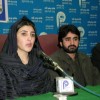
Disturbed by civilian casualties and moved by the plight of people living like refugees in their own country, students from Pakistan’s Federally Administered Tribal Areas (FATA) are demanding an end to army operations against militants on their native soil.
Internet Holds a Presidential Hope
Turkey is waiting to see if President Abdullah Gul will ratify the government's controversial Internet bill, which opposition parties, civil society and the international community call a major restriction on freedom of expression.Philippines Makes Tentative Truce With Islamists
After two years of intensive negotiations, the Philippine government and the country’s largest rebel group, the Moro Islamic Liberation Front (MILF), have signed a final peace agreement, which paves the way for a lasting resolution of one of the world’s longest-running intra-state conflicts.
Bursting the ‘Blood Bubble’
The longstanding Israeli practice of labelling settlement products “Made in Israel” is leading to mounting opposition to the occupation.
Egypt’s Generals Face a Watery Battle
Heavy reliance on water intensive crops, a major upstream dam project for the Nile basin, and rising groundwater levels pushing at pharaoh-era monuments will be pressing issues for the next Egyptian president - whether military or civilian.
Pakistan Caught Between Talking and Fighting
Whether to make war or peace with the Taliban has become a dilemma for the Pakistani government.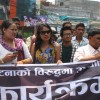
Dalit Women Face Multiplied Discrimination
Maya Sarki, a resident of Belbari in eastern Nepal, was returning home one summer evening last year when she was attacked. She was forced down on the ground and her attacker attempted to rape her.
CAR’s Sectarian Strife Worsens Despite French, AU Troops
Reports of horrific revenge killing continued to emerge from the Central African Republic Wednesday, less than 24 hours after the Security Council voted to increase the international troop presence there and levy sanctions against those it suspects of war crimes.
Nowhere to Come In From the Cold
As the temperature dips to zero degrees Celsius, a chill has set into the lives of people like 44-year-old Rasool Khan at the Jalozai camp for internally displaced persons (IDPs) in Pakistan. Huddled in tiny tents, with just a plastic sheet over their heads and no heat, they pass sleepless nights in the bitter cold.
New Writing on a School Wall
Welcome to Bridge Over the Wadi primary school, one of five bi-national schools under the "Hand-in-Hand" initiative of the Centre of Jewish-Arab Education in Israel. The centre strives to bring children from both communities to learn together in Hebrew and Arabic in the hope that they’ll bridge the divide between the two peoples.
OP-ED: The Arab World Has Changed, So Should Washington
As the Egyptian revolution against Hosni Mubarak celebrates its third anniversary, the military junta under General Abdel Fattah al-Sisi is resurrecting dictatorship under the veneer of “constitutional” legitimacy and on the pretense of fighting “terrorism.”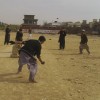
Playing Cricket, Praying for Peace
Afghanistan is rediscovering the joy of cricket. It is seen as a tool of progress, a means of entertainment, and a way to wean youth away from violence in a country that has been ravaged by conflict for more than 30 years.
The Right Note Hits Taliban
For many years they could not sing, dance or play their favourite instruments. The performing artists of Khyber Pakhtunkhwa province of northern Pakistan lost their voice as the Taliban carried out terror attacks and banned music, calling it un-Islamic. But after tentative advances in recent months, the Pakistani province is alive with the sound of music once again.
Military Launches a Democratic Missile
As Egyptians head for a referendum Tuesday and Wednesday this week, the fate of the Muslim Brotherhood, which was swept into government in the last election, hangs in the balance.
Djotodia’s Resignation Sparks Hopes for Peace in CAR
“I can’t wait to return back home,” Celeste Edjangue, a refugee from the Central African Republic (CAR) now in Cameroon’s East Region, told IPS.
Jordan Valley Produces Conflicting Dates
Israeli settler Gadi Blumenfeld distributes machetes to 15 Palestinian labourers and instructs them to cut the thorns off of his dates’ fronds. “I might be stabbed in the back,” he says, “but thanks to farming, we keep the area safe from terrorists.”
Gaza Loses an Underground Lifeline
The border between Egypt and the Gaza Strip used to buzz with activity until a few months back as traders brought in an array of Egyptian goods – from food supplies to raw material - through hundreds of tunnels.
Military Prepares a General’s Constitution
A draft constitution set to go before a public referendum next week gives the military more privileges, enshrining its place as Egypt’s most powerful institution and placing it above the state.
Fall of Fallujah Refocuses U.S. on Iraq
Two years after the last U.S. combat soldiers left Iraq, the past week’s takeover of the western city of Fallujah by the Al-Qaeda-linked Islamic State of Iraq and Syria (ISIS) has refocused Washington’s attention on a country that it had hoped to put permanently in its rear-view mirror.Islamic Party Parts With Islamists
In the city of Metlaoui in the Governorate of Gafsa, a mining region in the parched south of Tunisia, the streets are dust, filled with ruts, the skin of the men in the cracked lanes leathery brown from the heavy weather.
OP-ED: Arms and Athletes in Bahrain – Al Khalifa’s Deadly Game
A few days ago, Bahraini officials announced that they had “foiled an attempt to smuggle explosives and arms, some made in Iran and Syria, into the country by boat.” Around the same time, the government also contended it had defused a car bomb and seized weapons in different locations in the country.« Previous Page — Next Page »





Religion plays a big and in some cases growing role in the socio-political dynamics within countries and often is a factor in civil and cross-border conflict, conflict resolution and peace building. From Burmese monks' marches to the role of religious fundamentalism, this dedicated site gathers IPS stories about how religion affects our world, from daily life to geo-politics.

The Week with IPS

NEXT STOP - SDGs
Tracking global progress towards a sustainable world
Tracking global progress towards a sustainable world
