Languages
Monday, September 28, 2026



News and Views from the Global South
Water & Sanitation

Farmers Can Weather Climate Change – With Financing
Merian Kalala, a farmer in Solwezi, capital of the North-Western Province of Zambia, knows firsthand that climate change is posing massive problems for agricultural productivity.
No Farmers, No Food — True But Not Enough
Agriculture is the primary sector of all economies. It is the sector responsible for granting food and nutrition security to all human beings. Consequently it is responsible for social stability and health. And it provides work opportunities to families, men, women and youth, and largely contributes to the country Gross Domestic Product (GDP).
Farmers Hold Keys to Ending Poverty, Hunger, FAO Says
With recent data showing that 793 million people still go to bed hungry, ending hunger and poverty in 15 years is the next development challenge that world leaders have set for themselves.
Seeking a New Farming Revolution
As the World Farmers' Organization meets for its annual conference in Zambia to promote policies that strengthen this critical sector, IPS looks at how farmers across the globe are tackling the interconnected challenges of climate change, market fluctuations, water and land management, and energy access.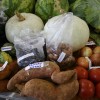
New Generation Aims to Plug Africa’s Research Deficit
The tonnes of uncollected garbage piling up on the streets of her home in Cairo was a brain wave for Sherien Elagroudy.
Indian Women Worst Hit by Water Crisis
A staggering 330 million Indians, making up a quarter of the country's population (or roughly the entire population of the United States), are currently reeling under the effects of a severe drought, resulting in an acute drinking water shortage and agricultural distress.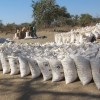
World Farmers’ Organisation Meeting Eyes New Markets, Fresh Investment
‘No Farmer, No Food’ is an old slogan that the Zambia National Farmers’ Union still uses. Some people consider it a cliché, but it could be regaining its place in history as agriculture is increasingly seen as the answer to a wide range of the world’s critical needs such as nutrition, sustainable jobs and income for the rural poor.
El Nino-Induced Drought in Zimbabwe
Emaciated and with their ribs jutting out, Evans Sinyoro’s cattle lie on the ground overlooking a dry patch of land while the small earth dam nearby is also dry, thanks to the El Nino-induced drought wreaking havoc across Zimbabwe.
UN Predicts 40 Percent Water Shortfall by 2030
Ten presidents and prime ministers from around the world will work together to resolve the growing global water crisis amid warnings that the world may face a 40 percent shortfall in water availability by 2030.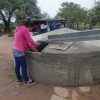
Harvesting Rainwater to Weather Drought in Northeast Argentina
In a semiarid region in the northeast Argentine province of Chaco, small farmers have adopted a simple technique to ensure a steady water supply during times of drought: they harvest the rain and store it in tanks, as part of a climate change adaptation project.
Ecosystem Conservation Gives Hope to a Vulnerable Community
42 year-old Saraswati Subedi still remembers the night she almost died in a flash flood. “I heard the cries of my neighbours and ran out of the room with my two children. There was water all around and I thought we were going to die, so I started to pray,” says the mother of the three in Karki Tahara – a village by the river Harpan Khola in Nepal’s Kaski district.
No Turning Back in the Global Fight Against Climate Change
As people around the globe observe Earth Day today, world leaders are making history at the United Nations in New York. Over 100 countries will sign the Paris Agreement on climate change, representing their commitment to join it formally. This marks a turning point in the story of our planet and may set a record for the largest number of signers to an international agreement in a single day. Moreover, last month, President Obama announced with President Xi Jinping that our two countries will sign the Paris Agreement today and formally join this year. We are confident other countries will do so too, with the intention of bringing this historic and ambitious agreement into force as quickly as possible.
Healthcare solutions that are smart
Every hour, tuberculosis kills nine Bangladeshis. Another seven die each hour from arsenic in drinking water. Simple and cheap solutions are available to avoid almost all these deaths.
Climate: Africa’s Human Existence Is at Severe Risk
“Africa’s human existence and development is under threat from the adverse impacts of climate change – its population, ecosystems and unique biodiversity will all be the major victims of global climate change.”
Arsenic Threat Looms Large in India: Well Switching Provides the Way Forward
An Indian Govt. Parliamentary Committee on Estimates on “Occurrence of High Arsenic (As) content in Groundwater” in December, 2014 stated that more than 70 million people in 96 districts in India is under threat due to As occurrence in groundwater.
Champions of Hygiene
Lydia Abuya, a tenant living in the Kaptembwa informal settlement west of Nakuru town, leaves one of the six on-plot toilets. She returns with a pail of water to splash away the waste.
Climate Change and the Middle East (II)
No Water in the Kingdom of the Two Seas—Nor Elsewhere
There is an oil producing country situated in the Gulf region, made of a cluster of islands. It is small, surface and population wise. But it holds the dubious privilege of ranking top of the list out of the 33 countries most likely to be water-stressed in the year 2040.

Climate Change (I)
Will the Middle East Become ‘Uninhabitable’?
This is not about any alarming header—it is the dramatic conclusion of several scientific studies about the on-going climate change impact on the Middle East region, particularly in the Gulf area. The examples are stark.

Interoceanic Canal Bogged Down in Nicaragua
Nearly three years after Nicaragua granted a 50-year concession to the Chinese consortium HKND to build and operate an interoceanic canal, the megaproject has stalled, partly due to a severe drought that threatens the rivers and lake that will form part of the canal.
Sri Lanka Braces for Extreme Heat
Sri Lanka is facing the heat from a scorching sun for the past one month. In recent times, the country has imposed power cuts after almost a decade. The main reason was the stoppage at a coal power plant, but engineers at the Ceylon Electricity Board (CEB) admit that the island’s hydro-power generation capacity is at such a critical low that without additional coal, diesel and renewable generation, the country’s full demand for power cannot be met.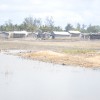
Saving Beira
Mozambique’s second largest city, Beira, is heading for climate change-induced disaster. Cyclones, floods, storm surges and the rising sea level are threatening to annihilate this important Indian Ocean coastal city; a city which is strategic for landlocked countries like Zimbabwe and Zambia.« Previous Page — Next Page »


The Week with IPS

NEXT STOP - SDGs
Tracking global progress towards a sustainable world
Tracking global progress towards a sustainable world
