Languages
Friday, October 23, 2026



News and Views from the Global South
Arabs Rise for Rights

Tribal War Simmers in Libya’s Desert
A group of Tabu fighters with mud-splattered trucks rest on the outskirts of Zweila, a small historic slave-trade stop in Libya’s southwest Sahara.
Q&A: Global Economy, Meet One Billion Co-op Members
The international rally to take the global cooperative movement to the next level is in full swing at the International Summit of Cooperatives here, which kicked off on Monday.
U.S.: Romney Assails Obama’s “Passivity” in Foreign Policy, Middle East
In what was billed as a major foreign policy address, Republican presidential candidate Mitt Romney Monday assailed Barack Obama for “passivity” in the conduct of U.S. foreign policy, arguing that it was “time to change course” in the Middle East, in particular.Besieged Homs Areas Endure Heavy Bombardment
Syria's military has intensified its shelling of rebel-held areas of the city Homs, activists say, amid reports of aerial and ground bombardment elsewhere in the country.
World Forgetting Palestinian Rights
The annual debate has just wrapped up and, already, the certainty is that if last year Palestinian statehood auspiciously dominated the international agenda, this time, the issue vanished from the United Nations General Assembly (UNGA), and will vanish even further from world affairs.
Shadow Fighting Erupts over Gaddafi
Civilians in the town of Bani Walid, 170 km south-east of Tripoli, are facing a humanitarian crisis as Libyan security forces lay siege to the stronghold of Muammar Gaddafi supporters, cutting off water, food and medical supplies.As Conflict Spreads, Syrian Opposition Prepares for the Future
As the uprising in Syria becomes violently entangled with its neighbours, the expatriate opposition leadership is already formulating plans for a political transition following the fall of Syrian President Bashar al-Assad.Deadly Explosions Hit Central Aleppo
Four blasts have struck a government-controlled district close to a military officers' club in the northern Syrian city of Aleppo, killing at least 40 people and wounding more than 100, opposition activists say.Rights Groups Slam Bahraini Court Ruling
Human rights groups reacted with condemnation following a ruling by Bahrain’s highest court Monday rejecting the last appeals and upholding the convictions of nine medics for their role in the 2011 uprising in the capital Manama.Egypt and U.S. Step Past Crisis
The wave of unrest in the Middle East caused by blasphemous depictions of Islam's Prophet Muhammad last month – and events near the U.S. embassy in Cairo in particular – does not appear to have impaired Egypt's longstanding 'strategic partnership’ with Washington, say local analysts.
Wall Threatens to Cut Through History
Dating back to the late 1890s, the historical Jaffa-Jerusalem railroad winds in a U-shape at the base of the valley. Olive groves adorn the bottom of one steep hill. Further up the slope, pine trees and an Israeli army patrol road lead westward towards Jerusalem.
Gaza Looks For Work, Not Aid
“The overwhelming majority of people we work with tell us, 'We don't want the aid, we want to have an opportunity to work and earn money’. Especially people who had a decent job but lost it in the last many years: before asking for any aid, they ask for a job.”
Gaza Farmers Find Canadian Support
“From the coast to eight miles out, the sea is like a desert: it's sandy and there are no fish.” Mohammed Al-Bakri traces a thick line on the wall map before him, following the lines of Gaza's eastern and northern borders, continuing south from three miles off the coast.Living in Hiding From Libyan Militias
Farrah Hamary looks the picture of despair as sweat trickles down his face in Tripoli’s heat and humidity. Hamary is too afraid to give his full name or to allow his picture to be taken.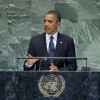
Strained East-West Relations Dominate General Assembly Opening
Addressing the 67th General Assembly at the United Nations in New York Tuesday, U.S. President Barack Obama accused the Iranian government of propping up the dictatorship in Syria and supporting terrorist groups abroad.
For Palestinian Workers, the Enemy Is the Hope
Hassan Hader’s application for a permit to work in Israel has been rejected four times. Now waiting to hear back from the Israeli authorities on his latest attempt, the 52-year-old father of five said he has no choice but to keep applying.
U.N. Chief Jabs Media for Overblown Coverage of Hate Crimes
When the United Nations commemorated International Day of Peace last week, the celebrations were marred by news of widespread rage in the Islamic world, a continued bloody civil war in Syria, suicide bombings in Iraq and Afghanistan and violent demonstrations in Pakistan, Indonesia and Bangladesh against a video caricaturing the Prophet Muhammad.Libyan Islamists Cornered, Not Quietened
It could be premature to believe that the storming of Islamist militia bases by Benghazi citizens on Friday could spell the end for Libya’s Islamist militants. Just as it was premature to claim when moderate Libyan political parties took the majority of votes during the July elections that Libya had bucked the Islamist trend sweeping the region.
Assad and Opposition Both Losing
Two floors have been ripped from the top of an apartment block in Aleppo in northern Syria. A lone man stands amidst the rubble four stories up after a missile from one of his own government’s fighter jets smashed into the building that morning. With his arms crossed, the solitary figure surveys the destruction around him.
Water for Phosphate, Not People
Gafsa region in the south of Tunisia was once an oasis; today the phosphate industry has plunged it into a water crisis.
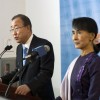
New Generation of Arab Leaders to Address World Body
When world leaders heading politically shaky authoritarian regimes lead their country’s delegations on overseas visits or attend international conferences, including the annual U.N. General Assembly sessions in September, there is always a lingering fear of either an insurrection or an attempted military coup back home.« Previous Page — Next Page »





The Arab Spring has changed the Arab seasons that have followed; it had to. The struggle continues in Syria; in Tunisia, Egypt, Libya and in countries that did not change that dramatically, such as Bahrain and Yemen, the political world, and the tone of society itself has changed. IPS has not left these countries with the headlines that accompanied cataclysmic changes. We continue to track changes closely, always keeping in our sights first the rights of peoples, and then reporting changes from fresh, newsy and human perspective.

Middle East & North Africa


