Languages
Tuesday, September 8, 2026



News and Views from the Global South
Children on the Frontline

Zimbabwe’s Education Sector on Slow Road to Recovery
 Zimbabwe's education sector, once rated amongst the best in Africa, came close to collapse during the country's economic crisis. A programme launched when the coalition government came into power in 2009 has seen the beginnings of recovery for the sector.

Saving Tanzania’s Poorest Children
Half asleep, Anuary lies exhausted on his bed in Amana Hospital in Dar es Salaam, Tanzania’s capital. His mother, Mariam Saidi, sits on the edge of his mattress, staring blankly out of the window. Every now and then, she turns to wipe her 18-month-old son’s forehead.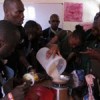
Kenya Not doing Enough to Educate Intellectually Disabled Children
Kenya has made efforts to increase literacy among intellectually normal children but not much is being done to ensure that intellectually handicapped children get appropriate education.

Morelos Is a Beacon of Juvenile Justice in Mexico
In a country like Mexico, identified with soaring crime rates, impunity, police corruption and a largely dysfunctional justice system, reports of judicial efficiency are rare, especially in the case of juvenile justice.
The Price of Ignoring the Sexuality of Kenya’s HIV-Positive Youth
It all started with a fight, one that would change his life forever.
Building More Democratic Families in Argentina
A wide-ranging reform of Argentina's civil code is looking to replace traditional concepts of parental authority and control with one of parental responsibility, while expressly prohibiting corporal punishment for children and adolescents.
Early sex debut leads to increased teenage pregnancies in Mauritius
Mauritius, held up as an economic success story, is undergoing a lot of social change. However it seems the education system is not keeping pace with the rapid change as the number of teenage pregnancies is on the rise.
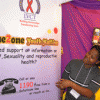
Kenyan NGO Pioneers HIV and Aids Phone Counseling
Young people find discussing HIV and Aids and sexuality difficult.In Kenya, a non-governmental organization has made it easier for them by establishing a free tele-counseling service.

Despite Poverty Pacific Islands Score on Child Mortality
The Pacific Islands are making steady progress on reducing child mortality, but most are struggling to eradicate poverty and generate employment for young and rapidly growing populations.
Parents Find Caring for Handicapped Children a Major Challenge
Caring for mentally and physically children is difficult any where in the world. In South Africa the situation is worsened by the fact that parents with handicapped children are stigmatized and some parents believe giving birth to a handicapped children is the result of witchcraft or punishment by God.

‘Breastfeeding Best for Bangladesh’
Bangladesh’s achievement in raising exclusive breastfeeding rates for infants under six months from 43 percent to 64 percent, over the last five years, is said to be the result of a determined campaign by government and non-governmental organisations (NGOs).Students Torn Between School and Work in DR Congo
Hanging from the door of a mini-bus taxi as it jerks and jinks through traffic, 16-year-old Gires Manoka calls out the van's destination to potential passengers as it crosses Kinshasa, the capital of the Democratic Republic of Congo.Congo Capital’s Schools Still Shattered From March Explosion
Three weeks after the new school year began in Brazzaville, many students in the capital of the Republic of the Congo have yet to attend a single class. The city is still trying to recover from a huge explosion at an arms dump in March.
Gang Truce Can Break Down, Prevention Should Be Priority
El Salvador has managed to bring down one of the world’s highest murder rates thanks to a truce between gangs that was lauded by the United Nations as an example to be followed in other countries of Central America.
OP-ED: What We Owe Our Youth
On Wednesday, we kick off a three-day meeting in Mexico City to discuss how to boost the involvement of young people in politics and expand their role in consolidating democracy in Latin America and the Caribbean.
Law Fails to Protect Malawi Children
Patrick Martin, 14, and his brother Mayeso, 15, are safely home for the moment with their mother and other siblings in Kasonya village, Phalombe District in southern Malawi, after they and 12 other children were rescued from being trafficked to neighbouring Mozambique last month by their father.
Reduce Poverty in Africa – Educate a Girl
While in the last decade an additional 52 million of sub-Saharan Africa’s children enrolled in primary schools, with girl’s enrolment increasing from 54 percent to 74 percent, a large majority of girls - 16 million – are still being denied access to education.
Child Marriage Defies Laws in Nepal
Social activists in Nepal agree that the one reason why this impoverished country will miss the gender-linked Millennium Development Goals (MDGs) of the United Nations is the persistence of child marriage.
Bounty Offered in Pakistan Activist Shooting
The Pakistani government has offered a Rs10 million (105,000-dollar) bounty for the capture of the Pakistani Taliban assailants who shot Malala Yousafzai, a teenage rights and education activist in the northwestern Swat Valley, officials say.
Q&A: “The Children Take on an Artist’s Lovely Identity, from a Young Age”
Venezuela’s youth symphony orchestras that have enamoured audiences on several continents are a social programme aimed at fighting poverty and marginalisation, more than an artistic endeavour, says the founder of the initiative, José Antonio Abreu.
NGO introduces ICT to schoolchildren in Cameroon
In Cameroon Information and Communication Technologies education is not universally accessible to Primary and secondary school children. A non-governmental organization called Ramsi ICT's House is filling the void by introducing school children to use computers, telephones and digital cameras.
« Previous Page — Next Page »


Children’s issues on the African continent remain on the margins of the news agenda. By raising the profile of children, the Children on the Frontline project seeks to help shape policies and inform Africa’s leadership on specific issues facing children across the region.

The Week with IPS

NEXT STOP - SDGs
Tracking global progress towards a sustainable world
Tracking global progress towards a sustainable world