Languages
Monday, November 9, 2026



News and Views from the Global South
Projects
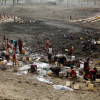
Water Scarcity Could Drive Conflict or Cooperation
When the General Assembly declared 2013 the International Year of Water Cooperation (IYWC) three years ago, the U.N.'s highest policy-making body was conscious of the perennial conflicts triggered by competition over one of the world's most critical finite resources.BOOKS: ‘Delusion’ Challenges U.S. Claims About Nuclear Iran
A Dangerous Delusion is the work of one of Britain's most brilliant political commentators, Peter Oborne, and an Irish physicist, David Morrison, who has written powerfully about the misleading of British public and parliamentary opinion in the run-up to the 2003 Iraq War.
Cuba’s Stray Dogs Have Their Champions
The stray cat’s fur was burned and its eyes were hanging from its sockets when pensioner Neida González found it on a street in the Cuban capital. The cat, which she named Grenlito, now lives with her eight other pets.Disarmament Deal Takes Two Steps Back
A Kremlin compromise on nuclear disarmament looks as far away as ever as Russian president Vladimir Putin and his U.S. counterpart Barack Obama use their countries’ strained relations to bolster their own domestic political agendas, experts say.
Tourism Deserts Egypt
It is Anna Betanova's second visit to Egypt and very different from the last time. The 26-year-old accountant from St Petersburg, Russia, is in Hurghada, the prominent resort destination on the Red Sea coast, some 400 km southeast of the capital Cairo. "The beaches are almost empty," she told IPS, "and we spend most of the day watching TV."
People Begin to Flee Damascus
As the United States prepares to fire Tomahawk cruise missiles on military targets inside Syria, Syrians are preparing for a new phase of the conflict that has already left more than 100,000 people dead.
Despite Opposition, Obama Undeterred from Striking Syria
U.S. President Barack Obama indicated Friday he would soon conduct what he called "very limited" military action against Syria to punish its alleged use of chemical weapons which, according to the White House, killed more than 1,400 people in several Damascus suburbs last week.
OP-ED: Military Force Is a Blunt Instrument, Mr. President
Now that we have heard Secretary of State John Kerry's emotional plea for us to believe the still rather ambiguous intelligence on chemical weapons use in Syria, there are far more substantive answers to be sought from the Obama administration.
Nationwide Protests Rage against Colombia’s Economic Policies
A strike declared nearly two weeks ago in Colombia by farmers and joined later by truck drivers, health workers, miners and students spread to include protests in the cities before mushrooming into a general strike Thursday, demanding changes in the government’s economic policies.
Kenya Embraces Carbon Trading
 Mary Itumbi reports from Nairobi that Kenya is taking advantage of carbon trading to contribute towards efforts to address climate change.

West Cold-Shoulders Rebuilding Southern Africa
The Southern African Development Community has had to revisit its plans to raise funding for its ambitious regional development plan in the wake of a cold-shoulder from western nations and multilateral finance institutions.
DR Congo Armed Groups Increase Child Recruitment
Over 2,000 children are still being used as soldiers by 27 armed groups in North Kivu in eastern Democratic Republic of Congo despite efforts by the United Nations Children’s Fund to remove them from the frontlines and return them to their homes.
One Way to See the Killing in Syria
Zuhair Hassib did not witness the last and the most ghastly massacre in Syria. Images of last year’s Siege of Homs were enough for the artist to have seen. His paintings have brought those horrors home in a way pictures could never have.
U.S., U.N. in Diplomatic Cross-Talk Over Syria
When the administration of President George W. Bush launched a military attack on Iraq in March 2003, it was nearly 18 months before Kofi Annan, then-U.N. secretary-general, described the invasion as "illegal" and in "violation of the U.N. charter" because the United States did not have Security Council authorisation.
World’s Top Chefs Cook for Change
For Denmark’s leading chefs, it’s not only the “taste” that counts. Many have an ambitious goal to “revise the relationship between people and food,” use local ingredients, produce less waste and go completely organic.
Zimbabwe Sails Close to Economic Rocks
For President Robert Mugabe to defeat the opposition in the Jul. 31 election by hook or by crook may have been a walk in the park, but beating the economic crisis will be another matter. The stock market fell 11 percent the day he was sworn in, the biggest fall in a day since 2009.U.S. Neocon Hawks Take Flight Over Syria
In an echo of the tactics they used to promote U.S. intervention in the Balkans, Iraq and Libya, a familiar clutch of neo-conservatives published a letter Tuesday urging President Barack Obama to go far beyond limited military strikes against Syria in retaliation for its government's alleged use last week of chemical weapons that reportedly killed hundreds of people.
In Rush to Strike Syria, U.S. Tried to Derail U.N. Probe
After initially insisting that Syria give United Nations investigators unimpeded access to the site of an alleged nerve gas attack, the administration of President Barack Obama reversed its position on Sunday and tried unsuccessfully to get the U.N. to call off its investigation.Nuclear Test Moratorium Threatened by North Korean Impunity
When the United Nations commemorates the International Day Against Nuclear Tests later this week, the lingering question in the minds of most anti-nuclear activists is whether or not the existing moratorium on testing will continue to be honoured - or occasionally violated with impunity.
Q&A: Everyone Loses in War Over Amazon Dams
In the war over major hydropower dams in the Amazon jungle, everyone loses - even the winners who manage to overcome the opposition and build them, but who suffer delays, costs that are difficult to recoup, and damage to their image.Peace No Longer Rests on the Palestinian Issue
The end of the world’s most enduring conflict was always regarded as the essential linchpin of Mideast security. As direct talks between Israelis and Palestinians resume following a three-year hiatus, it seems too late for peace between them - if the declared goal of a peace deal within nine months is achieved - to end the violence unleashed by the ‘Arab springs’.« Previous Page — Next Page »





The Week with IPS

NEXT STOP - SDGs
Tracking global progress towards a sustainable world
Tracking global progress towards a sustainable world
