Languages
Monday, November 9, 2026



News and Views from the Global South
Projects

Major U.S. Debate Over Wisdom of Syria Attack
While some kind of U.S. military action against Syria in the coming days appears increasingly inevitable, the debate over the why and how of such an attack has grown white hot here.
Uruguay Prepares for Iron Rush
A bill that would regulate large-scale mining operations is making its way through Uruguay’s two houses of parliament, despite a lack of political consensus and vocal opposition from environmental organisations and other sectors of civil society.
OP-ED: Obama Should “Resist the Call” to Intervene in Syria
President Obama got it right. He was picked by U.S. voters to put the nation's interests first – not those of any ally, any member of Congress, or the media, even if they clamour for him to "do something" yet do not take responsibility for the consequences if things go wrong, as they have for some time in the Middle East.
Q&A: Egypt’s Muslim Brotherhood Is Not Going Away
Almost 1,000 Egyptians have died, according to official count, since Aug. 14 when Egypt's armed forces began cracking down on Muslim Brotherhood-led protests against the military ouster of President Mohamed Morsi. That number well exceeds the 846 people officials say died during the 18 days of protests that ended Hosni Mubarak's 30-year rule in January 2011.
Brotherhood Cornered, Not Crushed
With the sun inching closer to the horizon on Friday afternoon in the Mohandiseen neighbourhood of Cairo, the call to prayer from Mostafa Mahmood mosque goes out over a street empty of all but a few soldiers lingering beside their tanks.
New Initiative Aims to Integrate Agriculture and Conservation
It took Brazil four decades to overcome food insecurity and earn a place as a major global food supplier. Now its experiences will contribute to the evidence base for a new initiative that seeks to reconcile agriculture and the conservation of biological diversity.
Opening Books Beneath Bombs
The school system in Syria’s largest Palestinian refugee camp Yarmouk, located in capital Damascus, has been shattered by the fighting that now bedevils the community and the siege that strangles the district. Some tenacious teachers are, however, refusing to leave the camp and are battling against odds to provide education to an ever-growing number of youngsters.
Civil Society Calls for Vote on Drilling in Ecuador’s Yasuní Park
The Ecuadorean government’s decision to allow oil drilling in the Yasuní National Park, one of the most biodiverse areas of the planet, has caused alarm among environmentalists and indigenous people, who are calling for a referendum on the issue.
Five Caribbean States Join Pilot for Energy Efficiency
Every year, the Caribbean's electric sector burns through approximately 30 million barrels of fuel. Overall, the region imports in excess of 170 million barrels of petroleum products annually.
Nicaragua’s New Canal Threatens Biggest Source of Water
The law passed in Nicaragua to grant a concession to a Chinese company to build a canal between the Pacific and Atlantic oceans repealed legislation that protects Lake Cocibolca and its tributaries.
Mining in Chile Going Back Underground
Declining mineral content, the need to preserve the environment, and technological advances are causing big mining companies to turn back to underground mining in what is a rising trend in Chile and around the world, experts say.
Noose Tightens Around Freedom in Egypt
The ongoing crackdown on Egypt's Muslim Brotherhood and supporters of ousted president Mohamed Morsi has prompted some analysts to warn of the apparent resurgence of the Mubarak-era police state.
U.S., UK, France Seek Wider U.N. Support for Syria Probe
The United States, Britain and France, three veto-wielding permanent members of the Security Council, are making a strong push for an "urgent" U.N. investigation of the alleged use of chemical weapons Wednesday in Syria.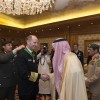
Washington’s Worries Grow Over Saudi Ties
As the administration of President Barack Obama continues wrestling with how to react to the military coup in Egypt and its bloody aftermath, officials and independent analysts are increasingly worried about the crisis's effect on U.S. ties with Saudi Arabia.
Mugabe Begins Another Presidential Term
Robert Mugabe will be inaugurated on Thursday, Aug. 22, to serve yet another five-year term as Zimbabwe’s president after holding the post for the last 33 years. And he does so as analysts here raise concerns that a recent High Court ruling recommending the arrest of outgoing Prime Minister Morgan Tsvangirai’s lawyers on contempt of court charges could be the start of political oppression.
Back to Mubarak, And Worse
Egyptian military leader General Abdel-Fattah El-Sisi said ousting the country’s first elected president was necessary “to preserve democracy” and resolve the political deadlock that had dangerously polarised the country. But six weeks after the coup he led, the notion that toppling Islamist president Mohamed Morsi would restore stability to Egypt has proven false.
Bahrain’s Tamarod Is Here to Stay
On Aug. 14, the 42nd anniversary of Bahrain’s independence from Britain, an online group called Tarmarod (“rebellion” in Arabic) officially joined Bahrain’s democracy movement that began in February 2011.
Water Dispute Pits Communities Against Brewing Giant
Josefina Escamilla was in the Salvadoran capital to protest against UK brewing giant SABMiller, whose local subsidiary plans to drill a new water well on land alongside her community that, she says, will cause water scarcity for local residents.
U.S., China Talk Peace but Still Frenemies
U.S. Secretary of Defence Chuck Hagel welcomed Chinese Defence Minister Chang Wanquan to the Pentagon Monday as part of Chang’s four-day tour of U.S. defence compounds.
Swazi Chiefs Shut Women Out of Parliament
Archaic and chauvinistic practices are being used to prevent Swazi women from taking part in the upcoming primary elections, despite the country having a constitution that guarantees their rights, says political analyst Dr. Sikelela Dlamini.
Southern Africa Shows the Way With Water
Water remains a key component in development policy. And, as the Southern African Development Community discusses how best to develop the region, the effective management of watercourses will be key, says Professor Anthony Turton, one of the foremost experts on water policy in southern Africa and a trustee of the Water Stewardship Council of Southern Africa.« Previous Page — Next Page »





The Week with IPS

NEXT STOP - SDGs
Tracking global progress towards a sustainable world
Tracking global progress towards a sustainable world
