Languages
Sunday, November 8, 2026



News and Views from the Global South
Projects

Migrants – The Increasingly Expensive Deadly Voyages
 They borrow huge amounts of money. They sell all their modest properties. They suffer brutalities on the hands of their own countries “security” forces to prevent them from fleeing wars, droughts, floods, lack of food, extreme poverty.

Value of Water Is on the Rise
In the wake of recent water-related disasters in Bangladesh, including water-logging and floods that displaced thousands of families, a high-level consultation in the capital Dhaka on valuing water will look at ways to optimize water use and solutions to water-related problems facing South Asia.
Can Economic Growth Be Really Green?
The answer to this big question is apparently “yes” – Economic growth can be really green. How?
Barbados Steps Up Plans for Renewables, Energy Efficiency
With wind, solar and other renewable energy sources steadily increasing their share in energy consumption across the Caribbean, Barbados is taking steps to further reduce the need for CO2-emitting fossil fuel energy.
Tobago Gears Up to Fight Sargassum Invasion
As Tobago's tourism industry struggles to repel the sargassum invasions that have smothered its beaches with massive layers of seaweed as far as the eye can see - in some places half a metre thick - and left residents retching from the stench, the island's government is working to establish an early warning system that will alert islanders to imminent invasions so they can take defensive action.
Costa Rica’s Caribbean Coast Pools Efforts Against Climate Change
Jonathan Barrantes walks between the rows of shoots, naming one by one each species in the tree nursery that he manages, in the south of Costa Rica’s Caribbean coastal region. There are fruit trees, ceibas that will take decades to grow to full size. and timber species for forestry plantations.
Local Farmers and Consumers Create Short Food Supply Chains in Mexican Cities
Víctor Rodríguez arranges lettuce, broccoli, potatoes and herbs on a shelf with care, as he does every Sunday, preparing to serve the customers who are about to arrive at the Alternative Market of Bosque de Tlalpan, in the south of the Mexican capital.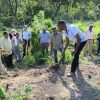
Farming Beyond Drought
The Caribbean accounts for seven of the world’s top 36 water-stressed countries and Barbados is in the top ten. The Food and Agriculture Organisation (FAO) defines countries like Barbados, Antigua and Barbuda, and St. Kitts and Nevis as water-scarce with less than 1000 m3 freshwater resources per capita.
East Africa’s Poor Rains: Hunger Worsened, Crops Scorched, Livestock Dead
Poor rains across East Africa have worsened hunger and left crops scorched, pastures dry and thousands of livestock dead, the United Nations food and agriculture agency has warned in a new alert.
Brazil’s Shipyards – Victims of a Failed Reindustrialisation Process
“I have lived through three good periods and two bad ones,” prior to the present crisis in the Brazilian shipping industry, said Edson Rocha, a direct witness since the 1970s of the ups and downs of a sector where nationalist feelings run high.
Not Just Numbers: Migrants Tell Their Stories
Every single day, print and online media and TV broadcasters show images and footage of migrants and refugees adrift, salvage teams rescuing their corpses--alive or dead, from fragile boats that are often deliberately sunk by human traffickers near the coasts of a given country. Their dramas are counted –and told-- quasi exclusively in cold figures.

Extreme Weather Wiping Out Hard-Won GDP Gains in Hours
With Antigua and Barbuda joining St. Kitts and Nevis as the two eastern Caribbean nations to attain middle-income country status, a senior diplomat has identified climate change as a major factor preventing other nations in the grouping from taking the same step forward.
The Arab Youth Bulge and the Parliamentarians
More than ever before, the Arab region now registers an unprecedented youth population growth while facing huge challenges such as extremely high unemployment rates --more than half of all regional jobless population--, and inadequate education and health provision, in particular among young women.
Communities Step Up to Help Save Jamaica’s Forests
According to the United Nations Food and Agriculture Organization (FAO), 31.1 percent or about 337,000 hectares of Jamaica is forested. Of this, 26.1 percent or 88,000 is classified as primary forest, the most biodiverse and carbon-dense form of forest.
Nuclear Ban Approved, Now What?
More than seven decades after the deployment of deadly atomic bombs in Japan, the UN has passed a historic treaty banning nuclear weapons around the world. Though it has sparked hope for a future without nuclear weapons, uncertainty in the success of the treaty still lingers.
Argentina Plans Billions of Dollars in Railway Projects
Development in Argentina in the second half of the 19th century and the first half of the 20th century was closely tied to that of the railway. The eighth largest country in the world, Argentina’s economy grew through exporting agricultural and livestock products, and the railways were key to founding centres of population and transporting goods to the ports.
Three-Zone Biosecurity Offers New Hope to Indonesian Farmers
Poultry farmer Bambang Sutrisno Setiawan had long heard about biosecurity but never gave serious thought to it, even when the highly pathogenic avian influenza H5N1 forced him to cull thousands of his layer chickens in 2003 and 2009.
Mexico’s Methane Emissions Threaten the Environment
Mexico is in transition towards commercial exploitation of its shale gas, which is being included in two auctions of 24 hydrocarbon blocks, at a time when the country is having difficulty preventing and reducing industrial methane emissions.
Climate Change-Poverty-Migration: The New, Inhuman ‘Bermuda Triangle’
World organisations, experts and scientists have been repeating it to satiety: climate change poses a major risk to the poorest rural populations in developing countries, dangerously threatening their lives and livelihoods and thus forcing them to migrate.
Mideast: Water Use Innovations ‘Crucial’ to Face Climate Change
In the Near East and North Africa region, the per capita renewable water availability is around 600 cubic metres per person per year --only 10 per cent of the world average- and drops to just 100 cubic metres in some countries, the United Nations warned.
Funding Climate Resilience Benefits All Nations – Yes, the U.S. Too
A leading climate change mitigation and adaptation activist and former climate negotiator in the Caribbean says that the United States could protect its economic and political interest by helping the region to go green.« Previous Page — Next Page »





The Week with IPS

NEXT STOP - SDGs
Tracking global progress towards a sustainable world
Tracking global progress towards a sustainable world
