Languages
Monday, October 19, 2026



News and Views from the Global South
Projects

Africa: Drought and Jobless, Hopeless Youth, Fertile Grounds for Extremism
Ignoring the plight of jobless young people in sub-Saharan Africa is a recipe for political instability and global insecurity, warned a high-level symposium of Africa’s interior, environment and foreign affairs ministers in Ouagadougou, Burkina Faso.
Latin America’s Rural Exodus Undermines Food Security
In Latin America and the Caribbean, which account for 12 per cent of the planet’s arable land, and one-third of its fresh water reserves, a number of factors contribute to soil degradation and to a rural exodus that compromises food security in a not-so-unlikely future.
BRICS to Lead World’s Efforts to Eradicate Hunger, Poverty by 2030
With the clock ticking toward the 2030 deadline for meeting the international goals to eradicate hunger and poverty, five of the world's most important emerging economies are well positioned to take a leading role in helping to achieve these objectives, according to the United Nations.
Drought Pushes 1 in 3 Somalis to a Hunger Knife-Edge
Another famine in former European colonies in Africa and another time in its Eastern region, with Ethiopia and Somalia among the major victims of drought and made-made climate disasters mainly caused by US and European multinational business.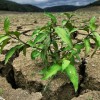
Mideast: Drought to Turn People into Eternal Migrants, Prey to Extremism?
Worldwide, land degradation, severe droughts and advancing desertification are set to force populations to flee their homes and migrate. In the specific case of the Middle East and North of Africa (MENA), such an obliged choice implies the additional risk to turn peoples into easy prey to extremist, terrorist groups.
More Plastic than Fish or How Politicians Help Ocean Destruction
World’s oceans are dangerously exposed to at least three major threats: climate change; the sharp degradation of marine biodiversity, and politicians. These simply encourage the destruction of oceans by subsidising over-fishing and turning a blind eye on illegal captures. See what happens.
What Future for 700 Million Arab and Asian Youth?
With a combined population of around 400 million inhabitants, 22 Arab countries are home to nearly 300 million youth. Meantime, there are 400 million youth living in Asia and the Pacific. In both regions, these 700 million young people aged 15–24 years account for up to 60 per cent of world’s youth population. What future for them?.
A Bold Step toward the Elimination of Nuclear Weapons
As previously announced, the President of the United Nations Conference for the negotiation of a Convention on the prohibition of nuclear weapons, Costa Rican Ambassador Elayne Whyte-Gómez, unveiled last 22 May the draft elaborated after the first part of those negotiations in March.
The Relentless March of Drought – That ‘Horseman of the Apocalypse’
By 2025 –that’s in less than 8 years from today-- 1.8 billion people will experience absolute water scarcity, and two thirds of the world will be living under water-stressed conditions. Now it is feared that advancing drought and deserts, growing water scarcity and decreasing food security may provoke a huge ‘tsunami” of climate refugees and migrants.
Solar Tents Improve Nutrition in Highlands Villages in Bolivia
In this remote highlands valley community in central Bolivia, a group of Quechua indigenous women have learned how to combat the intense frosts and the shortage of water in solar tents, and to use what they grow to prepare nutritious new meals for their families.
Women Small-Holder Farmers, Key Drivers for Sustainable Production
The shouts can be heard from a distance as one approaches Domboshawa, 30 kilometres northeast of the Zimbabwean capital, Harare.
Re-Connect with Nature Now… Before It Is Too Late!
Now that president Donald Trump has announced the withdrawal of the world’s largest polluter in history—the United States, from the Paris Accord, perhaps one of the most specific warnings is what a United Nations independent expert on rights and the environment has just said: “We should be fully aware that we cannot enjoy our basic human rights without a healthy environment.”
How to Produce More Food with Less Damage to Soil, Water, Forests
Massive agriculture intensification is contributing to increased deforestation, water scarcity, soil depletion and the level of greenhouse gas emission, the United Nations warns.
The ‘Water-Employment-Migration’ Explosive Nexus
Water--everybody talks about it, warns against its growing scarcity, excessive waste, the impact of climate change, the frequent severe droughts and so on. Now, a global action network with over 3,000 partner organisations in 183 countries comes to unveil the dangerous nexus between water, employment and migration, in particular in the Mediterranean region.
Millions of Homes in Mexico Suffer from “Energy Poverty”
Energy poverty afflicts millions of homes in Mexico, with many social, economic and environmental impacts for the country.
Brazil Drives New School Feeding Model in the Region
“I am going back to Panama with many ideas,” said Gilda Montenegro, a nutritionist with the Panamanian Education Ministry, after getting to know the school feeding system in the city of Vitoria, in central-eastern Brazil.
Formalising Informal Trade – Good for African Women?
Women constitute the largest share of informal traders in Africa–about 70 per cent in Southern Africa and more than half in other parts of this vast continent made up of 54 states, home to over 1,200 billion people.
Q&A: “It’s a Crime” that 35 Million Latin Americans Still Suffer from Hunger
The fight against hunger has been “remarkably successful” in Latin America and the Caribbean, but “it is a crime” that 35 million people still go to bed hungry every day, FAO regional representative Julio Berdegué told IPS.
Unique Sandbar Coastal Ecosystem in Cuba Calls for Climate Solutions
A battered bridge connects the centre of Baracoa, Cuba´s oldest city, with a singular dark-sand sandbar, known as Tibaracón, that forms on one of the banks of the Macaguaní River where it flows into the Caribbean Sea in northeastern Cuba.
Agony of Mother Earth (II) World’s Forests Depleted for Fuel
Humankind is the biggest ever predator of natural resources. Just take the case of forests, the real lungs of Mother Earth, and learn that every 60 seconds humans cut down 15 hectares of trees primarily for food or energy production. And that as much as 45,000 hectares of rainforest are cleared for every million kilos of beef exported from South America.
Agony of Mother Earth (I) The Unstoppable Destruction of Forests
The world’s forests are being degraded and lost at a staggering rate of 3.3 million hectares per year. While their steady destruction in many Asian countries continues apace, deforestation of the world's largest tropical forest - the Amazon - increased 29 per cent from last year’s numbers. And some of the most precious ecosystems in Africa are threatened by oil, gas and mineral exploration and exploitation.« Previous Page — Next Page »





The Week with IPS

NEXT STOP - SDGs
Tracking global progress towards a sustainable world
Tracking global progress towards a sustainable world
