Languages
Friday, September 25, 2026



News and Views from the Global South
Reframing Rio
Malawi Turns to Mozambique for Power
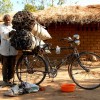
On-again, off-again… it's the story of both Malawi's power supply and the interconnection project that could end blackouts with power imported from neighbouring Mozambique.
Family Planning and Subsistence Agriculture Key to Food Security
Papua New Guinea’s high fertility rate is exerting pressure on land and food production in a country where 80 percent of the population lives in rural communities. But the National Agricultural Research Institute (NARI) argues that traditions of subsistence agriculture provide a firm foundation to build food security for a growing population.
Building a Company in Mozambique – One Peanut at a Time
When you board Mozambique’s national carrier, Linhas Aéreas de Moçambique, you will most likely be given small blue packets of peanuts to munch as the jet whisks you from the country’s capital, Maputo, to as far afield as Europe. Sugar, salt or chilli flavour. Take your pick.
Activists Call for Creation of High Commissioner for Future Generations at Rio+20
The theme of the United Nations Conference on Sustainable Development (Rio+20) is "The Future We Want", but there is no official role for youth nor a spokesperson for future generations who will inherit that future.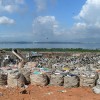
Brazil Closes Symbol of Environmental Degradation, Ahead of Rio+20
As Rio de Janeiro prepares to host the United Nations Conference on Sustainable Development, which will discuss the green economy, the Brazilian city has put an end to one of its worst environmental sins: the enormous Jardim Gramacho garbage dump on Guanabara Bay.
Politics Heats Up Around Arctic Thaw
The best way to protect the Arctic is for all nations with an interest in the region to participate in its governance - including non-Arctic nations like China, Brazil, and Singapore - suggests a new report.
“Land Is Our Ally, But Its Patience Is Not Eternal”
Land degradation poses a threat to all life on Earth including humanity. To stop the enormous loss of life-giving land, the United Nations Convention to Combat Desertification (UNCCD) is pushing for a sustainable development goal of Zero Net Land Degradation (ZNLD) to be adopted at the upcoming Conference on Sustainable Development, known as Rio+20, in Brazil.
U.N. Aims To Offset its Own Carbon Footprint
As the international community readies for a global mega-conference on sustainable development in Brazil mid-June, the United Nations is determined to practice what it preaches to the outside world: improve resource efficiency and drastically reduce its own greenhouse gas emissions.
For an Ailing Planet, the Cure Already Exists
The planet's climate recently reached a new milestone of 400 parts per million (ppm) of carbon dioxide in the Arctic.
RIO+20: Canada, Last Holdout, Drops Opposition to Water as Human Right
Canada, in a dramatic political turnaround, has signaled its willingness to recognise water and sanitation as a basic human right.
Rio+20 – a Call to Responsibility, a Call to Action
We are all going through a period of great confusion and uncertainty.
Time for a More Sustainable Global Food System
It is vitally important that governments and civil society organisations start transitioning to a more sustainable global food system in order to achieve lasting development.
Cultivating Food Security in Their Own Backyards
Misradi, a 58-year-old farmer from the Jelok neighborhood in Pacitan, East Java, some 524 kilometres east of Jakarta, has found a way to reduce his monthly expenses by 30 percent: instead of buying produce from the local market, he and his family now harvest most of their vegetables from their own yard.
A Future With Food, or No Future At All
The upcoming Rio+20 Conference on Sustainable Development will not succeed if the crises of hunger and malnutrition are not effectively addressed. The issues are so inextricably linked with sustainable development that they have to be part of the agenda, according to a report released Wednesday by the United Nations Food and Agricultural Organisation (FAO) for the upcoming Earth Summit that will take place in Rio de Janeiro from Jun. 20-22.
Climate Change and Family Planning – Twin Issues for LDCs
The reproductive rights agenda, from improving women’s access to education to systematic family planning to reducing birth rates and combating poverty, has become a cornerstone of most industrialised nations’ development policies toward the least developed countries (LDCs), comprised primarily of sub-Saharan African states.
Q&A: North-South Divide Looms Heavily Over Rio+20 Summit
The 1992 Earth Summit in Rio de Janeiro was to a large extent derailed by a North-South divide: a battle between a coalition of rich industrial nations versus the world's developing countries led by the Group of 77.
Rio+20 is Everyone’s Conference
The United Nations Conference on Sustainable Development, otherwise known as Rio+20, is a once-in-a-generation opportunity.
Paprika – Spicing Up Malawi’s Economy
As she sits down to watch the 8pm news on TV, Mercy Kamphoni from Chamtulo Village in Malawi’s Mangochi lake district looks elated. She still cannot believe that she is the new proud owner of a television set, refrigerator and radio.
‘Green Economy’ – New Disguise for Old Tricks?
Though the current global economic and financial crises are undoubtedly devastating much of the world, they present the perfect opportunity for remodeling our economic system, according to participants at the ninth annual Terra Futura (Future Earth) exhibition of ‘good practices’ in social, economic and environmental sustainability held here from May 25-27.
Q&A: A Green Economy Without a Pricetag on Nature?
As thousands gear up for the 2012 Earth Summit, Rio+20, scheduled to kick off in Brazil on Jun. 20, questions on the viability and adequacy of a ‘green economy’ abound.
Will Rio+20 Spark a Green Revolution?
Think of Rio+20 as the hothouse to grow the green ideas and values humanity needs to thrive in the 21st century.« Previous Page — Next Page »


The Rio Plus 20 United Nations conference on sustainable development in June 2012 raised hopes over ushering in an new development paradigm through scaled-up international commitment to equitable, climate-conscious growth. Its outcome was less sweeping, leaving the development, NGO and private sector to search for alternatives to address current and impeding crises caused by resource depletion, pollution and climate change, exacerbating endemic global inequality. This special section of our site covers the full spectrum of the Earth Summit, from the lead up to the height of the conference, while continuing to track post-Rio implementation and emerging initiatives for sustainable development.

Donors & Partners


International Institute for Environment and Development

This content has been produced with the financial assistance of the European Union. The content is the sole responsibility of IPS, and can under no circumstances be regarded as reflecting the position of the European Union.

Connect for Climate

Alliance of Communicators for Sustainable Development

This website is funded through the support of the International Fund for Agricultural Development (IFAD).
