Languages
Thursday, October 8, 2026



News and Views from the Global South
The Southern Africa Water Wire
Savings Spurned in Zimbabwe Water Purification
Zimbabwe spends an estimated 100 million dollars a year importing aluminium sulphate for water treatment plants. But a local entrepreneur has developed a technique to extract the needed compound from kaolin and flint clays abundantly available within the country.
SOUTH AFRICA: Children Help to Assess Water Health
Miss, Miss, there are tiny creatures here in the water!" a Grade 7 pupil shouts excitedly, trying to draw attention to his water sample. At first, the liquid looks clear, but upon closer examination, one can make out a tiny aquatic invertebrate.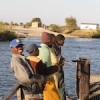
SOUTHERN AFRICA: Sharing the Okavango
Each January, a giant pulse of water from heavy summer rains over the south of Angola enters the Okavango River system and begins a five-month journey through Namibia to a richly biodiverse swamp in Botswana's Kalahari desert. The river is a rarity, scarcely disturbed by human development along its 1,100 kilometre length: shaping its future is the delicate task of the Okavango River Basin Commission.MOZAMBIQUE: Co-existing With Floods
April signals the tail end of the flood season in Mozambique. The country's water managers will soon be able to appraise the effects of changing policies.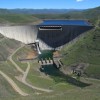
WATER-LESOTHO: Getting Community Consultation Right
The Lesotho Highlands Water Project will move into its second phase in 2010. The first phase has been praised as a shining example of transboundary water sharing in Africa, but community dissatisfaction may mean a rough ride for its extension.
SOUTHERN AFRICA: Benefits of Working Together on Water
The river basin organisation people are gathered in Botswana again: the theme this year is "benefit-sharing", an approach to allocating water that, it is promised, will accomplish nothing less than to make more water.MOZAMBIQUE: Weather Service Key to Flood Disaster Management
Mozambique's government learned some tough lessons from the devastating floods that hit the country a decade ago. Experts say the disaster management plans drawn up since are a model for other African countries.
WATER-ZAMBIA: Lozi Make Annual Migration to Higher Ground
Josias Akataama spent March watching the moon wane above, and flood waters rise from below. Only with the sighting of the new moon, would the men, women and children of Kandiani know when they could leave the water-logged village for higher ground.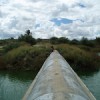
NAMIBIA: Banking Water for the Future
In the driest capital city south of the Sahara, water engineers are "banking" ground water to meet future demand, but the enormous costs might sink the project before water can be harvested.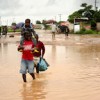
ZAMBIA: Health Fears Follow Floods
As the heavy rains subside, signifying the end of the rainy season, a cholera outbreak is sweeping through the Zambian capital, Lusaka.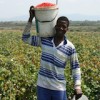
WATER : Swazi Village Gets a Self-Sustaining Water Supply
No one loves the bill collector, and Sifiso Shongwe gets a chilly welcome as he goes from household to household collecting money for Maphilingo's community water scheme.WORLD WATER DAY: Water Everywhere but Not a Drop to Drink
When there are water cuts in Bulawayo, the plants in 59-year-old Ntombizodwa Makati’s vegetable garden are still watered - but she and her family go thirsty.
SOUTHERN AFRICA: Preparing for Flood Season
Southern Africa is entering flood season. Governments and policy makers have been challenged to adopt a more preventive approach to disaster management by the Red Cross - what measures are in place?
MAURITIUS: These Women Chose the Sea
She cannot swim, but Marie-Claite Hector is not afraid of the ocean. The 53-year-old pushes her small boat with all her strength towards the blue lagoon, starts the engine, and sets out to sea.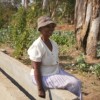
ZIMBABWE: Water Scarcity No Obstacle To Bulawayo Farmers
A project in Zimbabwe's second city, Bulawayo, is creatively using "marginal water" to ease water scarcity while helping residents provide food and earn a living.
MALAWI: Green Belt Initiative Taking Shape
Let the rains fail, even for several successive seasons, and Malawi should still be able to produce enough to feed itself.
TANZANIA: Community Still Worried By Mine Contamination
Susanna Solomon is still tending her shamba, but she won't eat the harvest from her farm when it's ready.SANITATION-ZAMBIA: Turning Urine Into Gold
When he ordered his colleagues at the Water and Sanitation Association of Zambia to save all their urine in a plastic bottle in the office toilet, they thought he was mad. But German sanitation specialist Christopher Kellner wanted to demonstrate why he calls urine "liquid gold".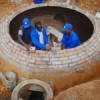
ZAMBIA: Putting Waste to Work
When Obed Mumba first came to the Zambian copper mining town of Ndola in search of work, it was still known reverently as "Ku kalale" - the land of the white man. In the decades since, he has witnessed his Kabushi township outgrow the limited dreams of its planners.DEVELOPMENT: Climate Change Likely to Increase African Hunger Woes
Africa, the continent already most affected by hunger and food scarcity, is likely to see its woes increased due to climate change and the changing rain patterns it provokes, experts and scientists say.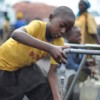
DR CONGO: Urban Water Supply Needs Attention
Kinshasa's population needs an estimated 700,000 cubic metres of water per day. The Régie de distribution des eaux (REGIDESO) produces only 425,000 cubic metres - vast neighbourhoods like Kitokimosi and Mpasa receive almost none of this water.« Previous Page — Next Page »





The Southern Africa Water Wire provides in-depth coverage of a diverse range of water-related issues in Africa, linking water to economic development, social well-being and environmental protection. Local journalists from across the continent explore the challenges, failures and successes of managing this vital resource.


Like the Southern Africa Water Wire to receive the latest water news and information from IPS and other top news agencies, as well as agencies in the field
Follow @africawaterwire

