Languages
Friday, November 13, 2026



News and Views from the Global South
Asia-Pacific

Modernity Triumphs over Feudalism in India
“We worked for the poor and they voted us back to power,” was the explanation that Prime Minister Narendra Modi made to newly-elected legislators on Saturday, May 25, on the spectacular win scored by his nationalist Bharatiya Janata Party (BJP) in India’s just concluded general elections.
Does God Hate Women? A Bangladeshi Murder Case
On 6 April, nineteen-year-old Nusrat Jahan Rafi was by a fellow student brought to the roof of their school. She told Nusrat that a friend of hers was beaten up there. Unknown to Nusrat, Moni who was four months pregnant at the time, had earlier bought burqas and gloves for three of the men who were awaiting them on the roof. Another girl, Umma, was already there beckoning Nusrat to come up. However, when Nusrat entered the roof Umma threw her down and tied her legs. The burqa-dressed men surrounded the defenseless Nusrat, demanding her to withdraw accusations of sexual harassment against the schools´headmaster. When Nusrat refused to give in, one of the men held her head down, while another poured kerosene over her and set her on fire.
As Fathers Die, Kashmir’s Children Become Breadwinners
Mubeen Ahmad was nine years old when his mother sold him into service to a mechanic for the petty sum of few thousand Indian rupees. His mother had found it hard to support the family after his father, a labourer, was killed during one of the anti-India protests in Jammu and Kashmir in 2008.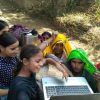
Rural Education: Moving Past “Poor Solutions for Poor People”
Communities are treated as passive recipients, giving them no say in the functioning of their schools. Here's why this needs to change.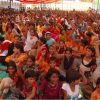
Want Social Change? Give Communities More Agency
No external force can bring about real change in society. Only the community itself can.
Massacre of the Innocents: Whereto from Here?
We have been here before. This blooded precipice is familiar, this looming abyss. What is unfamiliar, what renders the Easter Sunday massacre most vile and truly nightmarish is the total absence of any knowable rationality.
Terror and Religion
Just before nine o´clock in the morning of April 21st, Christians in Sri Lanka were in their churches peacefully celebrating Easter Sunday, while tourists were waking up in their hotel rooms. Suddenly explosions blasted three churches and three hotels. Among the ruins lay hundreds of wounded people, as well as 253 corpses of men, women and children. They had been killed and maimed because some fellow human beings believed they acted in God´s name and out of promises of an unproven, heavenly bliss if they killed themselves after obliterating people they did not know; sowing death, lifelong suffering and sorrow.
Muslim Terrorists Heading Towards a Jihadist Hell Hole
The history of terrorism in Sri Lanka reveals a clear pattern. The first to take up arms in the post-Independent era were the misguided Sinhala youth. They were educated youth desperately running in search of a quick solution to establish their classless paradise. Their violence did not take them anywhere.
Sri Lanka’s Easter Sunday Carnage: Quo Vadis?
I returned from attending a three-hour Easter Sunday mass at the Fordham University Church around midnight New York time on April 20, 2019, when my phone rang and a colleague asked me what’s going on in Sri Lanka? I said what is going on? He said there were a series of coordinated terrorist bombings with multiple fatalities and scores of injuries in my native country. For the next four and a half hours I was on the phone trying to piece together what happened, including reaching out to Sri Lanka’s Secretary of Defence Hemasiri Fernando.
Empowering Girls Through Sport
For too long, women and girls have been excluded from the playing field—literally. But now, many are paving the way in the fight against gender inequality through sports.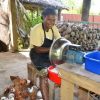
Climbing the Coconut Value Chain in the Pacific
In the Pacific, coconut is king. Known as the ‘tree of life’, locals make use of every part of the tree to survive – the fruit for eating, husks for fuelling fires, fronds for making multiuse baskets, and the trunk for building houses.
Lessons From China: Fostering Agricultural Growth and Poverty Reduction
As China has moved from a poor isolated country to a major player in the world economic and political sphere, developing countries need to learn how to engage.
Pakistan’s Battle Against Climate Change
Pakistan, which has been listed as the 7th most vulnerable country affected by climate change, is now seriously tackling the vagaries of weather, both at the official as well as non-official level. Pursuant to an initiative launched by the Pakistan Parliament’s Upper House, the Senate, which specially entrusted a sub-Committee of the Standing Committee on Climate Change to focus on “Green and Clean” Islamabad, media, civil society and students have taken up the cudgels on combating climate change.
Brunei’s Shariah Code & the New Stone Age
Over a week ago – on April 3 – Brunei, the tiny South East Asian kingdom on the island of Borneo, announced its citizens would face the full force of the Shariah law.
Rise in Cyberlaws Across Southeast Asia Spell Bad News for Human Rights & Democracy
Around the globe, cyberspace has become the new battleground in the fight for the heart and soul of democracy. And Southeast Asia is fast becoming one of the global hotspots where the screws are being tightened on freedom of expression online.
Q&A: 607 Island Atolls Means it’s Hard to Distribute Leprosy Healthcare to All Micronesians
During his 22-year career in the health sector, Marcus Samo has seen the Federated States of Micronesia (FSM) suffer from an increased burden of disease while at the same time the resources to address them have either remained the same or decreased.
Missing Data & Inefficient Drug Distribution Tops List of Micronesia’s Leprosy Challenges
It’s a good day for Dexter, a 25-year-old fisherman from Pohnpei in the Federated States of Micronesia. He’s just been told that he is cured of leprosy.
As Marshall Islands Integrates Healthcare Services, Experts Offer a Word of Caution
In Jack Niedenthal’s office in Majuro, there is an ominous reminder of the dark history of the Marshall Islands—once the site for dozens of nuclear tests conducted by the United States between 1946 and 1962. But it also provides a strong message about the future of island nation.
In Diverse Southeast Asia, Growing Ethnic & Religious Intolerance Pose Serious Threat to Stability
When the one-year anniversary of Malaysia’s historic presidential election outcome rolls around in early May, the wave of euphoria that followed it will be all but a wistful memory.
Greater Skills Equals Greater Ability to Combat Leprosy
It’s a Friday morning and Dr. Ken Jetton, the only doctor who treats leprosy in Majuro, the capital of the Marshall Islands, is seeing a patient recently cured of the disease.
Ambitions Are Affordable for Asia and the Pacific
Three years of implementation of the transformative 2030 Agenda for Sustainable Development in Asia and the Pacific shows the region has some catching up to do. Despite much progress, the region is not on track to reach the 17 Sustainable Development Goals set out in the United Nations 2030 Agenda for Sustainable Development. We are living in a time of booming prosperity, yet many are getting left behind. Basic needs, such as the freedom for all from hunger and poverty, ill-health and gender-based discrimination, and equal opportunity for all are elusive. Economic, social and planetary well-being has a price tag. Calculations by the United Nations Economic and Social Commission for Asia and the Pacific (ESCAP) show that it is mostly affordable for the region.« Previous Page — Next Page »


The Week with IPS

NEXT STOP - SDGs
Tracking global progress towards a sustainable world
Tracking global progress towards a sustainable world
