Languages
Wednesday, November 11, 2026



News and Views from the Global South
Global

Caring for The Old
With the unprecedented ageing of populations worldwide, countries are struggling with the critical questions of who should be responsible for caring for the old and what should be the extent of care provided to women and men in old age.
Bob Dylan and the Ukraine Crisis
Fifty-nine years ago, Bob Dylan recorded “With God on Our Side.” You probably haven’t heard it on the radio for a very long time, if ever, but right now you could listen to it as his most evergreen of topical songs:
If Security Council Fails, Violation of UN Charter Should Go Before International Court of Justice
The widening political crisis in Ukraine, which has taken a turn for the worse with the declaration of two new independent states—the Donetsk People’s Republic and the Luhansk People’s Republic -- is likely to prove once again the ineffectiveness of the 15-member UN Security Council (UNSC).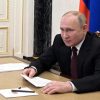
Ukraine: What’s Really Behind Putin’s Deployment of ‘Peacekeeping’ Troops? Experts Explain
Vladimir Putin’s recognition of the independence of the two breakaway republics of Donetsk and Luhansk followed a surreal live broadcast of a security council meeting in the Kremlin. Sitting facing the 13-member council, Putin cajoled and argued as, one by one, his most senior officials – including Dmitry Medvedev, a former president and prime minister, and the country’s foreign minister, Sergei Lavrov – took to the lectern to provide their boss with “reasons” for the formal recognition of the two republics in the country’s east as independent states.
Financialization at Heart of Economic Malaise
COVID-19 has exposed major long-term economic vulnerabilities. This malaise – including declining productivity growth – can be traced to the greater influence of finance in the real economy.
Children with Disabilities are Not Problems to Solve, but Potential to Nurture, says Nujeen Mustafa
Struggling with stigma and discrimination in an unaccommodating environment, Nujeen Mustafa knows all too well the difficulties children with disabilities face in emergency and protracted crises.
Arc of History Bending Towards (Ab) Using Democracy & Human Rights: A Plea for Multi-Religious Civil Accountability
A “Joint Statement of the Russian Federation and the People’s Republic of China, issued on February 4, 2022 on International Relations Entering a New Era and the Global Sustainable Development”, contains laudable and strong language about commitment to democracy and human rights:
Alarm: Every Two Weeks a Mother Tongue Disappears Due to Globalisation
“Every two weeks a language disappears taking with it an entire cultural and intellectual heritage. At least 43% of the estimated 6000 languages spoken in the world are endangered. Only a few hundred languages have genuinely been given a place in education systems and the public domain, and less than a hundred are used in the digital world.”
Ukraine Crisis: The Stakes are High
If the Ukraine crisis erupts into war – even intensified limited war in Eastern Ukraine with overt Russian intervention – the consequences will be severe and far-reaching.
Speed Dating with the Future, a Romance with Science and Biodiversity
In a busy world where love is a complicated affair, speed dating is one way to connect, but can it work to ignite more sustainable relationships with nature? Are we open to a romance with science and evidence?
When the Fate of Half Our Planet is being Discussed, it’s too Important to Shut out Civil Society
Over the past two weeks, a petition signed by almost five million people globally was handed in to governments around the world. It called for a Global Ocean Treaty to help rescue our oceans.
‘Our Common Agenda’: Guterres’ Open Door to Corporate Capture of the UN
On 10 September 2021, UN Secretary-General (SG) Antonio Guterres released the “Our Common Agenda” (OCA) report. This report was in response to a request from UN member states to “report back before the end of the seventy-fifth session of the General Assembly with recommendations to advance our common agenda and to respond to current and future challenges”.
Peasants Marginalized by Big Farmers
A recent Food and Agriculture Organization (FAO) study shows the largest farms cultivate a high and increasing share of agricultural land in much of the world. Farm size concentration World Agricultural Census data for 129 countries show about 40% of the world’s farmland is operated by farms over 1000 hectares (ha) in size. About 70% is operated by the top 1% of farms, all bigger than 50 ha each.
Dream. Dare. Do.
Conflict, forced displacement, climate change and COVID-19 are disrupting the education of millions of crisis-affected children and adolescents around the world.
ONE OCEAN SUMMIT – An Opportunity For Blue Transformation
The ocean covers more than 70 percent of our planet. There is no question it is critical for our health and well-being. It provides half the earth’s oxygen supply and every organism in existence depends on it to survive.
Inequality Kills One Person Every Four Seconds
Inequality is deadly… It contributes to the deaths of at least 21,300 people each day—or one person every four seconds. This is a “highly conservative estimate” for deaths resulting from hunger, lack of access to healthcare and climate breakdown in poor countries…
The Global South Moves Towards Vaccine Sovereignty
In 2021, Global South countries came out on the short end of vaccine supply deals. In 2022, they are building capacity to produce vaccines themselves.
Nobel Prizes and Donation Pledges
While living and working in Paris I joined the Cercle Suédois, a social club founded in 1891, at a time when Sweden and Norway were unified in one kingdom. By that time, Alfred Nobel was a frequent guest and in one corner I sometimes ended up standing in front of the writing desk where he in November 1895 had written his famous testament, stipulating that 94 percent of his total assets (equivalent to 120 million USD in today’s money value) was to be allocated to the establishment of five prizes. These prizes would every year be awarded to deserving individuals, who ”irrespective of their nationality” had contributed to ”the progress of humanity and preservation of peace in the world.”
UN’s Investigative Arm Launches Survey to Probe Racism & Discrimination in World Body
The Joint Inspection Unit (JIU)-- the UN’s only independent external oversight body mandated to conduct evaluations, inspections and investigations-- is conducting a survey probing the widespread racism and discrimination in the world body.
An International Treaty on Pandemic Prevention?
The global consensus about an international treaty on pandemic prevention is certainly a milestone towards the creation of a global health security framework.
Many Good Reasons to Eat More Pulses – And Perhaps Less Meat!
Pulses and meat are both needed as part of your diet, however… While the total emissions of greenhouse gases from global livestock amount to 7.1 Gigatonnes of Co2-equivalent per year, representing 14.5% of all anthropogenic emissions, pulses have root nodules that absorb inert nitrogen from soil air and convert it into biologically useful ammonia, a process referred to as biological nitrogen fixation.« Previous Page — Next Page »





The Week with IPS

NEXT STOP - SDGs
Tracking global progress towards a sustainable world
Tracking global progress towards a sustainable world
