Languages
Sunday, November 29, 2026



News and Views from the Global South

World Celebrates 250 Years Since First Freedom of Information Act
Press freedom is not just a beautiful idea but a very concrete thing, included in the UN's Sustainable Development agenda which is meant to lead the humankind to sustainable development, UNESCO's director general, Irina Bokova, said at the opening of the World Press Freedom Day here Tuesday.
New Generation Aims to Plug Africa’s Research Deficit
The tonnes of uncollected garbage piling up on the streets of her home in Cairo was a brain wave for Sherien Elagroudy.
On World Press Freedom Day, A View From Asia
Travel in many parts of Asia, as I do, and you are likely to find everyone looking at their smartphones – even in remote areas - hungry for information wherever they can find it.
Could the UN be Doing More to Protect Journalists?
As the world commemorates World Press Freedom Day, a coalition of some 35 press freedom groups is calling on the 193-member General Assembly to appoint a Special Representative of the Secretary General to monitor and oversee the safety of journalists worldwide.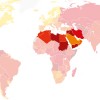
Mideast: 1 in 3 Bribes to Access Basic Public Services
Just an ordinary citizen living in a Middle East and North of Africa country and requring a birth certificate for your new-born daughter? No problem—just take something with you, either some cash, a pack of cigarettes or buy a glass of tea with milk and a lot of sugar.
Indian Women Worst Hit by Water Crisis
A staggering 330 million Indians, making up a quarter of the country's population (or roughly the entire population of the United States), are currently reeling under the effects of a severe drought, resulting in an acute drinking water shortage and agricultural distress.
The Family Garden Going Out of Style in Cuban Countryside
In the past, all rural homes in Cuba had gardens for putting fresh vegetables on the dinner table. The local term for these gardens is “conuco”, a word with indigenous roots that is still used in several Caribbean nations.Odd Situation in the “Paradise” of Press Freedom
A strange situation has emerged in Finland where some people feel that the press freedom is currently jeopardised. The small Nordic country is a press freedom celebrity leading the index kept by Reporters Without Borders since 2009 and hosting the UNESCO World Press Freedom Day on May 3.
Free Press a Casualty of Pakistan’s Terror War
Pakistan’s Federally Administered Tribal Areas (FATA) is widely viewed as one of the world's most dangerous places to be a journalist, with at least 14 killed since 2005 and a dozen of those cases still unsolved, according to local and international groups.
Grilled for a Retweet: Press Freedom in Kenya
In early January, Judith Akolo, a journalist with the Kenya Broadcasting Corporation, found herself in unfamiliar territory when she was summoned and grilled by the Directorate of Criminal Investigations for retweeting a Twitter message.Africa, Caribbean, Pacific Nations Prepare for Upcoming Summit in Papua New Guinea
The growing partnership between 78 countries of Africa, the Caribbean and Pacific (ACP) and the 28-member European Union (EU) has been described as one of the most successful examples of both South-South and North-South cooperation.
Media Freedom in Africa Remains Under Attack
Imagine a world without the media, where we have no verified information about what’s going on around us. Where everything is hearsay and gossip, where there are no trusted sources of information. It would be hard to operate in a world like that: to make decisions about what to do about the things that affect our lives.
West Papuans Turn to Africa for Support in Freedom Bid
For more than half a century, the indigenous people of West Papua, located on the western side of the island of New Guinea, who are related to the Melanesians of the southwest Pacific Islands, have waged a resistance to governance by Indonesia and a relentless campaign for self-determination.
World Farmers’ Organisation Meeting Eyes New Markets, Fresh Investment
‘No Farmer, No Food’ is an old slogan that the Zambia National Farmers’ Union still uses. Some people consider it a cliché, but it could be regaining its place in history as agriculture is increasingly seen as the answer to a wide range of the world’s critical needs such as nutrition, sustainable jobs and income for the rural poor.
Can the UN Security Council Stop Hospitals Being Targets in War?
Hospitals, health care workers and patients in war zones are supposed to be protected under international humanitarian law yet recent attacks from Syria to Afghanistan suggest that they have become targets.
Violence Against Women Journalists Threatens Media Freedom
For women journalists, violence and intimidation don't just happen in conflict zones, they are every day experiences.
UN Predicts 40 Percent Water Shortfall by 2030
Ten presidents and prime ministers from around the world will work together to resolve the growing global water crisis amid warnings that the world may face a 40 percent shortfall in water availability by 2030.
How We Can Keep Press Freedom from Withering Away?
Media freedoms appear increasingly under siege around the world, with concerning signs that achieving middle-income status is no guarantee for an independent political watchdog in the form of the press.
Why we need to stand united against governments cracking down on dissent
Last month, after receiving threats for opposing a hydroelectric project, Berta Caceres, a Honduran indigenous and environmental rights campaigner, was murdered. A former winner of the Goldman Environmental Prize for her opposition to one of Central America’s biggest hydropower projects, Berta was shot dead in her own home.
Opinion: Increasing Productivity Key to Revive Growth and Support Sustainable Development in Asia and the Pacific
The Asia-Pacific region’s successful achievement of the 2030 Agenda for Sustainable Development needs to be driven by broad-based productivity gains and rebalancing of economies towards domestic and regional demand. This is the main message of the Economic and Social Survey of Asia and the Pacific 2016, published today by the Economic and Social Commission for Asia and the Pacific. Such a strategy will not only underpin the revival of robust and resilient economic growth, but also improve the quality of growth by making it more inclusive and sustainable.
Times of Violence and Resistance for Latin American Journalists
Mexico is the most dangerous country in Latin America for journalists. In 2015 it accounted for one-third of all murders of reporters in the region, and four more journalists have been added to the list so far this year.« Previous Page — Next Page »


Want to keep up with the latest news and views from the Global South? Sign up for IPS Daily News Report for daily emails with our top stories about international development, climate change, gender and more. (Formerly IPS TerraViva since 1993).

The Week with IPS

NEXT STOP - SDGs
Tracking global progress towards a sustainable world
