Languages
Friday, November 13, 2026



News and Views from the Global South
Africa
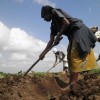
Farmers Need to Grow Climate Smart
Farmers cannot wait much longer for negotiators to reach an agreement on including a work programme on agriculture in the United Nations Framework Convention on Climate Change. And until one is approved, “it will continue to be difficult for farmers to produce the food needed, and at the same time reduce greenhouse gas emissions."Zuma Seeks ANC Leadership at Party Summit
Jacob Zuma, the South African president, has acknowledged that corruption and violence have marred the image of the African National Congress (ANC) under his watch, but called on members to again support him to be the party's leader.
South-South Political Alliances Yet to Influence Business
Politicians in the leading developing nations have been active in boosting mutual ties, as one way of counterbalancing the influence of the developed world. But the economic success of the Brazil, Russia, India, China, and South Africa and the India, Brazil, and South Africa groupings will depend on the extent to which businesses take advantage of the new opportunities which are being created.Some Côte d’Ivoire Women Don’t Want Joint Responsibility for Family
After 17 years of women struggling for parity with men in the household, Côte d'Ivoire's legislature has finally adopted a law which establishes equal responsibility for legally married spouses. But not everyone is happy.
Case to Abolish Gambian Death Penalty Falls on Toothless Court
The court of justice for the West African economic community is expected to hear a civil society case calling for the abolition of the death penalty in the Gambia this December, four months after the execution of nine prisoners shocked the world.
Saving Tanzania’s Poorest Children
Half asleep, Anuary lies exhausted on his bed in Amana Hospital in Dar es Salaam, Tanzania’s capital. His mother, Mariam Saidi, sits on the edge of his mattress, staring blankly out of the window. Every now and then, she turns to wipe her 18-month-old son’s forehead.
Major Study Suggests Crimes Against Humanity in Sudan
Reporting on the results of a two-year investigation, on Wednesday the U.S.-based Human Rights Watch presented findings that suggest that the Sudanese government’s aerial bombardment of civilians in the country’s south could amount to crimes against humanity.
Dreams of a ‘Green Utopia’ Wither in the Maghreb
When the Desertec Industrial Initiative (DII), an alliance of 21 major European corporations, first unveiled plans to install a network of solar thermal, photovoltaic, and wind plants across the North African Maghreb region to generate electricity, the project was greeted as a ‘green utopia’.
No Basic Services for Oil Country
South Sudan may have received slightly more than 10 billion dollars in oil revenue from 2005 to January 2012, when oil production shut down, according to both government officials and the World Bank. But development experts have urged the government to begin investing in the country and its people, as basic social services remain scarce.
U.S. Defends Low-Key Stance on Rwanda, Congo
President Barack Obama’s top diplomat on African affairs on Tuesday defended the U.S. administration’s response to the continued crisis in the Democratic Republic of Congo (DRC), in the face of stepped up criticism from both civil society and U.S. lawmakers.
Youth Call for ‘Change of Course’ to Solve Climate Crisis
While world leaders were wrapping up the United Nations conference on climate change (COP 18) in Doha, Qatar this past weekend with the annual vague promise to tackle the enormous crises brought on by extreme weather and global warming, a delegation of youth gathered far from the high-level conference halls to say “no” to advocacy without action.

China’s Tops in South African Trade
South Africa has experienced a significant shift in trade with a new emphasis on links with developing nations, at the expense of traditional partners in the developed world, according to a leading South African economist.
Brazilian Firms Bring Water and Power to Angolans
The Kwanza river in the heart of Angola will be a symbol of Brazilian partnership in African development when power stations along the country's main source of water are fully operational.
Q&A: Making Toilets Fashionable
When the founder of the World Toilet Organisation Jack Sim turned 40, he literally began counting how many more days he had to live and felt a sense of urgency to do meaningful things with the remainder of his life.Bumper Grain Harvest Expected in Southern Senegal
Farmers in Médina Yoro Foula, in Senegal's southern Kolda region, are expecting a good grain harvest this year, and hope to sell thousands of tonnes of grain in the local and regional markets.
Uganda’s “Kill the Gays” Bill Spreads Fear
Gay activist Gerald Ssentongo of Uganda is afraid to talk openly about his cause. Not only that, but he is terrified of being “caught” socialising with gay people and only meets his friends at night in out-of-reach places.Artificial Insemination Means More Milk in Mauritania
Cattle herder Mohamed Ould Bouthiah has seen the future, and he likes what he sees. "Five of my cows are crossbreeds with a European variety, and those five together produce 80 litres of milk a day."Ethiopia’s Anti-Terrorism Law Squelches Opposition, Activists Say
Ethiopia’s Anti-Terrorism Proclamation is once again stirring debate in this Horn of Africa nation as lawyer Temam Ababulga challenges the 2009 law in the highly-publicised "Muslim terrorism" case.
Cottoning on to Outsourcing Farming
Five years ago, Forbes Gwilize, 52, a cotton grower from Musena village, 80 kilometres north of the Zambian capital Lusaka, was hardly able to earn a living from farming maize.
From Doha to Dakar, Food Insecurity is the Norm
Qatar may be one of the richest countries in the world, but it has something in common with its African counterparts – food insecurity.
« Previous Page — Next Page »


The Week with IPS

NEXT STOP - SDGs
Tracking global progress towards a sustainable world
Tracking global progress towards a sustainable world
