Languages
Monday, November 16, 2026



News and Views from the Global South
Africa

ZAMBIA: Hope for Women Politicians
Mirriam Kauseni is on a quest to become her town’s first ever female parliamentarian. She has yet to be elected to run for the post by her party, the Patriotic Front (PF), but Kauseni has already been conducting door-to-door campaigns, telling people to vote for her in the country’s national elections.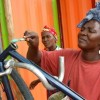
AFRICA: ‘Bicycles Are For Good’
"Politicians may tell us that bicycles are a sign that we are not advancing," says Patrick Kayemba, managing director of the First African Bicycle Information Organization in Uganda, "but we ourselves have seen that cycling is a socio-economic tool. It works now - we don’t have to wait for someone to rescue us with better public transport, better this, or better that..."ZIMBABWE: Rural Women Voting With Their Feet
At independence in 1980, Loyce Tshuma (55), a villager in rural Tsholotsho in Matebeleland North, was a loyal believer in politics as a powerful vehicle to change and better lives. Since then she never missed an opportunity to cast her vote.ZIMBABWE: Cross-Border Traders Don’t Trust Banks With Their Money
A newly available electronic banking service has received a lukewarm reception from cross-border traders in Zimbabwe’s second largest city Bulawayo, despite it alleviating the need to move around with large sums of cash.MALAWI: Rural Areas Still Struggle to Access Medicines
In the shade of a leafy mango tree at the rural Chipho Health Centre in Thyolo, southern Malawi, Melifa Faison sits looking frequently down the road hoping to see an ambulance. Lying beside her is her 6-year-old daughter, weak with malaria.
SOUTH AFRICA : Women Candidates Struggle in Local Government Elections
Political parties should be forced, through changes in legislation, to bring more women into government.
POLITICS: First Woman Speaker of Parliament Changing Politics
Very soon wives in Uganda will legally have the right to a share in their husband’s property, that’s if the country’s new speaker of parliament has her way.
Protecting One of Africa’s Most Enigmatic Creatures
The manatee, or sea cow, is a torpedo-shaped marine mammal that moves languidly through the tepid waters of the Caribbean, South America and along the coast, rivers and wetlands from Senegal down to Angola. In the late 18th century, one of the manatee's closest and much larger relative, the Stellar Cow, were hunted to extinction. Today, the future of the West African manatee may not be far behind.SOUTHERN AFRICA: Little ‘Extraordinary’ About Latest SADC Summit
Inaction marked the Extraordinary Summit of Southern African Development Community heads of state in Windhoek this weekend, despite an agenda covering Zimbabwe elections, political deadlock in Madagascar, the suspension of the regional court and allegations of corruption within SADC itself.Sudan’s Abyei ‘Ablaze’ After Capture by North
Sudan's disputed border town of Abyei is ablaze, with gunmen looting properties days after troops from the government in Khartoum entered the area, U.N. peacekeepers say.HEALTH: Money Needed for ART Funding
Fixed targets for universal access to AIDS treatment and funding to make it achievable are what HIV and AIDS organisations want from the upcoming United Nations General Assembly Special Session due to be held in New York next month.
Sorghum Proving Popular with Kenyan Farmers
Gadam sorghum was introduced to semi-arid regions of eastern Kenya as a way for farmers to improve their food security and earn some income from marginal land. The hardy, high-yielding sorghum variety has not only thrived in harsh conditions, it has won a place in the hearts - and plates - of local farmers.
NIGERIA: Women Giving Each Other a Hand Up
In an open space near her home in Makoko, a crowded suburb of the sprawling city of Lagos, Latifat Agboola sits in the midst of bags of charcoal, attending to her customers. Some of them call her "the charcoal woman with the dirty job, but she sees herself as a businesswoman on the rise.
KENYA: Small Profit Margin Hinders Access to Subsidised Anti-malarial Drugs
On the streets of Nairobi James Odhiambo goes from one pharmacy to the next in search of anti-malarial drugs marked with the Global Fund’s logo of a green leaf. He is looking for this specific brand because he understands that it is more than ten times cheaper than the same drug produced by different manufacturers.
Illegal Logging Spreading in Madagascar
The transitional authorities in Madagascar are struggling to overcome the problem of illegal logging of precious wood. In spite of an April 2010 decree that prohibits the logging, transporting, trading and export of precious woods, felling in the forests is still continuing.
ZAMBIA: Making the Most of Limited Capital
Proponents of microfinance often portray it as the empowering extension of credit to vulnerable but diligently self-employed poor people - often women - who support each other to improve their livelihoods as well as repay their loans. The image is true, to some extent, but in many parts of Africa, microfinance institutions have somewhat sharper teeth.
ZAMBIA: Microfinance Beyond the Reach of the Poor
According to the World Bank, less than eight percent of Zambian adults have bank accounts. For the millions who make their living in the informal economy, this prevents them from earning interest on any savings they have or securing credit needed to expand small businesses beyond mere survival.
Sub-Saharan School Enrolment Shoots Up, But Challenges Remain
Investment in education by sub-Saharan African countries is paying dividends, with more children than ever before now attending school, according to a new report by the United Nations Educational, Scientific and Cultural Organization (UNESCO).KENYA: Rights Defender Deemed ‘Contrary to National Interest’
At about 9 pm on May 10, British human rights lawyer Clara Gutteridge arrived at Nairobi’s Jomo Kenyatta International Airport from Dar es Salaam, where she was investigating the arrests of Tanzanians accused of terrorism.DR CONGO: Measles Claims Lives as Public, Private Resources Stretched Thin
More than 3,000 cases of measles have been recorded in the past three months in two districts of Maniema Province, in the eastern part of the Democratic Republic of Congo.
SOUTH AFRICA: Woman Navigating a Tough Political System
Victoria Zanele KaMagwaza-Msibi admits she is no angel. But for 30 years she’s navigated through South Africa’s tough political landscape, mainly as a member of a male-dominated party, and now as the leader of her own political party.« Previous Page — Next Page »


The Week with IPS

NEXT STOP - SDGs
Tracking global progress towards a sustainable world
Tracking global progress towards a sustainable world
