Languages
Saturday, November 7, 2026



News and Views from the Global South
Asia-Pacific

R & D Expenditure: How to Raise It and Why
Economic growth is the time-tested method of raising living standards and, if not accompanied by large increases in inequality, lowering poverty. Since World War II, economic growth has lifted hundreds of millions of people out of poverty, including in South Asia.
Celebrating Vanuatu’s Path to Sustainable Development
The Pacific Island Developing State of Vanuatu has emerged as one of the region’s great success stories. Vanuatu has joined the ranks of Samoa and the Maldives as one of only six countries to graduate from being a least developed country, since the category was introduced by the United Nations in 1971.
Can Agricultural Apps Bring Indonesia’s Farmers Back to the Fields?
When his friends prodded him to use an agricultural app in July, rice farmer Mustafa reluctantly downloaded RiTx Bertani into his smart phone. Four months later, he feels happy to have given the technology a try.
Climate Action for Human Rights
Climate change and human rights are two key issues in international development and their interaction is increasingly in need of focus at national, regional and international levels. In the Pacific, where the 22 Pacific Island countries and territories are on the front line of both climate ambition and the ongoing effects of the climate crisis, climate change is recognised as the region’s single greatest threat. Urgent climate action is consistently called upon to protect the interests of youth and the most vulnerable populations, together with preserving the ‘shared needs and interests, potential and survival of our Blue Pacific and this great Blue Planet’.
What Indonesia’s Local Elections Mean for National Politics
In just over a day, on 9 December, Indonesia holds 270 simultaneous local elections for executive office. This involves nine of the republic’s 34 governors, 224 of 416 bupati (district chiefs) and 37 of 98 mayors. The polling was initially scheduled for 23 September but the independent KPU (General Elections Commission) put the date back to 9 December due to the Covid-19 pandemic.
Nepal’s Climate Targets: Unrealistically Ambitious or Unnecessarily Ambiguous
The global pandemic hijacked 2020 and reset priorities, but countries now need to regroup and renew their commitment to cap global warming at well below 2°C above pre-industrial levels, as agreed in Paris in 2015.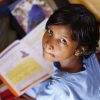
How Did Rural India Learn During Lockdown?
School closures due to the nationwide lockdown in March 2020 meant that children were disengaged with formal education for a prolonged period. The resulting talks around e-education exposed India’s digital divide, with only 24 percent of households having access to the internet.
Sustainable Measures Help Farmers Script a Positive Story Amid COVID-19 Uncertainty
 As India continues to grapple with the COVID-19 pandemic and a growing number of deaths, farmers here have been fighting a battle of their own against volatile pricing, uncertain demand and lack of access to the market. But in the midst of all this uncertainty, one farming couple in a village near Hyderabad are working towards a food-secure future for themselves using eco-friendly farming techniques.

Q&A: Mro Indigenous Community Plea for Halt of Construction of 5-Star Hotel
The construction of a five-star hotel in the Chittagong Hill Tracts, Bangladesh, could lead to the forced eviction of the Mro indigenous community from their ancestral lands and destroy “the social, economic, traditional and cultural fabric of the community”, warns Amnesty International.But local activist Reng Young Mro told IPS that the international community must rally behind the Mro indigenous community to halt the construction.

From Political Prisoner to Champion of Human Rights – The Wai Wai Nu Story
Instead of being cowed by her seven-year imprisonment, Wai Wai Nu, emerged stronger and more determined to fight for the rights of all people, including the Rohingya in her native Myanmar.
Japan Should Lead Charge for Equitable Access to COVID-19 Vaccines
Japan should step up and play a role as a global facilitator for equitable access to COVID-19 vaccines, Dr Daisaku Higashi said at a recent Japan Parliamentarians Federation for Population (JPFP) study meeting.
My Voice, Our Equal Future! Joining the Chorus of Girls Who Are Speaking up for Change
Girls are change makers and world shapers! When girls speak up, they are a powerful force to be reckoned with.
Vietnam and Cambodia: Leveraging Support to Enhance Climate Ambition
The COVID-19 pandemic has disrupted nearly every facet of our lives and delayed what was slated to be a landmark Conference of the Parties (COP26). This pivotal year marks the first due date for countries to submit revised national climate plans per the five-year cycle required by the Paris Agreement. Remarkably, countries are still moving forward with renewed urgency. And many countries are integrating green recovery into their COVID-19 responses, further contributing to climate action. While many countries have positive stories to tell, both of our nations, Vietnam and Cambodia, are sterling examples of nations taking strong, decisive action, particularly with support through the NDC Partnership. Just last month, the people of Vietnam submitted their updated national climate plan and, in short order, the people of Cambodia will do likewise.
Bringing Clean Water On Tap To Rural Villages In Polynesian Island Nation Of Tuvalu
Rural communities on one of the nine islands that make up the Polynesian nation of Tuvalu are anticipating how life will change when they are connected to piped clean water for the first time.

Reversing the Rohingya Crisis: One Woman at a Time
“This is a crisis without a quick fix that could take years to resolve unless there are concerted efforts to address its root causes”, says Manuel Fontaine, UNICEF Director of Emergency Programmes.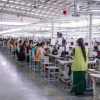
Working Class Bears Disproportionate Burden of COVID-19 Economic Fallout
Back in May 2019, we were visiting a large garment factory in Arsikere, Karnataka, when we asked some of the workers, “What would you do if you got Saturdays off?” Their responses to this simple question summed up their priorities. A majority said they would spend time with family or friends and take care of their children. Many said they would use this time to relax or do household chores. Only a few said they’d look for additional pay.
Secretive Mega-Trade Deal Rules Could Harm Asia’s Covid-19 Recovery
Fifteen countries will sign a mega-trade deal at the ASEAN conference this weekend imposing secretive restrictions on how governments help workers through the pandemic, trade union leaders and parliamentarians have warned.
In India, Ending FGM Demands Truth and Transparency
“My daughter is eight years old. In May 2017, I had her ‘Khatna,’ her circumcision, done. I had taken her to a traditional cutter. Once back home I made her sleep on the bed. After some time, around 4:00 p.m. I took her to the bathroom, she was bleeding as if she had started her menses. It seemed like she was urinating blood. By 6:00 p.m. my daughter had been bleeding so heavily, the blood had soaked three bed sheets and I was very worried. And my daughter was quiet and she also kept asking me if she will be fine.” Excerpt from: How I got her from the hands of death: WeSpeakOut study 2018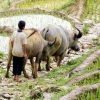
Vietnam Takes the Lead on Indo-Pacific Economic Integration
This was the year that Vietnam was poised to make progress on its rise as a regional leader. Under the auspices of Vietnam’s ASEAN chairmanship, a breakthrough in global trade has been achieved despite rising protectionism and a global pandemic.
Despite Conflict and COVID-19, Children Still Dream to Continue Their Education in Afghanistan
As if four decades of war were not enough, then came the pandemic. For each of the past five years, Afghanistan has been identified by the United Nations as the world’s deadliest country for children and, despite progress made in peace talks between the government and the Taliban, child and youth casualties from the ongoing conflict continue to mount in 2020.
Pandemic Induced Drop in Remittance Flows to South Asia
Remittances are an essential part of economic activity in low and middle-income countries (LMIC), including those in South Asia. Because of the pandemic remittances to LMIC are expected to drop from $548 billion on 2019 to $508 billion in 2020 and $470 billion in 2021. The implied growth rates for 2020 and 2021 are -7.2% and -7.5%. For South Asia the drop will be from $140 billion in 2019 to $135 billion in 2020 and $ 120 billion in 2021 with implied growth rates of -3.6% and -10.9%. https://www.knomad.org/publication/migration-and-development-brief-33« Previous Page — Next Page »





The Week with IPS

NEXT STOP - SDGs
Tracking global progress towards a sustainable world
Tracking global progress towards a sustainable world
