Languages
Monday, November 9, 2026



News and Views from the Global South
Global

Development Banks Needed to Finance Sustainable Development
Public or state development banking will be vital to achieving the Sustainable Development Goals, argues UNCTAD’s Trade and Development Report 2019 (TDR 2019). Ongoing World Bank led efforts seek to leverage private finance via shadow banking by using public money to guarantee handsome returns managed by giant investment houses. Such financialization introduce new costs and risks to financing investments for sustainable development, decent work and renewable energy.
13 Commitments to Tackle Hate Speech
In June 2019, the Secretary-General of the UN, António Guterres, launched the UN Strategy and Plan of Action on Hate Speech. Respect for human rights, without any form of discrimination is one of the core fundamentals of this strategy.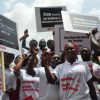
Private Finance and Agenda 2030: Way Off-Track
Four years ago, UN member states proclaimed their ambitions for development in a document named “Transforming Our World”, also known as Agenda 2030. Today, according to several assessments including of the UN’s inter-agency task force on financing for development (FfD) transformation has fallen off-track. It has received too little money, political commitment and action to change the workings of the global economy. Agenda 2030 spells out the Sustainable Development Goals (SDGs) needed to ‘transform our world’.
Q&A: How Europe has Moved Away from Being a Sanctuary for Journalists
Rising populism, anti-media rhetoric from politicians, cyber-harassment of journalists and physical attacks are among the reasons why press freedom in Europe is on the decline, according to the global media watchdog Reporters Without Borders (RSF).

Trump Poised to Withdraw from Open Skies Treaty
The Trump administration is reportedly on the verge of withdrawing from the 1992 Open Skies Treaty, according to lawmakers and media reports. Rep. Eliot Engel (D-N.Y.), chairman of the House Foreign Affairs Committee, first sounded the public alarm in an Oct. 7 letter to National Security Advisor Robert C. O’Brien.
Religious Leaders’ Plea to Member States: Honour Your Commitment to the UN
On the 8th of October, the United Nations Secretary General Antonio Guterres warned that the organisation is running out of money by the end of October - "member States have paid only 70 percent of the total amount needed for [our] regular budget”.
Tuberculosis Infections Declining, But Not Fast Enough Among Poor, Marginalised: UN Health Agency
A staggering 1.5 million people died from tuberculosis (TB) last year, the UN health agency said on Thursday, in an appeal for far greater funding and political support to eradicate the curable and preventable disease.
Governments, Donors and Investors Must Put Their Money Where Their Mouths are on Gender and Climate Change
Climate change has a disproportionate impact on women and girls. This is clear when it comes to water, for instance. The Global Commission on Adaptation Report launched at the United Nations General Assembly last week states that the number of people who may lack sufficient water, at least one month per year, will soar from 3.6 billion today to more than 5 billion by 2050.
UN’s 75th Anniversary Shadowed by Right-Wing Nationalism, Widespread Authoritarianism & Budgetary Cuts
When the six much-ballyhooed high-level UN meetings concluded late September, there were mixed feelings about the final outcomes. And civil society organizations (CSOs), who were mostly disappointed with the results, are now gearing themselves for two upcoming key climate summit meetings: COP25 in Santiago, Chile in December and COP26 in Glasgow, UK in late 2020, along with the 25th anniversary of the Beijing Women’s Conference scheduled to take place in September 2020 in New York.
Holding Transnational Corporations Accountable for Human Rights Abuses
In Geneva this week, a treaty process is underway that promises to usher in a new era for human rights around the globe. The process—the intergovernmental working group on the binding treaty on transnational corporations and human rights—could mean that for the first time, human rights would be prioritized above corporate profits.
Let Plants be Thy Medicine – You Are What You Eat
United Nations World Food Day is celebrated around the world on October 16 under the theme: “Our Actions ARE Our Future. Healthy Diets for a Zero Hunger World”. This theme is timely, especially, because across Africa and around the world, there has been a gradual rise in malnutrition and diet-related non communicable diseases, as highlighted in The Lancet study and a United Nations Report published earlier this year.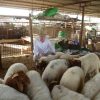
Global Challenges for the ‘NextGen’
Success has many parents – so the saying goes. In the case of the massive successes of international agricultural research, no one person can claim parentage. There are heroes along the way such as Norman Borlaug and his early cereal breeding, and the team that eliminated the cattle disease Rinderpest from the world – smallpox is the only other disease that has been totally eradicated. Another is the founder of The Crawford Fund, Derek Tribe, who was also instrumental in the creation of what is now the International Livestock Research Institute (ILRI), which I chair. However, it would be more correct to highlight the thousands of scientists who have contributed to the world’s greatest feat of feeding an extra three billion people when pundits said it was impossible.
A Major Step Forward in Reducing Food Loss and Waste is Critical to Achieve the SDGs
A new FAO report launched today by the UN Food and Agriculture Organization provides insights into how much food is lost - as well as where and why - at different stages of the food supply chain, calls for informed decisions for an effective reduction and offers new ways to measure progress.
OECD Tax Reform Proposal Could Be Better
The OECD Secretariat published its proposed ‘unified approach’ to reform international tax rules to address tax challenges posed by digitalization on 9 October 2019. Under current rules, there is little chance of a company being taxed without its physical presence in the country concerned. But digitalization enables many businesses to remotely conduct economic activities affecting a national economy without a direct physical presence.
Stop the Waste: UN Food Agencies Call for Action to Reduce Global Hunger
With one-third of food produced for human consumption lost or wasted, and millions still going hungry, the UN’s food-related agencies are shining a spotlight on the issue: on Monday, the Food and Agriculture Organization (FAO) published its annual State of Food and Agriculture report with findings that could lead to a reduction in food loss and waste, and, earlier in October, the World Food Programme (WFP) launched its awareness-raising #StopTheWaste campaign.
Free Trade is Dead
In recent years, global trade and trade policy have become central socio-political issues. The planned EU-US trade agreement TTIP triggered an unprecedented storm of indignation and resistance.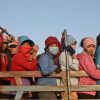
The #MeToo Movement’s Powerful New Tool
If one dreamed up an ambitious global #metoo success story, it might involve governments around the world enthusiastically supporting legal norms and action on sexual harassment with active support and cooperation from businesses and workers.
World Food Day 2019 – “Our Actions Are Our Future”
 Globalization and urbanization have had a staggering impact on human history, especially over the last decade.

Making a Whale of a Difference to Marine Conservation
The thrill of watching a whale up close or schools of dolphins frolicking in an ocean are much sought after experiences today, boosting the demand for tours that provide people the opportunity to see these marine animals in their natural habitats. But becoming a major tourist drawcard has also exposed cetaceans (whales, dolphins and porpoises) and their environs to risks and challenges.
Justin Trudeau´s Blackface
Politics is a dodgy game, maybe even more so if you represent political views based on a moral approach. When the charismatic Justin Trudeau, son of a cosmopolitan liberal who served as Canada´s Prime Minister for 16 years, in 2015 was elected Prime Minister it was within a global political climate different from what it is today. Barack Obama was in the White House, Angela Merkel served her third period as German Chancellor, and the UK Government had not yet announced its country's withdrawal from the EU. Nevertheless, Russia had three months before Trudeau´s election annexed Crimea, while Viktor Orbán´s Hungarian government the month before initiated the construction of a 4 metres high barrier along its nation´s eastern and southern borders to keep immigrants out.
Wanted: Bold Leadership by António Guterres: On Sustainable Funding of United Nations
The United Nations is faced with a financial crisis once again. Leaders of as many as 64 countries who paraded and pontificated at the UN General Assembly and its multiple Summit meetings in September 2019 were deadbeats, who had not paid their dues in full to the UN for this year.« Previous Page — Next Page »





The Week with IPS

NEXT STOP - SDGs
Tracking global progress towards a sustainable world
Tracking global progress towards a sustainable world
