Languages
Saturday, November 21, 2026



News and Views from the Global South
Latin America & the Caribbean

Sustainable Transport Gets a Boost in Latin America
Latin America's big cities should cooperate with each other in order to overcome shared challenges in transport issues, such as sustainability and a more human-centered approach to urban development, experts say.
Young Cubans Take a Critical Look at Fatherhood
While more and more young men in Cuba today are rising above cultural prejudices that condition their role as fathers, many continue to conform to traditional styles of fatherhood, often reproducing negative patterns of neglect and abandonment, with serious repercussions for the whole family in light of the country’s economic and legal situation.
Challenges Dog Community Radio, Finally on Air in El Salvador
For the first time in El Salvador, a community radio is broadcasting under its own licence. The struggle continues, however, for legislative change that will give these kinds of broadcasters more airspace.Despite Immigration Reform, Travel Still Tricky for Cubans
Maria Lourdes, a Cuban, has two passports, one from the island and another from Spain, but until now traveling was only a dream.Mexico Tearing Its Hair Out Over Mercury
The Coatzacoalcos river basin in southern Mexico is so polluted that you can sense the mercury in the air, feel it and breathe it, and the population living in the area is only too aware of its undesirable neighbours: refineries and petrochemical complexes that emit this toxic element into the air and water.Hugo Chavez and Colombia’s Peace
Colombia has suffered an internal armed conflict for so many decades that it almost amounts to a "forgotten crisis" for external donors. But the president of neighbouring Venezuela, Hugo Chavez, is well aware of the conflict, and understands that it destabilises Latin America, where centre-left governments proliferate.
In Caribbean, Climate-Smart Agriculture Bolsters Farm Production
A new initiative is catching on in the Caribbean that aims to increase and sustain agricultural productivity by incorporating information about weather and climate into the farming process, all under the umbrella of climate-smart agriculture.
OP-ED: Learning from Haiti’s Goudou Goudou
On a hillside overlooking Port-au-Prince, a muscular Haitian man in a green tank top raises a heavy steel pry bar over his head and brings it down into a hole, shattering a bit of Haiti’s limestone skeleton.
Latin America and the Venezuelan Question Mark
A lot of water has passed under the bridge in Latin America since Hugo Chávez first took office as president of Venezuela in 1999, with left-wing and centre-left governments coming to power and the emergence of paths toward integration that exclude the United States.
South Africa-Brazil Trade Partnership Hits Potholes
As the five members of the BRICS group of emerging economies – Brazil, Russia, India, China and South Africa – tighten ranks and seek to expand their global influence, the inevitable trade spats have begun.
Alternative Media Fights Back in Argentina
Sustained by editors and readers convinced that another kind of communication is possible, independent magazines are growing and strengthening in Argentina, offering a view different from the mainstream media coverage of political, cultural and advocacy issues.Fighting for a Future in Rio’s Toughest Neighbourhoods
Teachers at a local primary school here, the Escola Municipal IV Centenário, are trained to help their pupils find cover in case of gun battles.
In Haiti, Aid Dollars Corroded Social Fabric
A World Bank-funded community development project in Haiti appears to have inadvertantly harmed or even dissolved some of the grassroots organisations it was designed to strengthen.
World Bank “Success” Came at High Cost in Haiti
A 61-million-dollar, eight-year community development project funded by the World Bank and executed by the Haitian government and two international development agencies has raised questions of waste and corruption, and even carried out what could be called “social and political re-engineering".Mexico’s Gun Problems Go Beyond Drug Wars
A lot of attention goes to the U.S.-made weapons in the hands of criminal groups in this Latin American country. But there is little talk of another problem: the large number of light weapons in the hands of civilians.
Two Luthiers Emerge From Deep Bolivian Amazon
They belong to the Amazon of Bolivia, where their people, the Moxena nation, are found, and they are brothers. Francisco and Alfonso Ichu Tamo came to this southern city to become the premier makers of musical instruments.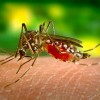
Brazil Measures Rain Against Dengue
Mosquitoes that transmit dengue fever need clean, still water and warm night temperatures to reproduce and thrive. That is common knowledge, but now scientists in Brazil have managed to measure the relation between increased rainfall and temperatures and the risk of dengue epidemics in this city.
Government “Continuity” Winning Over in Venezuela
While Hugo Chávez is being treated for serious illness in Havana, the premise of government "continuity" is winning out in his home country, along with plans to postpone his swearing-in ceremony for a new term as president of Venezuela, due to take place on Thursday Jan. 10.Cuban Sugar Sector Aims for Recovery in 2013
The Cuban sugar industry seems to be experiencing a rebirth thanks to an economic modernisation programme that has allowed for an injection of foreign capital as part of a strategy to strengthen and diversify this key sector.
Chilean Archaeologists and Environmentalists Fight Dakar Rally
Archaeologists, environmentalists and the National Monuments Council are battling the Dakar Rally, an annual off-road race, in northern Chile, an area with a rich archaeological and natural heritage that has already lost dozens of sites key to understanding Chilean and South American prehistory.
What’s in Store for 2013
Having survived the announced end of the world on Dec. 21, we can now try to foretell our immediate future, based on geopolitical principles that will help us understand the overall shifts of global powers and assess the major risks and dangers.« Previous Page — Next Page »


The Week with IPS

NEXT STOP - SDGs
Tracking global progress towards a sustainable world
Tracking global progress towards a sustainable world

